Li Yandian arrived in Shenzhen with a bachelor’s degree from Universiti Malaya, Malaysia’s oldest university, and a question he hadn’t fully answered: what did he actually want to research? Today, he is a PhD student at the School of Advanced Materials (SAM) at Peking University Shenzhen Graduate School (PKU Shenzhen), working on materials and engineering research in Dr. Wang Ligang’s group.
His academic path—from the intersection of life sciences and engineering to an entirely new research field—wasn’t mapped out from the start. It came together one decision at a time: think a little more, take a step forward; take a step, and see a little clearer. For him, coming to Shenzhen wasn’t just about studying in a different city. It meant a research direction that excited him, an advisor willing to offer trust and support, and a scientific frontier waiting to be explored.
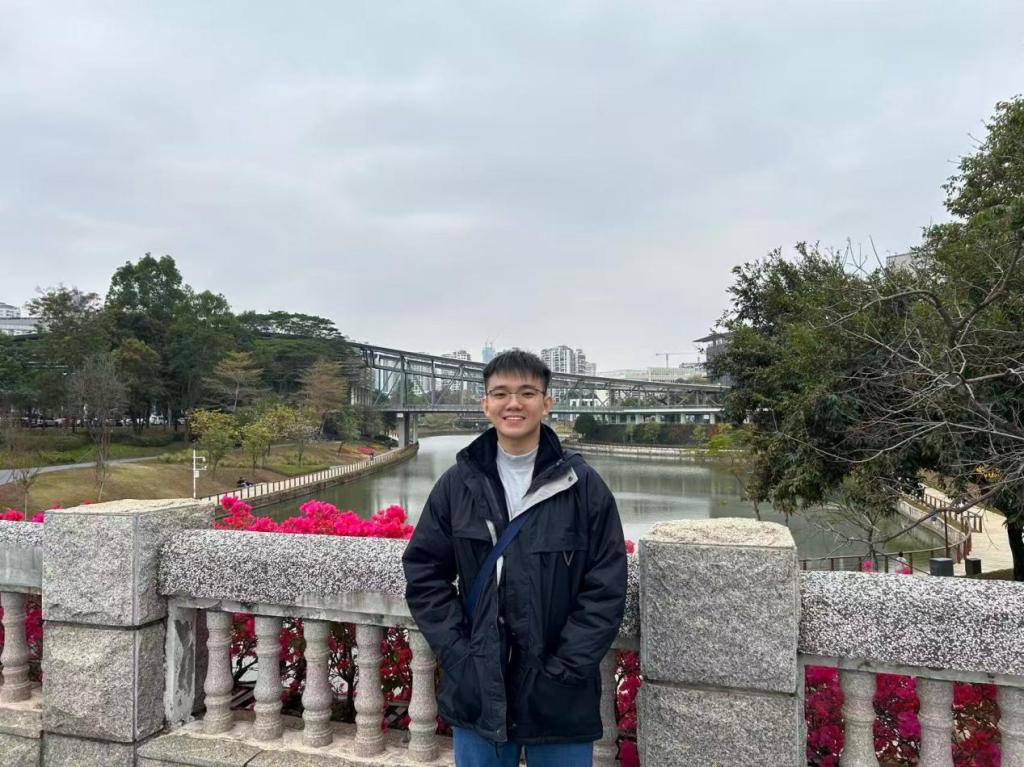
A Different Path
Li Yandian originally wanted to be a doctor. Throughout high school, the goal was concrete and unwavering. He studied and took exams with that aim in mind—until he actually began to understand what the profession entailed. Clinical medicine certainly helps people, but its path is relatively fixed: visible diseases, clear treatment plans, predictable rhythms. What he wanted was a different kind of life—one where he could continually encounter new problems and decide for himself which direction to pursue.
His interest in biology led him to biomedical engineering at Universiti Malaya, a field that blends biology with engineering. It connected the two areas he cared about and opened a door different from clinical medicine.
What truly shifted his academic interests was an undergraduate research experience in quantum-related fields. A new direction, somewhat removed from his major, sparked his curiosity. Compared with the familiar territory of his coursework, quantum research raised questions he hadn’t encountered before and made him want to dig deeper. He began to consider whether he could pursue a different direction in graduate school and expand his academic horizons. It wasn’t a clean break from the past—his biomedical engineering training remained—he just wanted to push his perspective a little further.
With a direction in mind, the next question was where. Singapore and Australia were both on his list. Singapore was closer to Malaysia, with a similar climate and cultural environment; Australia offered a different living and learning experience, but the cultural distance gave him pause. Practical factors like scholarships also weighed on his decision. As he compared possibilities, he began to look toward China.
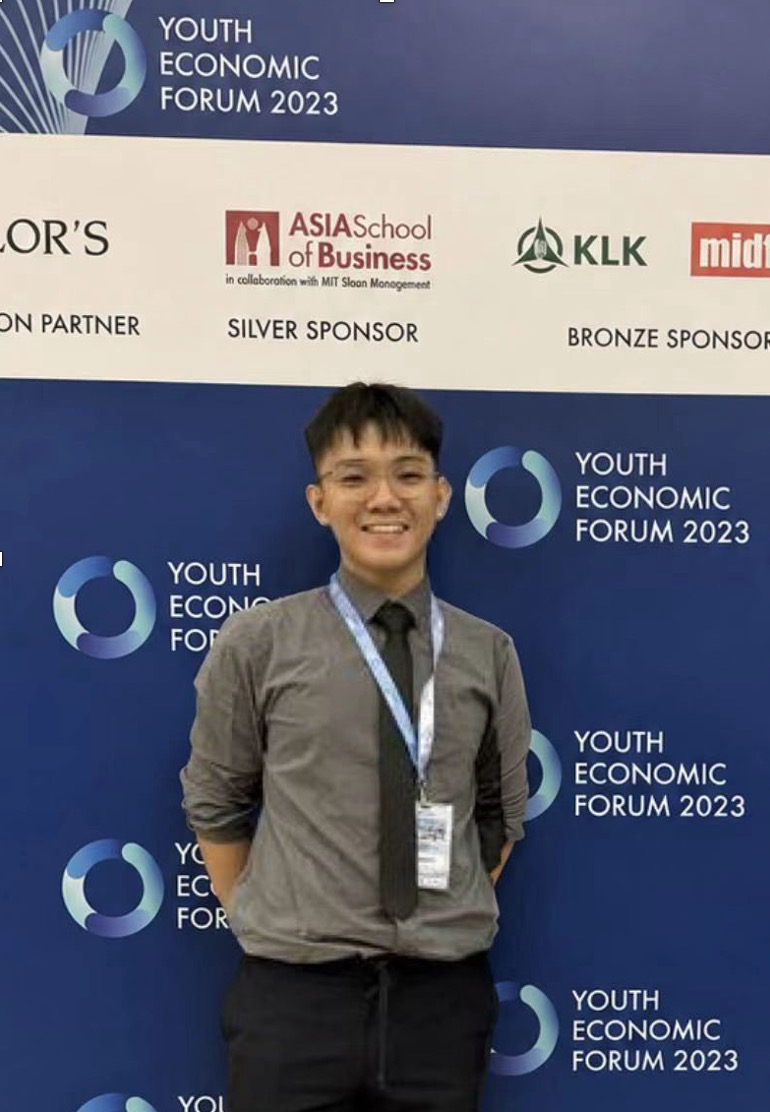
Li at the Malaysian Youth Economic Forum (YEF 2023)
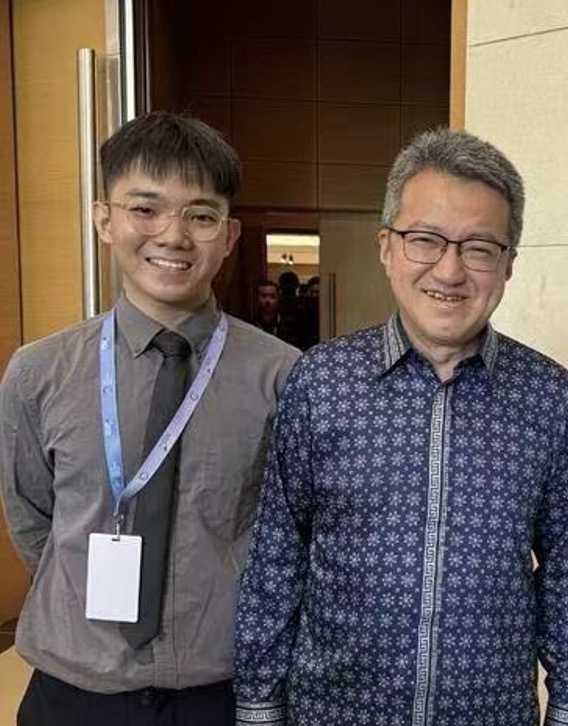
Li with Liu Chin Tong, Deputy Minister of Finance of Malaysia
The turning point came through a joint exchange program between Universiti Malaya and Peking University. During that visit, he set foot in PKU Shenzhen for the first time, saw the labs, and heard faculty describe their research. Compared with scrolling through information online, a face-to-face conversation gave a distant option a concrete shape: what the future might look like, what people here were working on, what daily life might be like. That exchange marked the beginning of his connection with PKU Shenzhen. A choice still being weighed gradually took on a definite form.
Choosing an Advisor, Building Trust
Choosing a school matters; choosing an advisor matters just as much. A PhD takes years, and students work closely with their advisors throughout. An advisor’s academic judgment, mentoring style, and even the ease of communication between mentor and student can shape a long stretch of one’s career.
It was also during that exchange that he met Dr. Wang Ligang. As they stayed in touch, Dr. Wang invited him to Shenzhen to see what the research group was actually doing. That invitation became a key step in his understanding of PKU Shenzhen. Before making a final decision, he visited Shenzhen twice. Brochures and papers can tell you what a team has done, but only by walking into the lab and talking with faculty and senior students can you sense the atmosphere and imagine what you yourself might do.
Dr. Wang’s group focuses on two areas: optics and rare earths. The deeper he looked, the clearer he understood what he would be facing—and the more seriously he asked himself whether this was where he wanted to spend five years of doctoral study. It wasn’t that he had no other options. But in the end, he found it hard to find both a direction he was genuinely interested in and a team he felt comfortable committing to. Going elsewhere would mean giving up Dr. Wang’s group; other directions might not suit him as well. He chose Dr. Wang’s team.
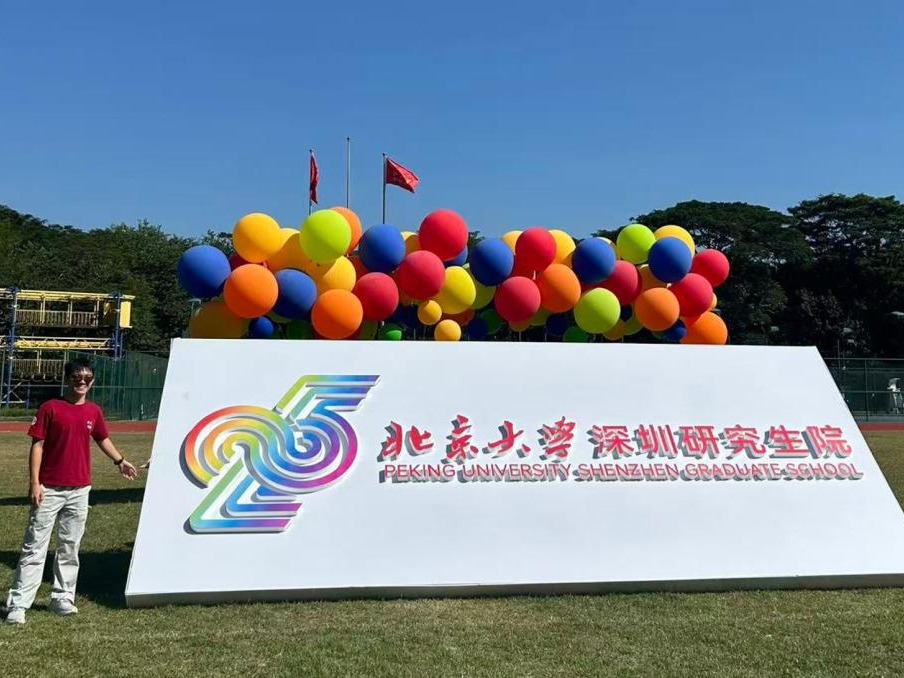
Li at the PKU Shenzhen Fun Games
When talking about Dr. Wang, one word came up repeatedly: approachable. Research is inherently full of uncertainty. PhD students face unanswered questions every day, and there are always moments when their thinking stalls or progress slows. At such times, whether an advisor can create a relaxed environment for communication significantly affects the psychological cost of the whole process. Li Yandian wanted to be able to ask questions naturally when he ran into difficulties or had new ideas—not to hold them in out of fear of criticism. If every conversation required bracing yourself first, research—already difficult—would carry an extra burden.
Dr. Wang was more or less what he had imagined. In daily mentoring, Dr. Wang listens to students finish their thoughts and offers timely reminders when he spots problems. When Li Yandian’s ideas are still rough or his understanding of a problem goes off track, Dr. Wang points it out in a relaxed, tactful way and helps him straighten out his thinking. This kind of exchange gives him professional guidance without making him worry about voicing a different opinion. In his view, a good mentor-student relationship isn’t one where the advisor gives answers and the student follows—it’s one where the student gradually develops judgment through repeated conversations. Someone shows the way, but leaves room for you to walk it yourself. He describes the relationship as “a mentor who is also a friend.” He remains grateful for that encounter.
Adjusting to the Rhythm of a PhD
Once he actually began his doctoral studies, Li Yandian found that PhD life isn’t always made up of major breakthroughs and impressive results. More often, it lives in papers that need to be read again and again, in group discussions, and in the process of repeatedly trying new things when facing unfamiliar problems.
From undergraduate to doctoral study, the way of learning changes significantly. Courses, literature, group meetings, and research tasks all interweave; time must be reorganized and rhythms readjusted. Especially in the beginning, many questions about direction have no ready answers. Most of the time goes into reading papers, understanding what others have done, and trying to find one’s own angle.
Language was another hurdle to clear. For daily communication, his Chinese was sufficient. But once professional discussions began, things were different. How to understand terminology, how to express ideas precisely, the habits everyone takes for granted in group meetings—all of it had to be learned bit by bit. For an international student just entering a new field, it’s often a matter of “roughly understanding” first, then spending more time to truly grasp the content.
The adjustment process wasn’t always smooth. Balancing coursework and research was an ongoing challenge. Recently, he had two group meetings and an exam to prepare for within ten days. One thing after another—he had to prioritize within limited time and find balance between courses and research. When facing unfamiliar and difficult tasks, he sometimes felt anxious. But he didn’t treat anxiety as something that had to be eliminated immediately. Sometimes he would let himself rest for a while, calculate how much there was to do next, reorganize his thoughts, and then continue. Rather than forcing himself to stay efficient at all times, he cares more about getting back to a state where he can keep moving forward.
Fortunately, he wasn’t walking this path alone. Labmates and a postdoctoral researcher in the group helped him a great deal. When he encountered unfamiliar methods or problems he couldn’t work through, they were patient in explaining. The postdoc even shared her own experience with reading literature, helping him get up to speed on developments in the field more quickly. These forms of help weren’t grand gestures—they were woven into daily life. For Li Yandian, it was precisely these everyday interactions that made an unfamiliar research environment gradually feel familiar. Knowing he could ask the people around him when problems arose gave him a sense of grounding on this new journey and helped him gradually keep pace with the team through discussion after discussion.
He isn’t rushing toward results. He hasn’t been in the group long and doesn’t yet have major research achievements to show. At this stage, being able to present his ideas in group meetings and receive a word of recognition from his advisor or senior labmates is enough to encourage him. Those ideas may not be fully developed or immediately turn into results, but that small affirmation tells him his thinking is being understood. That, in itself, is feedback—and motivation to keep going.
Leaving home to pursue a five-year PhD in Shenzhen also means managing all aspects of life independently. From daily routines to time planning, he is learning to take care of himself. At the same time, he is well aware that a PhD means investing several years in long-term study and research rather than starting work and earning sooner. It’s an account to be carefully calculated—and a path that requires patience.
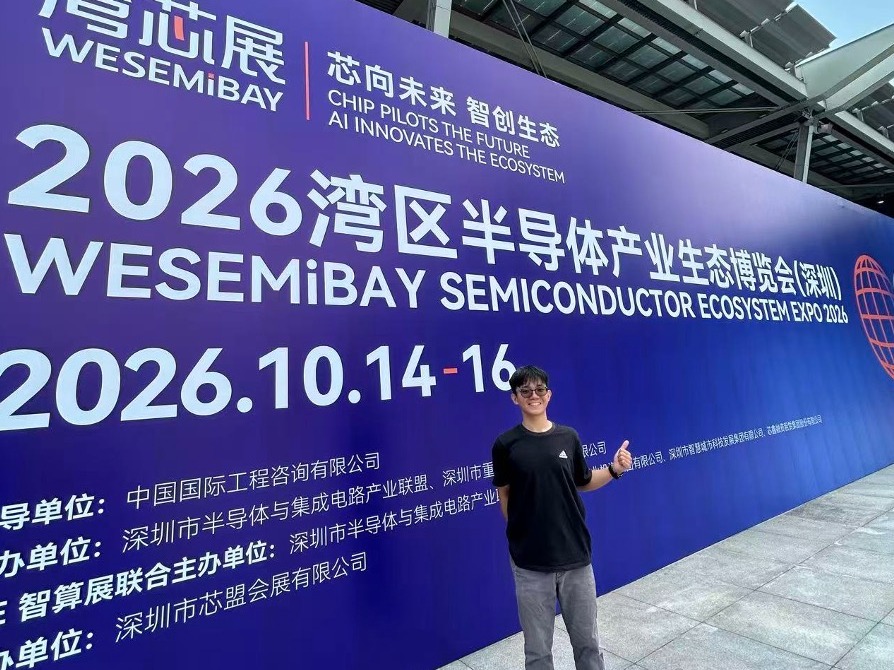
Li at the 2026 Greater Bay Area Semiconductor Industry Ecosystem Expo
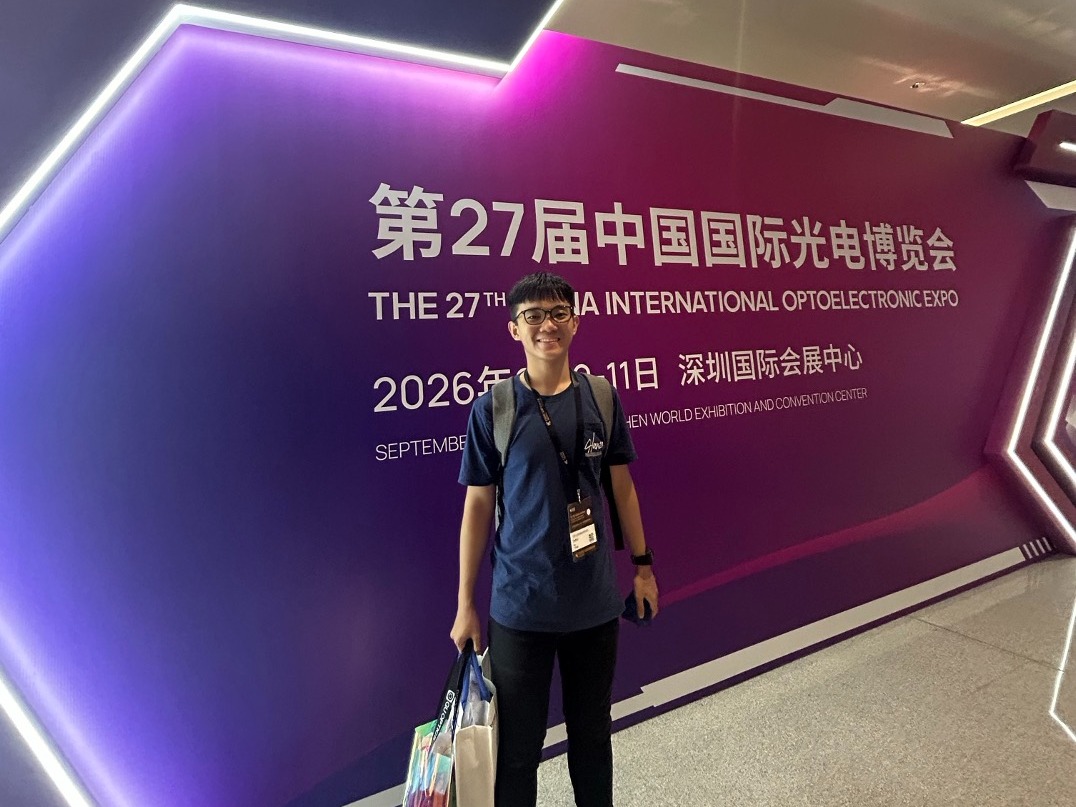
Li at the 27th China International Optoelectronic Exposition (CIOE)
From the uncertainty of facing an unfamiliar field to gradually settling into the team’s rhythm, finding people to talk to and ask for help, and learning to balance life and research, his PhD life is still unfolding. There may not yet be results that represent this journey, but what has accumulated through reading, discussion, adjustment, and trial has already become part of his growth. He is finding his rhythm.
A City Beyond the Lab
He chose Shenzhen initially for the research opportunities. Once he actually settled in, Li Yandian discovered the city offers more than laboratories. What struck him first was its technological energy—high-rises, fast-growing industries, and new energy vehicles everywhere. The sheer number of electric cars particularly surprised him. In his view, Shenzhen isn’t just a city with a strong modern feel; it also provides fertile ground for cutting-edge research.
For his quantum research, this environment holds real appeal. China is strong in quantum technology, and Shenzhen is home to a cluster of tech companies, making it easier to connect research with industry. Research shouldn’t stay confined to the lab—it should also consider what society needs and connect with industry. The resources and atmosphere here make him more hopeful about his future research.
But what keeps him in Shenzhen goes beyond technology. Art has always held a place in Li Yandian’s life. Though he studies science and engineering, he enjoys music, painting, and history. In his free time, he listens to piano music and reads historical novels and classical Chinese literature. Since coming to Shenzhen, Dafen Oil Painting Village has become a regular haunt. Walking through it, with paintings, studios, and narrow alleys all mixed together, he can step away from the pace of research and breathe differently.
Art is also a form of relaxation for him. Research demands long periods of focus, and when confronting complex problems, it’s easy to get stuck in repeated thinking. Music, painting, and reading let him shift his mood and experience life from another angle. Because of this, he doesn’t see technology and art as separate worlds. That’s what delights him about Shenzhen: on one side, a thriving tech industry; on the other, rich cultural and artistic spaces. Besides Dafen, he also enjoys Shenzhen Bay Park. Walking along the coast, watching the skyline merge with the bay, offers a rare sense of ease outside of research.
When it comes to daily life, he also mentions the food—cuisines from across China can be found here, which reminds him of Kuala Lumpur. From the lab to art spaces, from streets to the seaside, Li Yandian is getting to know Shenzhen in his own way. The city’s appeal isn’t limited to research resources—it’s also the diverse life it offers. Here, he can focus on the direction he has chosen and find moments of relaxation in music, art, and everyday life.
A Journey Across Cultures
From Malacca to Shenzhen, this path is also a journey of continually encountering different cultures.
For Li Yandian, cross-cultural exchange is nothing new. While studying in Malaysia, he participated in activities related to international economic exchange, met participants from different countries, and heard perspectives on economy and development from people of various cultural backgrounds. That experience taught him that communication isn’t just about stating your own views—it’s also about trying to stand in the other person’s shoes and finding common ground amid differences.
In Shenzhen, this experience has become part of daily life. On campus, students from different countries and regions come together for their studies, building connections in classrooms, labs, and everyday life. Leaving a familiar environment to pursue a PhD in another country isn’t just an academic choice for him—it’s also a chance to rediscover his own culture and see a bigger world through interactions with people from different backgrounds.
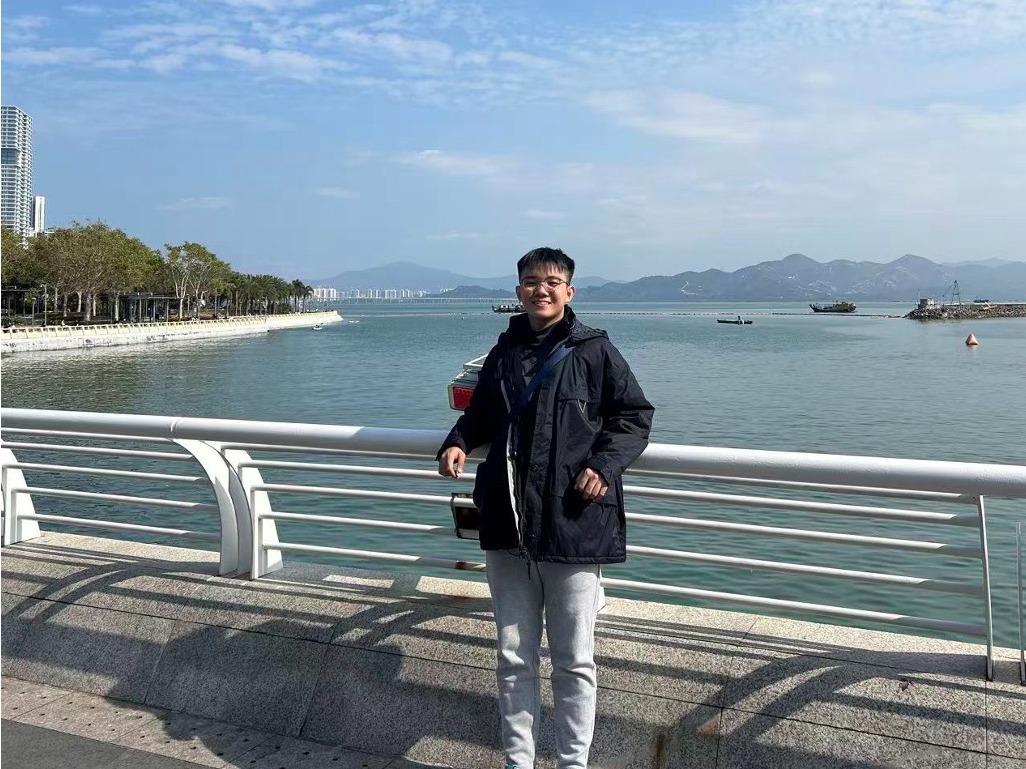
Li exploring Shenzhen
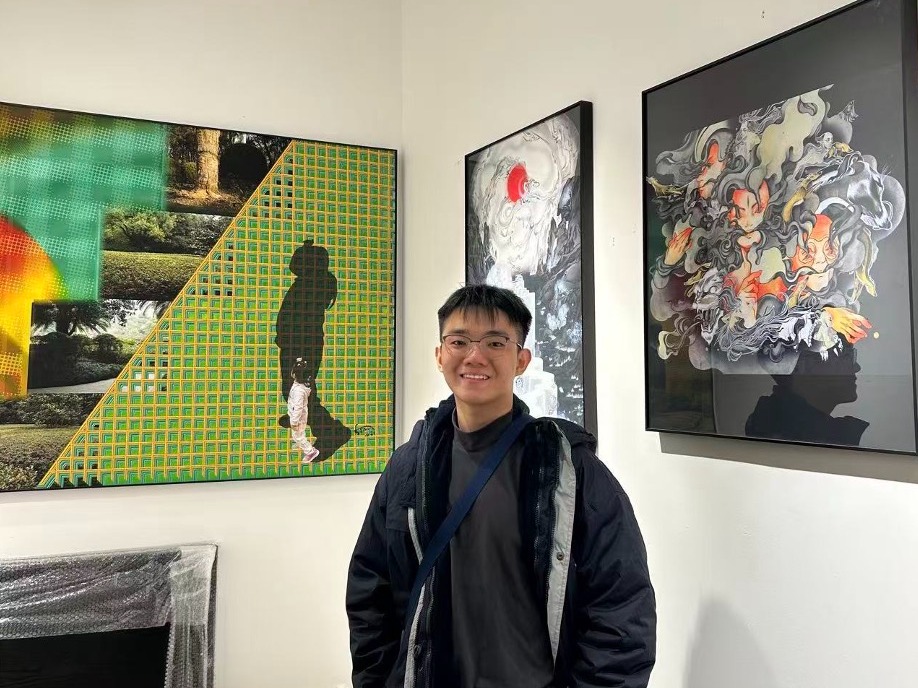
Li at Dafen Oil Painting Village
In 2026, Shenzhen hosts APEC-related meetings, and the city—known for openness and innovation—once again becomes a stage for international exchange. For Li Yandian, a meeting like APEC may feel somewhat distant from daily research, but the openness, exchange, and cooperation it represents resonate with his experience in Shenzhen. Cross-cultural interactions on campus, dialogue between nations—exchange happens in different settings and connects people in different ways.
Asked whether he would recommend that young people from other countries come to China to study, his answer is an unequivocal yes. China has abundant research resources and a strong technological environment, offering young researchers many opportunities to explore new fields. Of course, a PhD also means a longer commitment: Malaysia’s doctoral programs typically take about three years, while here it’s five, and it means being far from home and living independently—all things to consider in advance. But after weighing it all, he still finds the experience worth looking forward to.
Today, Li Yandian’s PhD journey in Shenzhen has only just begun. Many unknown research questions await him, and many new experiences await discovery. From Malacca to Shenzhen, what has changed isn’t just where he lives—it’s also how he sees academia, culture, and the world.
Perhaps the most valuable thing about a cross-border educational experience isn’t arriving at some predetermined destination, but giving a young person the chance to step into a new environment, meet different people, and—through learning and exchange—discover a larger world than the one they left behind.