Types of Spline Gear Couplings
Rokee® is a well-known high-quality spline gear coupling supplier from china, learn more about types of spline gear couplings, pls contact Rokee technology. Rokee has been established in China since 1999, over the years, with excellent quality, we have been continuously providing many spline gear coupling products of various categories and uses complying with multiple standards and a full range of services, from the spline gear coupling selection to final installation and operation, for the industry fields of ferrous metallurgy, nuclear power, gas turbine, wind power, ropeway construction, lifting transportation, general equipment, etc.
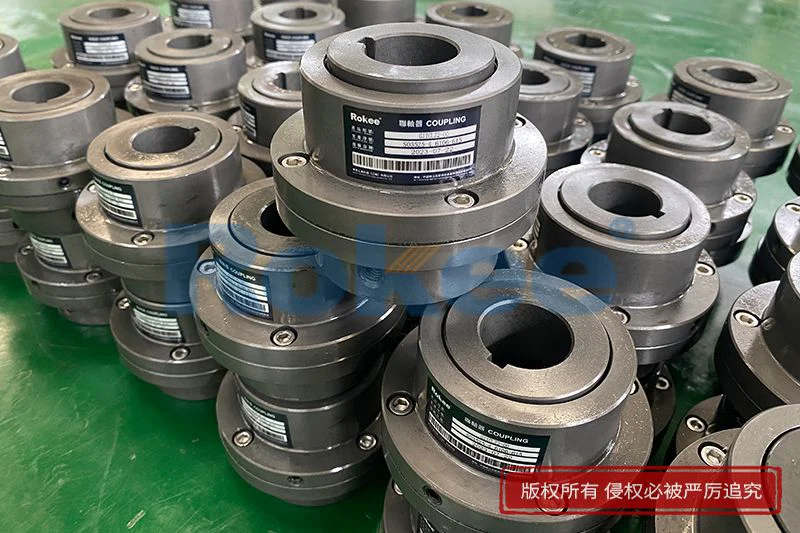

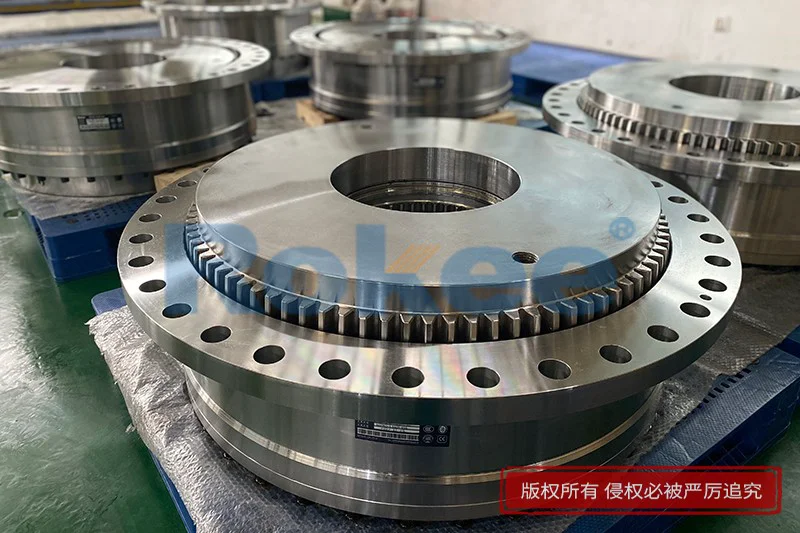
The spline gear coupling is a specially designed advanced gear coupling. Its outer teeth are made into a sphere, with the center of the sphere on the axis of the gear. The teeth clearance is slightly larger than the general products and can transfer a greater torque and allow greater angular displacement, enjoying excellent performance and longer life.
Spline Gear Coupling Products
-
![RODA Drum Gear Coupling,Types of Spline Gear Couplings]()
RODA Drum Gear Coupling
Basic Type
The RODA Drum Gear Coupling is the basic type of ROD series coupling, suitable for most situations where the compensation of transmission distance and motion position does not require special increase.View More -
![RODT Drum Gear Coupling,Types of Spline Gear Couplings]()
RODT Drum Gear Coupling
Intermediate Connecting Pipe
The RODT Drum Gear Coupling is an extended type of ROD series coupling, suitable for increasing transmission distance.View More -
![RODX Drum Gear Coupling,Types of Spline Gear Couplings]()
RODX Drum Gear Coupling
Intermediate Connecting Shaft
RODX Drum Gear Coupling is an extended type of ROD series coupling with a floating shaft design in the middle, suitable for increasing transmission distance.View More -
![RODP Drum Gear Coupling,Types of Spline Gear Couplings]()
RODP Drum Gear Coupling
With Brake Discs
The RODP Drum Gear Coupling is a type of ROD series coupling with a brake disc, suitable for transmission situations where braking needs to be used in conjunction with disc brakes.View More -
![RODF Drum Gear Coupling,Types of Spline Gear Couplings]()
RODF Drum Gear Coupling
Split Type, Brake Disc
The RODF Drum Gear Coupling is a type of ROD series coupling with split brake discs, suitable for transmission situations where there is braking demand and the braking position changes when used in conjunction with disc brakes.View More -
![RODW Drum Gear Coupling,Types of Spline Gear Couplings]()
RODW Drum Gear Coupling
With Brake Wheel
The RODW Drum Gear Coupling is a type of ROD series coupling with brake wheels, suitable for transmission situations where braking needs to be used in conjunction with wheel brakes.View More -
![RODU Drum Gear Coupling,Types of Spline Gear Couplings]()
RODU Drum Gear Coupling
With Brake Wheel
The RODU Drum Gear Coupling is another type of ROD series coupling with brake wheels, suitable for transmission situations where braking needs to be used in conjunction with wheel brakes and applied to one end of the axle, achieving smoother and more reliable braking performance.View More -
![RODV Drum Gear Coupling,Types of Spline Gear Couplings]()
RODV Drum Gear Coupling
Vertical Installation
The RODV Drum Gear Coupling is a vertical installation type of the ROD series coupling, suitable for transmission situations that require vertical transmission torque.View More -
![RODM Drum Gear Coupling,Types of Spline Gear Couplings]()
RODM Drum Gear Coupling
Torsion Protection
The RODM Drum Gear Coupling is a torque setting form of the ROD series coupling. By adjusting relevant components, the maximum transmission torque can be easily set within a certain range. Suitable for shafting transmission situations that require safe torque operation to protect important machine components from excessive damage.View More -
![GICL Drum Gear Coupling,Types of Spline Gear Couplings]()
GICL Drum Gear Coupling
Wide
GICL Drum Gear Coupling has larger inner teeth width, which can transfer torque while compensating for larger axial displacement.View More -
![GICLZ Drum Gear Coupling,Types of Spline Gear Couplings]()
GICLZ Drum Gear Coupling
Connected to Intermediate Shaft
Half of the GICLZ Drum Gear Coupling adopts a non-toothed semi-coupling sleeve structure, which is usually connected in pairs or used in occasions with small angular displacement.View More -
![GIICL Drum Gear Coupling,Types of Spline Gear Couplings]()
GIICL Drum Gear Coupling
Narrow
GIICL Drum Gear Coupling has small inner teeth width, which can transfer torque while compensating for small axial displacement. Also, its structure is compact and the moment of inertia is low.View More -
![GIICLZ Drum Gear Coupling,Types of Spline Gear Couplings]()
GIICLZ Drum Gear Coupling
Connected to Intermediate Shaft
Half of the GIICLZ Drum Gear Coupling adopts a non-toothed semi-coupling sleeve structure, which is usually connected in pairs or used in occasions with small angular displacement. Also, its structure is compact and the moment of inertia is low.View More -
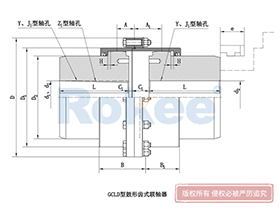
![GCLD Drum Gear Coupling,Types of Spline Gear Couplings]()
GCLD Drum Gear Coupling
Motor Shaft Extension
GCLD Drum Gear Coupling is generally used for direct connection with the motor, so it generally has a higher speed and compact structure.View More -
![NGCL Drum Gear Coupling,Types of Spline Gear Couplings]()
NGCL Drum Gear Coupling
With Brake Wheel
NGCL Drum Gear Coupling is designed with a brake wheel, suitable for situations where braking is required.View More -
![NGCLZ Drum Gear Coupling,Types of Spline Gear Couplings]()
NGCLZ Drum Gear Coupling
With Brake Wheel
NGCLZ Drum Gear Coupling is designed with a brake wheel, suitable for situations where braking is required. Half of its structure adopts a semi-coupling sleeve design, with smaller angular displacement compensation but more stable braking.View More -
![WG Drum Gear Coupling,Types of Spline Gear Couplings]()
WG Drum Gear Coupling
Basic
The overall characteristics of WG Drum Gear Coupling are similar to those of other drum gear couplings, but with a larger modulus design, which can generally transmit greater torque.View More -
![WGZ Drum Gear Coupling,Types of Spline Gear Couplings]()
WGZ Drum Gear Coupling
With Brake Wheel
WGZ Drum Gear Coupling is designed with a brake wheel, suitable for shoe type braking.View More -
![WGP Drum Gear Coupling,Types of Spline Gear Couplings]()
WGP Drum Gear Coupling
With Brake Discs
WGP Drum Gear Coupling is designed with a brake disc, suitable for disc type braking.View More -
![WGT Drum Gear Coupling,Types of Spline Gear Couplings]()
WGT Drum Gear Coupling
Intermediate Connecting Pipe
WGT Drum Gear Coupling is designed with indirect tube, suitable for long distance torque transfer.View More -
![WGJ Drum Gear Coupling,Types of Spline Gear Couplings]()
WGJ Drum Gear Coupling
Connected to Intermediate Shaft
WGJ Drum Gear Coupling is designed with intermediate shaft, suitable for long distance torque transmission, and some are equipped with axial buffers.View More -
![WGC Drum Gear Coupling,Types of Spline Gear Couplings]()
WGC Drum Gear Coupling
Vertical Installation
WGC Drum Gear Coupling is specially designed for situations where vertical transmission is required, suitable for some vertical transmission systems.View More
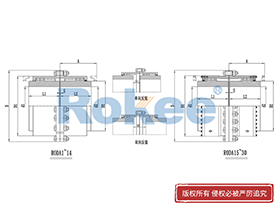
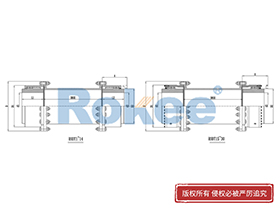
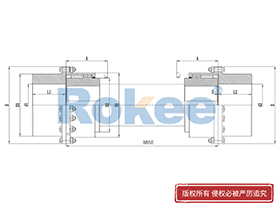
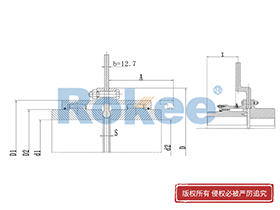
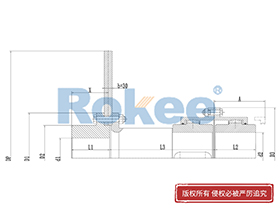
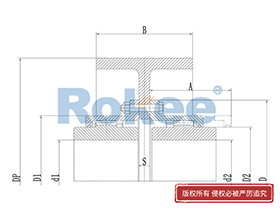
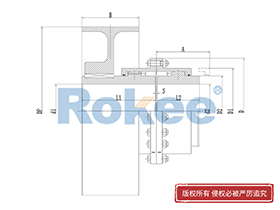
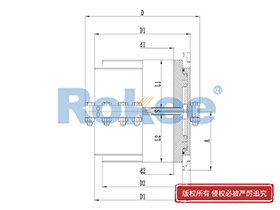
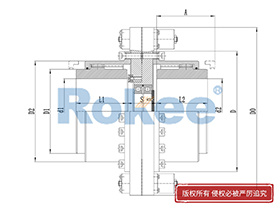
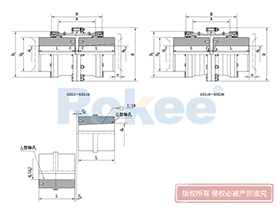
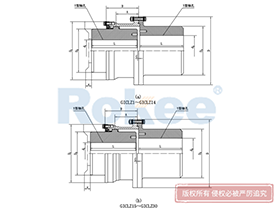
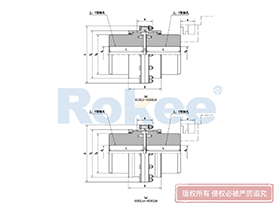
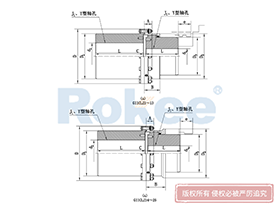
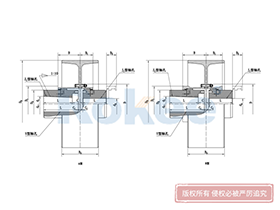
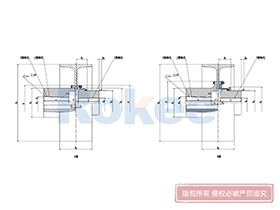
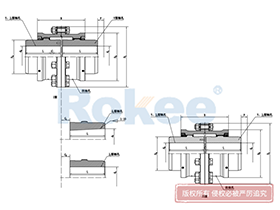
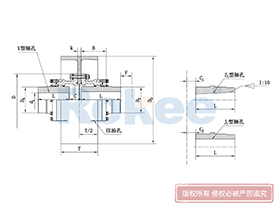
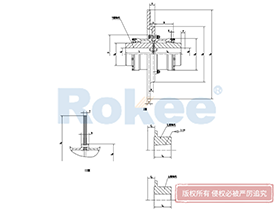
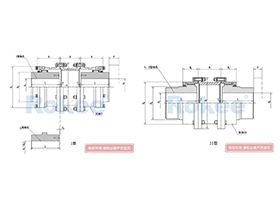
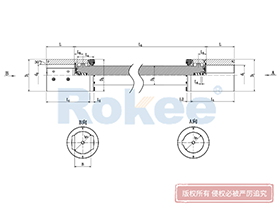
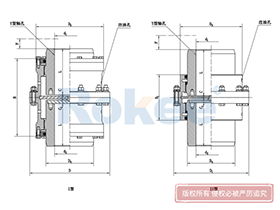
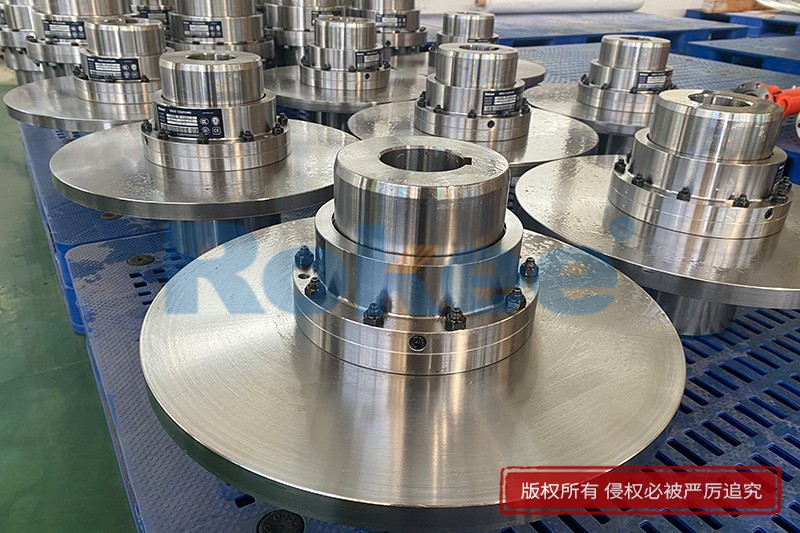
In the realm of mechanical power transmission, spline gear couplings stand as indispensable components that bridge rotating shafts, facilitating the seamless transfer of torque while accommodating minor operational discrepancies and maintaining rotational alignment. Unlike standard keyed couplings that rely on a single keyway for torque transmission, spline gear couplings feature multiple evenly spaced teeth that mesh between internal and external spline surfaces, distributing load across a larger contact area to enhance durability, load-bearing capacity, and operational stability. This design evolution addresses the limitations of traditional coupling solutions, making spline gear couplings suitable for a wide spectrum of industrial applications, from light-duty precision machinery to heavy-duty industrial equipment operating under variable loads and moderate misalignment conditions.
One of the primary classifications of spline gear couplings is based on the tooth profile geometry, which directly impacts torque transmission, meshing smoothness, and load distribution. The most prevalent profiles in this category include straight-sided (rectangular) spline gear couplings, involute spline gear couplings, and triangular spline gear couplings, each engineered to meet distinct performance and application requirements. Straight-sided spline gear couplings feature flat, parallel tooth faces with a rectangular cross-section, a design that prioritizes simplicity in manufacturing and assembly. The straight tooth profile allows for straightforward machining processes, lower production complexity, and greater tolerance for minor manufacturing variations compared to more intricate profiles. These couplings excel in applications where high torque transmission is not the primary demand, such as light to medium-duty machinery, small-scale transmission systems, and equipment with static or low-speed rotational needs. Their straightforward design also simplifies disassembly and reassembly, making them a practical choice for systems that require routine maintenance or component replacement. However, the straight tooth profile results in concentrated stress at the tooth roots under heavy loads, limiting their suitability for high-torque, high-speed operations or applications with frequent load fluctuations.
Involute spline gear couplings represent a more advanced and widely adopted category, distinguished by their curved, involute tooth profiles that mirror the geometry of precision gears. This curved design delivers several key performance advantages, starting with automatic self-centering during assembly and operation. As the internal and external splines mesh, the involute teeth align naturally, maintaining precise coaxiality between connected shafts and minimizing radial runout, vibration, and noise. The involute profile also promotes uniform stress distribution across the tooth surface and root, reducing stress concentration and enhancing the coupling’s ability to handle higher torque loads and elevated rotational speeds. Additionally, the curved tooth face creates a larger effective contact area during meshing, improving load-bearing capacity and wear resistance compared to straight-sided alternatives. Involute spline gear couplings are versatile enough to serve both light precision equipment, such as machine tool spindles and instrumentation drives, and heavy-duty applications, including automotive drivetrains, industrial gearboxes, and heavy machinery. Variations within this category are defined by pressure angles, with common angles including 30°, 37.5°, and 45°; 30° pressure angle involute splines typically offer superior load-bearing performance, while 45° angles are tailored for compact, light-load scenarios where space is constrained. The tradeoff for these benefits is a higher degree of manufacturing precision required to achieve the correct involute geometry, which adds moderate complexity to production processes but delivers substantial long-term value in operational reliability.
Triangular spline gear couplings feature a tapered, triangular tooth profile that strikes a balance between compactness and precision, making them ideal for applications with limited installation space and strict centering requirements. The triangular profile enables tight, precise meshing between internal and external splines, delivering exceptional concentricity and minimizing backlash, which is critical for precision transmission tasks. These couplings are particularly well-suited for small-scale precision machinery, handheld power tools, micro-motor assemblies, and light-duty automotive components where compact design and accurate motion transfer are prioritized over extreme torque capacity. While their load-bearing capabilities are more modest compared to involute spline couplings, triangular spline gear couplings offer efficient performance for light to medium loads, with a streamlined profile that reduces overall component size and weight. Their self-centering properties also help dampen minor vibrations, supporting smooth operation in sensitive equipment. Like other spline types, triangular spline couplings vary in module and pressure angle, with configurations optimized to match the spatial constraints and load demands of specific miniature or compact transmission systems.
Beyond tooth profile, spline gear couplings are also categorized by their structural design and flexibility characteristics, splitting broadly into rigid spline gear couplings and flexible spline gear couplings. Rigid spline gear couplings are engineered for applications where zero misalignment tolerance and maximum torque transfer efficiency are non-negotiable. These couplings feature a solid, one-piece or tightly mated spline design that maintains absolute shaft alignment, eliminating any radial, angular, or axial movement between connected components. This rigidity makes them perfect for high-precision machinery, such as CNC machine tools, precision instrumentation, and servo-driven systems, where even minor shaft misalignment could compromise operational accuracy or product quality. Rigid spline couplings distribute torque evenly across multiple teeth, ensuring consistent power delivery without torsional play, but they lack the ability to compensate for shaft misalignment caused by thermal expansion, manufacturing tolerances, or operational wear. As such, they require precise shaft alignment during installation and perform best in controlled environments where shaft positioning remains stable over time.
Flexible spline gear couplings, by contrast, are designed to accommodate limited degrees of shaft misalignment while maintaining reliable torque transmission, addressing the common operational challenge of minor shaft displacement in industrial machinery. This flexibility is achieved through refined spline meshing clearances, curved tooth profiles, or modular structural designs that allow for small angular, radial, and axial adjustments without sacrificing torque transfer efficiency. Flexible spline couplings are highly versatile, finding use in a vast array of equipment, including pumps, fans, compressors, conveyor systems, and automotive transmissions, where thermal growth, minor assembly errors, or operational vibration create slight shaft misalignment. The flexible design not only compensates for these discrepancies but also reduces shock loads and vibration transfer between shafts, extending the service life of both the coupling and connected components. Unlike highly flexible elastomeric couplings, flexible spline gear couplings retain the robust load-bearing capacity of spline-based designs, making them suitable for medium to heavy-duty applications that demand both misalignment tolerance and torque handling capability. They strike a practical balance between rigidity and adaptability, ensuring stable performance in real-world operating conditions where perfect shaft alignment is difficult to maintain.
Another functional classification of spline gear couplings is based on their application-specific configurations, including parallel spline gear couplings, helical spline gear couplings, and face spline gear couplings, each tailored to unique transmission requirements. Parallel spline gear couplings feature spline teeth that run parallel to the shaft axis, the most common configuration for general-purpose torque transmission. These couplings offer straightforward installation and reliable performance for inline shaft systems, supporting smooth power transfer in standard industrial machinery with moderate load and speed parameters. They are compatible with both straight-sided and involute tooth profiles, adapting to a wide range of light to heavy-duty applications based on material and dimensional specifications. Helical spline gear couplings, on the other hand, feature teeth cut at a slight helical angle relative to the shaft axis, creating a gradual, continuous meshing action between internal and external splines. This helical design reduces impact loads during engagement, minimizes noise and vibration, and enhances torque transmission efficiency, especially at higher rotational speeds. The gradual tooth meshing also distributes stress more evenly, reducing wear and extending component life, making helical spline couplings ideal for high-speed machinery, quiet-operation equipment, and systems with frequent start-stop cycles.
Face spline gear couplings, also referred to as end-tooth spline couplings, are designed for axial torque transmission, with spline teeth machined on the end faces of the coupling hubs rather than along the shaft circumference. This unique configuration enables the coupling to transmit high torque loads while maintaining precise axial alignment, making it suitable for applications with strict axial positioning requirements and high starting torque demands. Face spline couplings are commonly used in heavy machinery, marine propulsion systems, gearbox assemblies, and industrial drives where axial space is limited but high torque capacity is essential. The face-tooth meshing design provides a secure, rigid connection that resists axial displacement, though it offers minimal misalignment compensation, requiring careful installation alignment. While less common than parallel or helical spline couplings, face spline gear couplings fill a critical niche in specialized heavy-duty transmission systems that prioritize axial torque transfer and positional stability.
Material selection further differentiates spline gear couplings and influences their performance, durability, and application suitability, with common materials including carbon steel, alloy steel, and in some cases, specialized engineered metals for extreme environments. Carbon steel spline gear couplings offer a cost-effective solution with balanced mechanical properties, suitable for general industrial applications with moderate loads, standard operating temperatures, and non-corrosive environments. Heat-treated carbon steel enhances hardness and wear resistance, making it a popular choice for straight-sided and basic involute spline couplings. Alloy steel spline gear couplings, crafted from materials such as chromium-molybdenum steel, deliver superior strength, toughness, and wear resistance, ideal for heavy-duty, high-torque, high-speed applications, or harsh operating environments with elevated temperatures, moisture, or minor corrosive elements. Alloy steel couplings undergo specialized heat treatments, such as carburizing and quenching, to boost surface hardness and core toughness, ensuring reliable performance in demanding sectors like automotive, aerospace, and heavy manufacturing. Material choice is closely tied to spline type and application; for example, high-load involute spline couplings typically utilize alloy steel, while light-duty triangular spline couplings may employ carbon steel for cost efficiency.
Selecting the appropriate spline gear coupling requires a holistic assessment of multiple operational factors, starting with torque load magnitude and rotational speed, followed by shaft alignment conditions, installation space constraints, environmental parameters, and maintenance accessibility. For high-precision, zero-misalignment applications, rigid involute or triangular spline couplings are the optimal choice, while flexible spline couplings are preferred for systems with minor shaft displacement. Heavy-duty, high-torque operations demand alloy steel involute or helical spline couplings, whereas light-duty, compact equipment benefits from carbon steel straight-sided or triangular spline designs. Proper installation practices, including precise shaft alignment, correct meshing of spline teeth, and adequate lubrication, are critical to maximizing coupling lifespan; lubrication reduces friction and wear between meshing teeth, especially in high-speed or heavy-load scenarios, while routine inspection for tooth wear, stress cracking, or misalignment helps prevent unexpected failures and downtime.
In summary, spline gear couplings encompass a diverse family of components, each engineered with distinct tooth profiles, structural designs, and material compositions to address the unique demands of mechanical power transmission systems. From straight-sided to involute, rigid to flexible, parallel to helical, every type of spline gear coupling offers a unique set of performance attributes that make it suitable for specific industrial, automotive, and precision machinery applications. By understanding the core characteristics, strengths, limitations, and ideal use cases of each spline gear coupling type, design and maintenance professionals can make informed selection decisions that optimize transmission system efficiency, reliability, and longevity. As mechanical engineering continues to advance, spline gear coupling designs will evolve alongside emerging industry needs, refining performance, durability, and adaptability to support the next generation of power transmission technology across global industrial sectors.
« Types of Spline Gear Couplings » Update Date: 2026/3/7