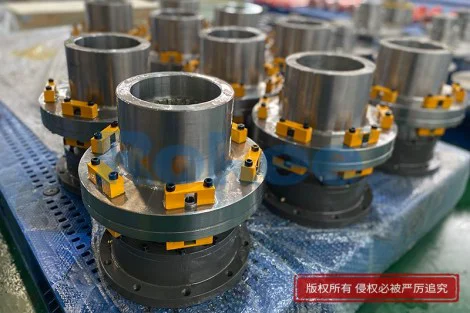
Universal Coupling Joint
Rokee is a manufacturer of universal coupling joint from china, we can provide non-standard custom universal coupling joint based on parameters or drawings supplied by customers, with export support available.
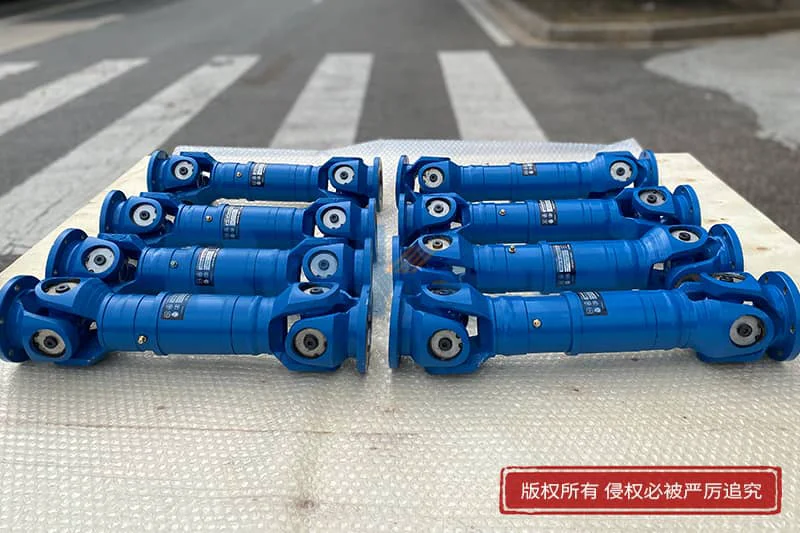
As an indispensable and versatile mechanical transmission component, the universal coupling joint serves as a core connecting device in modern mechanical systems, dedicated to transmitting torque and rotational motion between two shafts that are not strictly collinear. In complex mechanical operation scenarios, shaft misalignment caused by installation deviations, equipment vibration, structural deformation, and dynamic displacement is an inevitable technical problem, and the universal coupling joint is precisely designed to solve this industry pain point. Unlike rigid coupling components that require high coaxiality of connected shafts and flexible couplings limited to small displacement compensation, this special transmission structure can maintain stable and continuous power output under the condition of angular deviation, spatial offset and dynamic displacement of the connected shafts, making it widely adaptable to various mechanical equipment with complex motion trajectories and harsh operating conditions. Its unique spatial motion characteristics and flexible compensation performance lay a solid foundation for the stable operation of countless mechanical transmission systems, and it has become a key basic component supporting the normal operation of transmission machinery in multiple industrial fields.


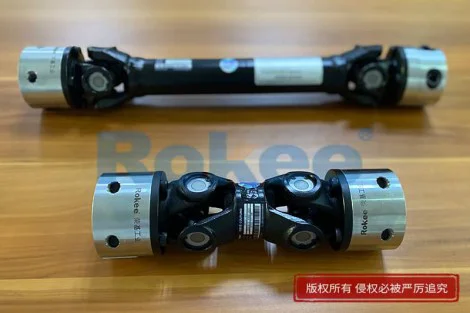
The basic structural composition of a universal coupling joint is sophisticated and practical, with a classic and mature mechanical layout that has been continuously optimized and inherited in long-term engineering applications. The core structure is composed of two fork-shaped yoke components and a central cross shaft connector, forming a complete spatial linkage transmission unit. The two yokes are respectively fixed to the end parts of the driving shaft and the driven shaft, and the four shaft heads of the cross shaft are flexibly matched with the bearing structures inside the two yokes, realizing flexible rotational connection in multiple spatial directions. This structural design abandons the fixed-axis connection mode of traditional rigid transmission parts, and creates a movable spatial hinge structure. In order to reduce friction loss and wear during high-speed operation, precision bearing components are installed at the matching positions between the cross shaft and the yokes. These bearings can convert sliding friction into rolling friction, effectively reducing operating resistance and improving transmission fluency. Some optimized structural models are also equipped with telescopic spline structures, which can effectively compensate for axial displacement generated during equipment operation while realizing angular deviation compensation, further expanding the adaptive range of the coupling.
The working principle of the universal joint coupling is derived from the spatial linkage mechanism theory and the law of rotary motion transmission, realizing efficient conversion and stable transmission of mechanical energy through coordinated spatial motion. When the driving shaft rotates and outputs torque power, the fixed driving yoke rotates synchronously with the shaft body, and drives the cross shaft to generate composite motion of rotation and spatial swing. Benefiting from the flexible hinge connection of the cross shaft, the cross structure can adaptively adjust its spatial angle according to the deviation state between the driving shaft and the driven shaft, and continuously transmit torque to the driven yoke, thereby driving the driven shaft to rotate synchronously. In this whole process, the coupling does not rely on any auxiliary power or complex control system, but purely relies on mechanical structural motion to complete power transmission. Even when the two connected shafts produce a certain angle deviation or relative spatial displacement during operation, the cross shaft can always maintain effective meshing and transmission, ensuring that the torque output is continuous and uninterrupted. This passive adaptive transmission characteristic enables the equipment to maintain stable working performance in dynamic working environments where shaft alignment states change in real time.
One of the most prominent performance advantages of universal joints is their excellent angular compensation capability, which is far superior to most traditional coupling products. Conventional coupling components can only adapt to extremely small coaxial errors, and slight angular deviation will lead to increased transmission resistance, severe component wear, and even mechanical jamming and transmission failure. In contrast, the universal coupling joint can stably work under large-angle shaft deviation conditions, and the allowable angular deviation range can meet the needs of most complex mechanical transmission scenarios through structural optimization. This powerful compensation ability makes it perfectly suitable for mechanical structures with variable shaft angles during operation, avoiding transmission failure caused by dynamic changes of equipment operating posture. In addition to angular compensation, the optimized universal coupling structure can also adapt to a certain degree of radial and axial comprehensive displacement, realizing multi-dimensional spatial error compensation, which greatly reduces the installation accuracy requirements of mechanical equipment and lowers the assembly and debugging difficulty of the transmission system.
In terms of transmission efficiency and load-bearing performance, universal shaft coupling also show outstanding comprehensive mechanical properties. The integrated transmission structure based on cross shaft and yoke meshing has high structural rigidity and load-bearing capacity, which can stably transmit large torque and is suitable for heavy-load mechanical transmission scenarios. The precision matching design of internal bearings and moving parts minimizes mechanical friction loss during operation, so the overall transmission efficiency remains at a high level, and the power loss in the torque transmission process is extremely low. Compared with flexible couplings that are easy to deform under heavy load and rigid couplings that are poor in fault tolerance, universal coupling joints balance load-bearing stability and displacement flexibility, realizing high-efficiency and high-reliability power transmission. Moreover, the overall structure of the coupling is compact and reasonable, occupying a small installation space, which can be perfectly adapted to mechanical equipment with compact structural layout and limited internal space, providing convenient and efficient transmission solutions for miniaturized and integrated mechanical systems.
Despite its numerous performance advantages, the universal shaft joint also has inherent structural characteristics and application limitations that need to be reasonably controlled in actual use. The most typical mechanical characteristic is the periodic fluctuation of rotational speed in the single-unit universal coupling transmission process. When there is a certain angle deviation between the driving shaft and the driven shaft, the instantaneous rotational speed of the driven shaft will produce regular periodic changes with the rotation cycle, resulting in slight transmission speed fluctuation. This speed fluctuation will produce alternating mechanical load and vibration during long-term operation, which may cause fatigue wear of internal components and generate certain operating noise. In addition, the internal moving parts of the coupling are in frequent friction and meshing motion during operation, so the dependence on lubrication conditions is high. Long-term operation without effective lubrication will lead to severe wear of bearings and cross shaft structures, reduce transmission accuracy and service life, and even cause structural failure in severe cases. It is also worth noting that the basic universal coupling structure has limited compensation ability for pure axial displacement, and auxiliary telescopic structures are required to meet the working conditions of large axial displacement.
To make up for the performance defects of single universal coupling joints in transmission stability, the combined installation mode of double universal coupling joints is widely adopted in engineering applications. By connecting two single universal coupling units with an intermediate shaft, the periodic speed fluctuation generated by the front coupling can be completely offset by the reverse speed change of the rear coupling. This matching installation mode can realize constant-speed and stable torque transmission between misaligned shafts, completely eliminate the vibration and impact caused by speed fluctuation, and greatly improve the transmission stability and operating smoothness of the system. In practical application, as long as the installation angle of the two couplings is kept consistent and the structural posture is matched symmetrically, the optimal constant-speed transmission effect can be achieved. This simple and efficient matching method makes the double universal coupling combination the mainstream application form in high-speed and high-stability mechanical transmission scenarios, effectively expanding the application scope and working performance of universal coupling products.
The application fields of universal coupling joints cover almost all mechanical industries involving rotary power transmission, showing extremely high engineering versatility. In vehicle transmission systems, they are used as key connecting components of power transmission structures, adapting to the angle changes and displacement deviations generated by the chassis suspension during driving, ensuring stable power transmission from the power source to the walking mechanism in complex road conditions and dynamic driving posture changes. In engineering machinery and heavy industrial equipment, universal coupling joints bear heavy-load torque transmission tasks, adapting to the severe working conditions of frequent vibration, large structural displacement and complex operating angles of engineering equipment, providing reliable power guarantee for the normal operation of mining machinery, construction machinery and conveying equipment. In precision processing machinery and automated production equipment, optimized high-precision universal coupling products are used to solve the transmission error problem caused by equipment installation errors and micro-deformation, ensuring the high-precision operation of transmission systems and meeting the processing and operation accuracy requirements of precision equipment.
In addition to industrial and mechanical equipment, universal coupling joints also play an important role in agricultural machinery, special transportation equipment and intelligent mechanical devices. Agricultural machinery often operates in complex and variable field environments, with harsh working conditions and large equipment vibration and deformation. The strong adaptability and fault tolerance of universal coupling joints can well cope with the dynamic displacement and angle deviation of agricultural machinery transmission shafts, ensuring the continuous operation of agricultural production equipment. In some special mechanical devices with variable motion trajectories and multi-angle rotation operations, the flexible spatial transmission capability of universal coupling joints can meet the special motion transmission requirements that cannot be realized by traditional fixed-axis transmission structures, providing core technical support for the structural design and functional realization of special equipment.
The reasonable selection and standardized application of universal coupling joints are crucial to the operating effect and service life of mechanical systems. In the model selection stage, it is necessary to comprehensively evaluate multiple key factors such as the torque demand of the transmission system, the operating speed range, the maximum allowable shaft deviation angle, the displacement compensation demand and the working environment. For heavy-load and low-speed working conditions, priority should be given to coupling structures with high structural rigidity and strong load-bearing capacity to ensure stable load transmission and avoid structural deformation and damage under long-term heavy load. For high-speed operating scenarios, it is necessary to select products with high dynamic balance accuracy and optimized speed fluctuation performance, and prefer double coupling combined structures to eliminate transmission vibration and ensure high-speed smooth operation. For working environments with large dust, high humidity or severe vibration, it is necessary to select coupling products with good sealing performance and strong environmental adaptability to reduce the impact of external environmental factors on internal moving parts.
Daily maintenance and scientific maintenance are key links to maintain the long-term stable performance of universal coupling joints. Lubrication maintenance is the core of daily maintenance work. Good lubrication conditions can effectively reduce the friction and wear of internal bearings and cross shaft moving parts, reduce operating noise and vibration, and improve transmission efficiency. It is necessary to select suitable lubricating media according to different working conditions, and regularly supplement and replace lubricants to ensure that all friction pairs are fully lubricated. At the same time, the sealing performance of the coupling should be checked regularly to prevent external dust, impurities and moisture from entering the internal structure, avoiding abrasion, corrosion and lubricant deterioration caused by impurity invasion. In addition, the operating state of the coupling should be inspected regularly during equipment operation, focusing on checking for abnormal vibration, noise and temperature rise, and timely troubleshooting of loose connection, excessive wear and structural deviation problems to avoid minor faults evolving into major mechanical failures.
With the continuous progress of mechanical manufacturing technology and the continuous upgrading of industrial equipment, the performance optimization and structural innovation of universal coupling joints are also advancing steadily. Modern manufacturing processes and high-performance new materials are applied to the production of couplings, effectively improving the structural strength, wear resistance and fatigue resistance of products, enabling universal coupling joints to adapt to higher load, higher speed and more harsh working environments. The optimized structural design further reduces the transmission speed fluctuation and mechanical vibration of single couplings, improves the overall transmission stability, and expands the application scope in precision mechanical equipment. At the same time, the integrated and lightweight structural design makes the coupling more compact in structure and lighter in weight while maintaining high performance, which is more in line with the development trend of modern mechanical equipment towards miniaturization, integration and energy conservation.
As a classic and efficient mechanical transmission component, the universal coupling joint has irreplaceable application value in the field of mechanical transmission by virtue of its unique spatial compensation capability, efficient transmission performance and wide environmental adaptability. It perfectly solves the technical problem of stable power transmission between non-collinear and dynamically offset shafts, makes up for the performance defects of traditional couplings in displacement compensation and fault tolerance, and provides a reliable and efficient basic guarantee for the operation of various mechanical systems. In the future, with the continuous development of intelligent manufacturing and high-end mechanical equipment, universal coupling joints will continue to realize technological innovation and performance upgrading, adapt to more complex and high-precision mechanical transmission scenarios, and play a more important role in promoting the development of modern mechanical industry.
« Universal Coupling Joint » Update Date: 2026/7/17
Contact
If you require custom machined couplings, please contact Rokee via the contact information below for inquiries.
Email: https://www.gshmdpq.com
 WeChat