Elastic Pin Couplings
Rokee is a manufacturer of elastic pin couplings from china, we can provide non-standard custom elastic pin couplings based on parameters or drawings supplied by customers, with export support available.
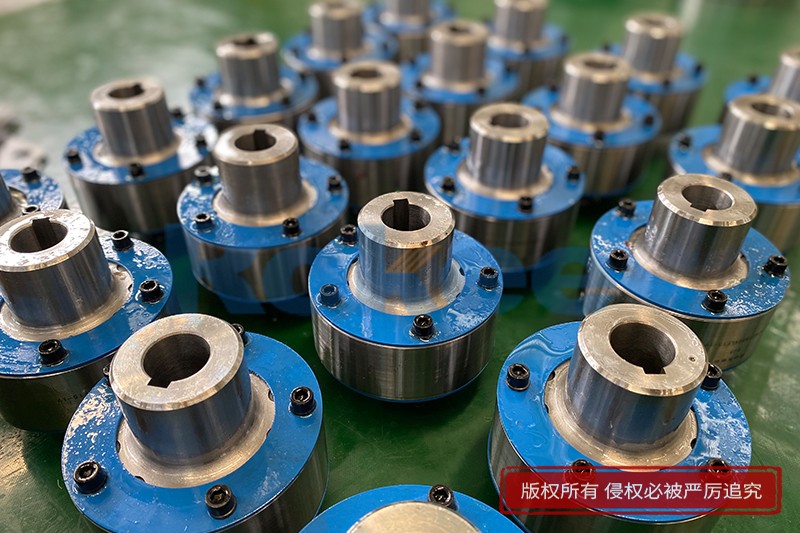
In the field of mechanical transmission systems, the stable connection between rotating shafts is the fundamental guarantee for the continuous and efficient operation of equipment. As a crucial flexible transmission component, elastic pin coupling has become one of the most widely used coupling types in modern industrial machinery by virtue of its unique structural design, excellent vibration damping performance and reliable misalignment compensation capability. It serves as a flexible bridge between driving and driven shafts, effectively solving a series of operational problems caused by installation errors, mechanical deformation, load fluctuations and temperature changes, and plays an irreplaceable role in protecting transmission components, reducing equipment operating noise and extending the service life of mechanical systems.
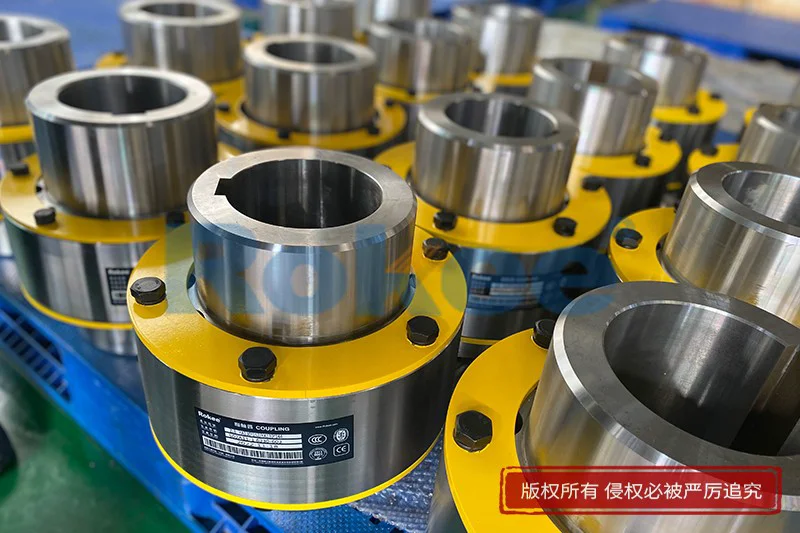


The basic structural composition of elastic pin coupling follows a simple and practical design logic, abandoning the complex mechanical transmission structure of traditional rigid couplings. The overall structure mainly consists of two symmetrical flange half-couplings and multiple groups of elastic pin assemblies uniformly distributed along the flange circumference. The pin bodies are usually made of high-strength metal materials with good rigidity and fatigue resistance, while the outer layer of the pins is wrapped with elastic sleeves made of high-elasticity polymer materials such as polyurethane and rubber. This composite structure perfectly combines the high torque transmission capacity of metal materials and the flexible buffering performance of elastic materials, realizing organic integration of rigid power transmission and flexible vibration absorption. Different from the integral rigid connection method, the elastic pin coupling relies on the contact extrusion and micro-deformation of the elastic sleeve between the pin shaft and the flange pin hole to complete power transmission, which reserves a reasonable flexible buffer space for the operation of the transmission system.
The working principle of elastic pin coupling runs through the entire power transmission process of mechanical equipment, covering torque transmission, misalignment compensation and vibration damping buffering. When the equipment starts and runs stably, the driving shaft drives the active half-coupling to rotate synchronously, and the flange pins drive the elastic sleeve to generate mild extrusion force, thereby transmitting torque to the passive half-coupling and finally driving the driven shaft to operate synchronously. In this process, the elastic sleeve will produce tiny elastic deformation according to the actual operating state of the equipment. This subtle deformation is the core of its flexible performance. On the one hand, it can effectively absorb the instantaneous impact load generated during equipment start-up, sudden stop and variable load operation, avoid rigid impact between shaft parts, and reduce the shear force and torsional stress borne by the shaft body, bearings and gears. On the other hand, the elastic deformation of the sleeve can automatically compensate for three common shaft misalignment states in actual mechanical operation, including axial displacement caused by thermal expansion and cold contraction of equipment, radial offset caused by installation deviation and mechanical vibration, and angular deflection caused by equipment frame deformation. This real-time adaptive compensation ability ensures that the transmission system can always maintain a stable operating state even under non-ideal installation and operating conditions.
Compared with rigid couplings and other types of flexible couplings, elastic pin coupling has prominent comprehensive performance advantages, which lay a solid foundation for its wide industrial application. First of all, it has excellent vibration damping and noise reduction effects. In high-speed rotating machinery, mechanical vibration and operating noise are mainly derived from rigid friction and impact between transmission parts. The elastic buffer layer of the elastic pin coupling can isolate most of the vibration transmission between the driving and driven shafts, weaken the resonance phenomenon of the mechanical system, and significantly reduce the operating noise of the equipment. This advantage is particularly prominent in fan, blower and pump equipment, which can effectively avoid vibration damage to the equipment shell and auxiliary parts and improve the working environment of the production site.
Secondly, the elastic pin coupling has strong impact resistance and fatigue resistance. Industrial mechanical equipment often faces complex working conditions such as frequent start-stop, sudden load change and intermittent operation, which will generate instantaneous impact torque inside the transmission system. The elastic sleeve can convert rigid impact force into elastic deformation energy for absorption and release, avoid local stress concentration of mechanical parts, and effectively protect core components such as motors, reducers and bearings. In long-term cyclic operation, the selected high-quality elastic materials have stable fatigue resistance, which can maintain good elastic performance after millions of deformation cycles and avoid structural failure caused by elastic fatigue.
In addition, the elastic pin coupling has outstanding economic and practical advantages in application and maintenance. Its overall structure is simple and compact, with small overall size and light weight, which can effectively save the installation space of mechanical equipment and is suitable for various compact structural design scenarios. The processing and manufacturing difficulty of components is low, and the assembly and disassembly process is convenient and fast. The most prominent maintenance advantage is that the wearing parts are only the elastic sleeves, and the replacement operation can be completed without disassembling the overall shafting structure or moving the main equipment, which greatly reduces the equipment maintenance time and labor cost. Meanwhile, the coupling does not need regular lubrication and oil maintenance during operation, which avoids the failure risk caused by lubricant deterioration and leakage, and further reduces the daily operating cost of the equipment.
The reliable comprehensive performance makes elastic pin coupling applicable to a wide range of industrial scenarios, covering light, medium and heavy load mechanical transmission systems in various industries. In fluid transmission equipment such as water pumps and oil pumps, the coupling can compensate for shaft misalignment caused by mounting errors and long-term operation vibration of pumps and motors, ensure the stable operation of fluid transmission, avoid equipment vibration failure and liquid transmission instability caused by shaft offset, and extend the service life of pump body seals and bearings. In ventilation and heat dissipation equipment such as industrial fans and blowers, high-speed rotation is accompanied by continuous vibration and dynamic load changes. The vibration damping performance of the elastic pin coupling can effectively suppress the vibration amplitude of the fan shaft system, reduce the vibration transmitted to the equipment support and shell, reduce equipment operation noise, and ensure the stable and efficient operation of ventilation and air supply systems.
In general mechanical transmission equipment such as reducers, conveyors and packaging machinery, elastic pin couplings adapt to frequent start-stop and variable load operation characteristics. They can buffer the starting impact of the motor, stabilize the transmission torque, avoid material conveying jitter and mechanical operation jitter caused by unstable transmission, and improve the operating accuracy and working efficiency of the equipment. In medium and heavy industrial equipment such as metallurgical machinery, mining machinery and crane auxiliary transmission systems, the high torque transmission capacity and impact resistance of elastic pin couplings can adapt to harsh working conditions such as heavy load, impact load and dust pollution, ensure the continuous and stable operation of mechanical equipment under complex working conditions, and reduce the failure rate of transmission systems.
In practical industrial application, the service performance and service life of elastic pin coupling are affected by multiple factors, among which material selection and working condition adaptation are the most critical. The elastic sleeve is the core vulnerable part and functional component of the coupling, and different elastic materials are suitable for different working environments. Polyurethane elastic sleeves have high wear resistance, high tensile strength and good oil resistance, and are suitable for conventional industrial working conditions with medium load and normal temperature. Natural rubber elastic sleeves have better elasticity and vibration damping performance, and are more suitable for light-load and low-noise operation scenarios. For high-temperature, low-temperature or corrosive working environments, special modified elastic materials need to be selected to ensure the stability of elastic performance and structural integrity in extreme environments. The metal pin shaft and flange body need to adopt high-strength alloy steel after heat treatment to ensure high rigidity, wear resistance and fatigue resistance, avoiding bending deformation and wear failure of pin shafts under long-term load operation.
Installation and daily use management also directly affect the operating effect of elastic pin coupling. Standardized installation operation can reduce the initial misalignment of the shaft system to the minimum, reduce the long-term eccentric load and abnormal wear of the coupling, and lay a foundation for stable operation. During the installation process, the coaxiality of the driving and driven shafts needs to be strictly calibrated to avoid excessive axial, radial and angular deviation exceeding the compensation range of the coupling. At the same time, the assembly tightness of the pin shaft and elastic sleeve should be kept moderate. Excessive tightness will lose the flexible buffer effect, and excessive looseness will cause impact and wear during operation. In daily operation, regular visual inspection and running state monitoring are required. The aging, cracking and wear of the elastic sleeve should be checked regularly, and the vulnerable parts should be replaced in time when abnormal conditions are found to prevent the failure of vibration damping and compensation function caused by excessive wear of the elastic sleeve, and avoid mechanical failure caused by transmission instability.
With the continuous upgrading of modern industrial machinery towards high speed, high precision and high intelligence, the performance requirements for supporting transmission components are also constantly improving. Elastic pin coupling, as a mature and efficient flexible transmission component, is also constantly optimized and upgraded in structural design and material technology. The optimized structural design further improves the misalignment compensation range and torque transmission efficiency, and reduces the dynamic load of the transmission system. The application of new composite elastic materials further enhances the temperature resistance, corrosion resistance and fatigue resistance of the coupling, expanding its adaptability in extreme industrial environments. At the same time, with the development of precision manufacturing technology, the dimensional accuracy and assembly consistency of the coupling are continuously improved, which can better meet the transmission accuracy requirements of high-precision mechanical equipment.
In the entire mechanical transmission system, the elastic pin coupling is a small but key component. It does not directly determine the operating power of the equipment, but it undertakes the important tasks of stabilizing transmission state, buffering impact load, isolating vibration and protecting mechanical components. Its excellent flexible performance and reliable stability make it play an important role in reducing equipment failure rate, extending equipment service life, reducing production and maintenance costs, and improving the overall operating efficiency of industrial production lines. In the future industrial development process, with the continuous progress of mechanical manufacturing technology and the diversification of industrial working conditions, elastic pin coupling will continue to exert its unique application advantages and be more widely used in various emerging mechanical equipment and industrial fields.
« Elastic Pin Couplings » Update Date: 2026/7/15
Contact
If you require custom machined couplings, please contact Rokee via the contact information below for inquiries.
Email: https://www.gshmdpq.com
 WeChat