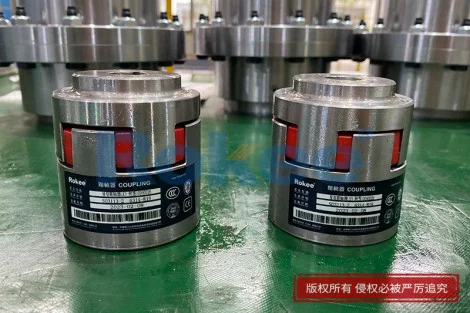
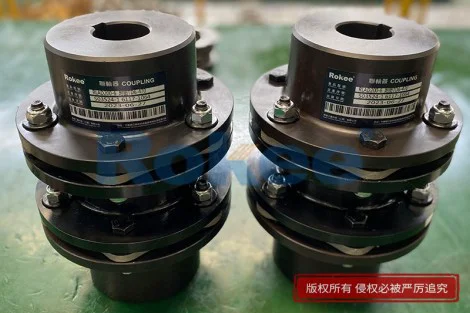
Universal Joint Shaft Coupler
Rokee is a manufacturer of universal joint shaft coupler from china, we can provide non-standard custom universal joint shaft coupler based on parameters or drawings supplied by customers, with export support available.

As a fundamental and versatile mechanical transmission component, the universal joint shaft coupler serves as a critical connecting unit in modern mechanical systems, dedicated to transmitting rotational torque and continuous motion between two misaligned shafts. Unlike rigid coupling devices that rely on precise coaxial alignment of connected shafts for stable operation, this specialized mechanical assembly is uniquely designed to adapt to angular deviation, parallel offset, and composite shaft misalignment, solving the core technical problem of power transmission in complex and dynamic operating environments. Its flexible structural characteristics and reliable transmission performance make it an indispensable part of industrial machinery, transportation equipment, and automated production systems, supporting the stable operation of various mechanical equipment under variable working conditions.


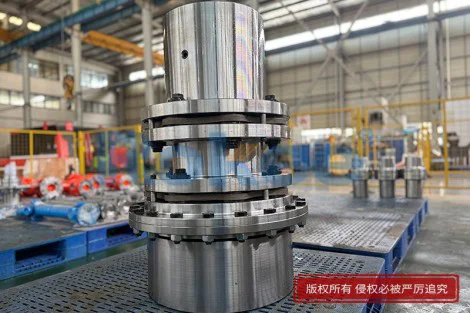
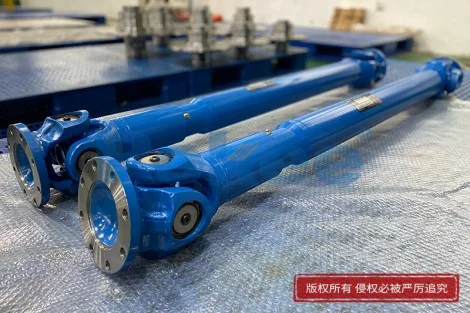
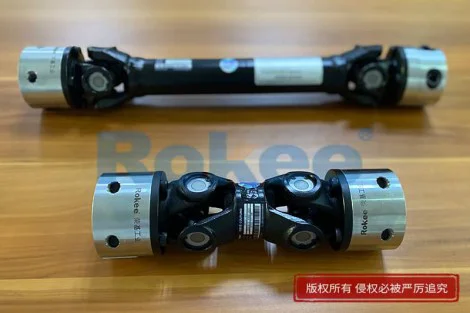
The basic structure of a universal joint shaft coupler follows the principles of spatial linkage mechanisms, with a mature and optimized component configuration that balances structural compactness and mechanical flexibility. A standard universal joint shaft coupler mainly consists of two symmetric yoke components and a central cross-shaped spider shaft, which forms the core articulated structure for power transmission. The two yokes are respectively fixed to the input shaft and output shaft of the transmission system, while the four end shafts of the central cross spider are embedded in the bearing chambers of the yokes through precision rolling bearings or sliding bearings. This structural design enables free relative rotation and swing between the two yokes around multiple axes, laying a structural foundation for adaptive compensation of shaft misalignment. Some extended models are also equipped with spline telescopic structures, which can effectively compensate for axial displacement between shafts caused by thermal expansion and contraction, mechanical vibration, or equipment operation deviation, further improving the environmental adaptability of the coupling.
The working principle of the universal shaft coupler is derived from spatial mechanical kinematics and geometric transmission laws, realizing efficient conversion and stable transmission of mechanical motion. During equipment operation, the fixed-axis rotational motion of the input shaft drives the connected driving yoke to rotate synchronously. Through the flexible hinge connection between the yoke and the central cross spider, the single fixed-axis rotation is converted into a composite motion of spatial rotation and swing of the cross component. This composite motion is then stably converted into fixed-axis rotational motion by the driven yoke connected to the output shaft, thereby completing the continuous transmission of torque and rotational power between the two misaligned shafts. What distinguishes it from ordinary couplings is that this transmission mode does not depend on strict coaxiality. Even when there is a significant angular included angle between the input and output shafts, the system can maintain uninterrupted power transmission, with the adaptable angle range of mainstream structural models covering 5 degrees to 45 degrees, which fully meets the misalignment compensation needs of most mechanical scenarios.
In actual transmission processes, the single universal joint structure has inherent motion characteristics of periodic velocity fluctuation, which will cause slight instantaneous speed changes of the output shaft during continuous rotation when the shaft angle exists. This minor transmission fluctuation will not affect the operation of ordinary low-speed and light-load equipment, but for high-speed, high-precision, and heavy-duty mechanical systems, it may lead to vibration, noise, and accelerated component wear. To optimize transmission stability, most industrial-grade universal joint shaft couplers adopt a double-joint combined structure. By connecting two single universal joints through an intermediate shaft and reasonably matching the installation angles, the velocity fluctuation generated by the first joint can be completely offset by the second joint, realizing approximate constant-velocity power transmission. This optimized structural design greatly improves the transmission accuracy and operational stability of the coupling, expanding its application scope to high-precision mechanical transmission scenarios.
The unique performance advantages of universal coupling make them widely superior to rigid couplings and elastic couplings in complex working conditions. First of all, they have outstanding multi-dimensional misalignment compensation capability, which can simultaneously adapt to angular misalignment, parallel offset, and axial displacement of shafts. This capability is particularly important for equipment that is difficult to achieve permanent precise alignment, such as mechanical systems affected by thermal deformation during long-term operation, mobile mechanical structures with dynamic position changes, and large-scale equipment with assembly errors. Secondly, the coupling has a compact and lightweight structure with high transmission efficiency. The simplified hinge structure reduces mechanical energy loss during power transmission, and the efficient transmission state can be maintained even under large-angle deviation working conditions, ensuring the energy-saving operation of mechanical equipment.
In addition to transmission stability and compensation capability, universal joint shaft couplers also have excellent mechanical durability and impact resistance. Most products are made of high-strength alloy steel through integral forging and precision machining, with high structural rigidity, wear resistance, and fatigue resistance. The bearing parts in the hinge structure are optimized with lubrication and wear-resistant designs, which can effectively reduce friction loss and component wear during long-term high-speed operation. Meanwhile, the flexible hinge structure can absorb part of the vibration and impact load generated during equipment startup, shutdown, and load mutation, buffering the impact on the transmission system, protecting bearings, gears, and other precision components in the equipment, and extending the overall service life of the mechanical system. Compared with elastic couplings that rely on elastic deformation for compensation, universal joint shaft couplers have stronger load-bearing capacity and better stability under heavy-load and high-temperature working conditions, avoiding aging and failure problems of elastic materials.
The application scenarios of universal joint shaft couplers cover almost all fields of mechanical power transmission, showing strong industrial versatility. In the field of transportation machinery, they are core transmission components of vehicle drive systems. Due to the jitter and position deviation of the drive shaft caused by vehicle suspension vibration and road condition changes during driving, the universal joint shaft coupler can adapt to real-time angular and displacement changes of the shaft, ensuring stable power transmission from the engine to the wheels. In engineering machinery such as excavators, loaders, and cranes, the frequent movement and load changes of working arms will cause continuous misalignment of the transmission shaft, and the high-strength universal joint shaft coupler can bear heavy torque and complex dynamic loads to ensure the reliable operation of hydraulic transmission and power output systems.
In industrial manufacturing and automated production equipment, universal shaft coupling is widely used in conveyor systems, transmission machinery, and precision assembly equipment. In long-distance material conveying equipment, the deformation and displacement of the long shaft caused by equipment operation and environmental temperature changes are common, and the coupling’s multi-dimensional compensation capability can effectively eliminate transmission jitter and power loss caused by shaft misalignment. In automated production lines and precision processing machinery, the double-joint constant-velocity transmission structure ensures stable torque output and accurate motion transmission, avoiding processing errors and equipment operation failures caused by transmission velocity fluctuation. In addition, they are also commonly used in metallurgical equipment, mining machinery, agricultural machinery, and aerospace auxiliary transmission systems, adapting to harsh working environments such as high dust, high temperature, and heavy load.
Reasonable type selection and standardized installation are key prerequisites to ensure the performance and service life of universal joint shaft couplers. In the type selection process, the first core factor is to match the torque level. The rated torque of the coupling must be higher than the maximum instantaneous torque of the equipment operation, and a certain safety margin should be reserved according to the working load characteristics, so as to avoid structural deformation and fatigue damage caused by long-term overload operation. Secondly, it is necessary to confirm the maximum misalignment angle and displacement compensation range required by the equipment. Different structural specifications of universal joint shaft couplers have different adaptive angle ranges and axial compensation distances, and the matching model must be selected according to the actual operating displacement and angle deviation of the transmission shaft.
Working speed and environmental conditions are also important selection indicators. For high-speed rotating equipment, high-precision balanced universal joint shaft couplers should be selected to reduce vibration and noise generated by high-speed operation. For working environments with high temperature, high humidity, or corrosive media, products with surface anti-corrosion treatment and high-temperature resistant bearing accessories need to be preferred to adapt to harsh environmental conditions. In terms of installation, the coaxiality and installation angle of the input and output shafts must be strictly controlled within the allowable range of the product design. Excessive single-side angle deviation will increase the operating load of the hinge structure, accelerate component wear, and even cause transmission failure. For double-joint couplings, the installation angles of the two universal joints need to be symmetrically matched to ensure the constant-velocity transmission effect and avoid periodic vibration of the transmission system.
Scientific daily maintenance and regular inspection can effectively extend the service life of universal joint shaft couplers and maintain stable transmission performance. The core of maintenance work is the lubrication management of the hinge bearing parts. The cross shaft and bearing friction pair need to be filled with high-quality lubricating grease regularly to reduce friction and wear. Long-term operation will cause lubricant aging and loss, leading to increased friction, abnormal noise, and accelerated component wear. Therefore, regular lubricant replacement and refilling must be carried out according to the equipment operating cycle. At the same time, the sealing performance of the coupling should be checked regularly to prevent dust, impurities, and moisture from entering the bearing chamber, which may cause bearing abrasion, rust, and transmission jamming.
In daily inspection, attention should be paid to observing the operating state of the coupling, including whether there is abnormal vibration, irregular noise, and local temperature overheating during equipment operation. These phenomena are important feedback of abnormal operating conditions such as excessive wear, loose fastening, and excessive misalignment angle. Regularly check the fastening state of the connecting bolts and the fit clearance of the hinge structure, timely fasten loose parts, and replace severely worn bearings and cross shaft components. For equipment that has been shut down for a long time, rotate the transmission shaft regularly to avoid long-term fixed stress deformation of the coupling structure and lubricant precipitation failure. Standardized maintenance can not only ensure the efficient and stable operation of the universal joint shaft coupler, but also avoid equipment failure and production loss caused by component damage.
With the continuous upgrading of modern mechanical equipment towards high speed, high precision, and high load, the technical iteration of universal joint shaft couplers is also advancing continuously. Traditional products are gradually optimized in terms of material performance and structural design. High-strength lightweight alloy materials and new surface strengthening processes are applied to product manufacturing, which further improves the load-bearing capacity and fatigue resistance of the coupling while reducing its own weight. The optimized bearing structure and lubrication system adapt to higher-speed and longer-cycle operating requirements, effectively reducing maintenance frequency and improving equipment operation efficiency. At the same time, personalized customized design has become a development trend. For special working conditions such as ultra-large angle transmission, ultra-heavy load operation, and special environmental adaptation, targeted structural optimization and size matching can be carried out to meet the differentiated transmission needs of various professional mechanical equipment.
As a mature and continuously developing mechanical transmission component, the universal joint shaft coupler has irreplaceable application value in the mechanical industry. Its flexible misalignment compensation capability, stable transmission performance, and strong environmental adaptability solve many difficult problems in power transmission of complex mechanical systems. From traditional industrial machinery to modern intelligent equipment, from civilian mechanical devices to professional engineering equipment, universal joint shaft couplers always play a key basic supporting role. In the future, with the progress of material technology, precision manufacturing technology, and intelligent detection technology, the comprehensive performance of universal joint shaft couplers will be further improved, and their application fields will be more extensive, providing more reliable and efficient basic guarantees for the upgrading and development of modern mechanical transmission systems.
« Universal Joint Shaft Coupler » Update Date: 2026/7/16
Contact
If you require custom machined couplings, please contact Rokee via the contact information below for inquiries.
Email: https://www.gshmdpq.com
 WeChat