Flex Couplings
Rokee is a manufacturer of flex couplings from china, we can provide non-standard custom flex couplings based on parameters or drawings supplied by customers, with export support available.
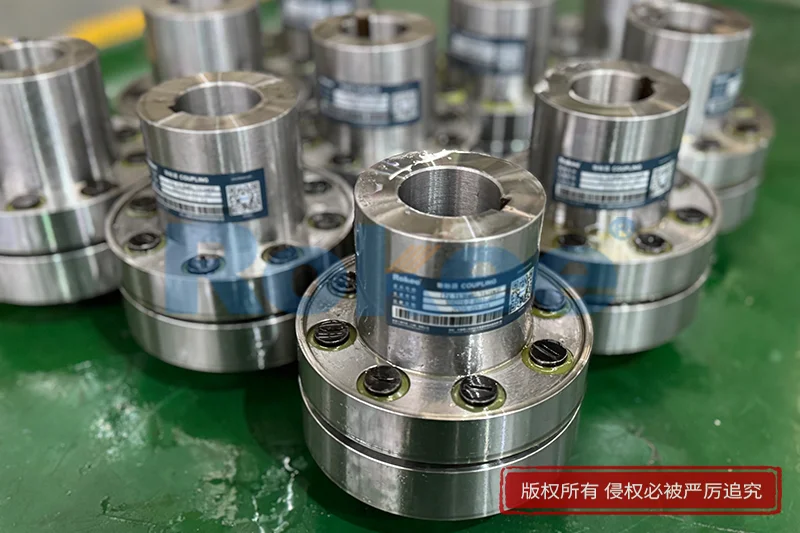
In the complex and interconnected operating system of modern mechanical transmission, the stability, durability and efficiency of power transmission directly determine the overall performance of mechanical equipment. Most rotating mechanical systems rely on shaft connection structures to transmit torque and rotational motion, and the connection mode between driving shafts and driven shafts has become a key factor affecting equipment operating status and service life. In practical industrial operation, absolute coaxial alignment of two connected shafts is almost impossible to achieve. Installation deviations, structural deformation caused by long-term operation, thermal expansion and contraction of materials under variable temperature working conditions, and minor mechanical vibration displacement will all lead to different degrees of misalignment between shafts. Rigid connection structures, which require precise alignment and zero displacement tolerance, often suffer from excessive bearing pressure, structural wear, vibration amplification and even sudden equipment failure when facing unavoidable shaft misalignment. As a flexible and adaptive transmission component, flex coupling effectively solves the inherent defects of rigid connection structures, becoming an indispensable core component in modern mechanical power transmission systems.
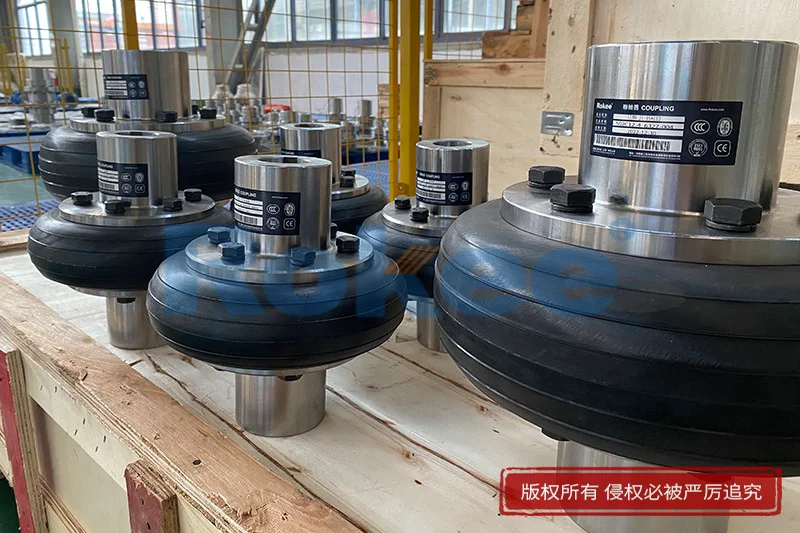


Flex coupling is a special mechanical component designed for shaft connection and torque transmission. Different from rigid couplings that pursue rigid and fixed connection effects, its core design concept is to introduce controllable structural flexibility and elastic deformation characteristics on the premise of ensuring stable torque transmission. It can not only efficiently and continuously transmit rotational torque and power between driving and driven shafts, but also actively adapt to various minor displacements and deviations generated during equipment operation. This unique functional characteristic makes it break through the limitation of harsh alignment requirements of traditional connection structures, and perfectly adapt to the complex and variable working conditions in industrial scenarios. The basic working logic of flex coupling is based on the elastic deformation of internal flexible components or the reserved flexible clearance of mechanical structures. When the equipment operates, the torque output by the power source acts on the flexible coupling, and the internal flexible structure produces mild, regular and reversible deformation. This deformation will not interfere with the basic efficiency and stability of power transmission, but can offset the adverse effects caused by shaft misalignment, vibration and impact load, so as to realize stable power transmission and effective mechanical protection.
The misalignment compensation capability of flex coupling covers three mainstream displacement forms in mechanical transmission, which are parallel offset, angular misalignment and axial displacement, covering almost all minor shaft deviation problems in industrial operation. In actual mechanical assembly, manual installation errors and equipment assembly tolerances will inevitably cause parallel offset between two connected shafts, that is, the central axes of the two shafts are parallel but not coincident. Long-term operation under this state will cause uneven stress on rigid connection structures, resulting in accelerated wear of shaft sleeves and bearings. Flex coupling can adapt to a certain range of parallel offset through the flexible deformation of internal components, evenly distribute the transmission stress, and avoid local concentrated load. Angular misalignment refers to the slight inclination angle between the central axes of the two shafts, which is easily caused by equipment foundation settlement, structural fatigue deformation and long-term alternating load impact. Most flex couplings can stably adapt to angular deviation within a reasonable range, eliminate the additional torque generated by angular dislocation, and ensure synchronous and stable rotation of the two shafts. Axial displacement is mainly derived from the thermal expansion and contraction of metal materials during equipment operation. When the equipment starts and stops frequently or operates under variable temperature conditions, the shaft will produce telescopic displacement along the axial direction. The flexible structure of flex coupling can effectively absorb this axial displacement, avoid structural extrusion and stress accumulation, and prevent equipment structural damage caused by thermal deformation.
In addition to the core misalignment compensation function, flex coupling has two key auxiliary advantages of vibration damping and impact buffering, which greatly improves the operational reliability of mechanical systems. Mechanical equipment will inevitably generate periodic vibration during rotating operation, and sudden start, stop, load switching and external impact will produce instantaneous impact load. For rigid transmission systems, vibration and impact will be directly transmitted along the shaft structure, which will not only aggravate the wear of bearings, seals and transmission parts, but also cause resonance of the whole equipment in severe cases, affecting the operating accuracy and service life. The flexible components inside flex coupling have excellent elastic damping performance. When vibration and impact load are generated in the transmission process, the elastic structure can absorb and consume part of the vibration energy and instantaneous impact force through self-deformation, reduce the vibration amplitude of the transmission system, weaken the peak impact load, and realize smooth transition of power transmission. This vibration damping and buffering effect is particularly critical for high-precision mechanical equipment and equipment with frequent start-stop and variable load operation, which can effectively maintain the stability of equipment operating accuracy and extend the service cycle of mechanical components.
The structural diversity of flex coupling enables it to adapt to different working conditions, load types and precision requirements, forming a complete product system covering light-load high-precision transmission and heavy-load high-strength transmission. Although the structural forms are diverse, all flexible coupling designs follow the unified core principle of "stable torque transmission + flexible adaptive compensation". Some flex couplings adopt elastic element structures made of polymer elastomer materials. This type of coupling has simple structure, no need for lubrication, low operating noise and excellent vibration damping effect, and is suitable for light and medium load transmission scenarios with frequent start-stop and complex vibration. The elastomer material can produce uniform elastic deformation, effectively compensate for various minor misalignments, and has good fatigue resistance, which can maintain stable performance after long-term repeated deformation. Another type of flex coupling adopts thin metal disc laminated structure. This structural design greatly improves the torsional stiffness of the coupling, ensuring high-precision synchronous transmission while retaining flexible deformation capability. It can adapt to high-speed, high-precision and heavy-load industrial scenarios, and has outstanding stability in long-term continuous operation. There are also grid-type flexible couplings with special mechanical clearance structures, which rely on the flexible fit between mechanical structures to realize displacement compensation, with strong load-bearing capacity and impact resistance, suitable for harsh working conditions with large load fluctuation and strong mechanical impact.
The wide application value of flex coupling is reflected in almost all fields of mechanical power transmission, and it plays an irreplaceable role in optimizing equipment performance and reducing operating costs. In fluid power equipment such as pumps and compressors, the equipment will produce continuous vibration and slight shaft displacement during high-speed operation. The application of flex coupling can effectively isolate vibration, protect the precision sealing structure and bearing components of the equipment, avoid fluid leakage and equipment failure caused by vibration wear, and ensure the continuous and stable operation of fluid transmission systems. In material conveying and processing equipment such as conveyors and mixers, the load often changes dynamically during operation, and frequent start-stop will generate instantaneous impact load. Flex coupling can buffer the impact of variable load, stabilize the power transmission state, avoid structural fatigue damage caused by alternating load, and improve the continuous operation capacity of conveying and processing equipment.
In high-precision mechanical processing and automation equipment, the operating accuracy of the transmission system directly determines the processing quality and operation stability of the equipment. Minor shaft misalignment and vibration will lead to displacement deviation of processing components and reduce product precision. The high-precision flex coupling can realize almost lossless torque transmission while compensating for tiny displacement deviations, suppress transmission vibration, maintain the synchronous accuracy of the transmission system, and provide stable power guarantee for high-precision processing and automated operation. In heavy industrial equipment such as mining machinery and power generation equipment, the equipment bears heavy load and harsh operating environment, with large shaft displacement and strong vibration interference. The high-strength flex coupling can adapt to severe working conditions, resist large impact load and structural displacement, reduce the failure rate of key transmission components, and greatly improve the operational safety and stability of heavy equipment.
From the perspective of mechanical system operation and maintenance, flex coupling also has significant economic and practical advantages compared with rigid connection structures. Rigid couplings have extremely high requirements for installation precision. The alignment calibration process is complicated and time-consuming, and slight installation errors will be amplified in subsequent operation, leading to accelerated component wear and frequent maintenance. Flex coupling reduces the precision requirement of shaft alignment in equipment assembly, simplifies the installation and debugging process, shortens the equipment assembly cycle, and reduces the technical threshold and time cost of installation and maintenance. In the long-term operation stage, the adaptive compensation performance of flex coupling can effectively reduce the wear of bearings, shafts and seals, reduce the frequency of equipment maintenance and part replacement, and greatly reduce the daily operation and maintenance cost of mechanical equipment. In addition, most flex couplings have compact structural design, small occupied space and convenient disassembly and replacement, which can quickly complete maintenance and replacement operations when components fail, reduce equipment downtime loss, and improve the overall operational efficiency of the production system.
In the context of the continuous upgrading of modern industrial manufacturing towards high precision, high efficiency and high stability, the functional value of flex coupling is further highlighted. Traditional mechanical transmission systems often take structural rigidity as the core design goal, ignoring the inevitable displacement, vibration and deformation in actual operation, resulting in low equipment operation stability and short service life. The design concept of flex coupling breaks this traditional limitation, and realizes the organic unity of "rigid power transmission" and "flexible adaptive protection". It not only ensures the high-efficiency output of mechanical power, but also builds a buffer protection mechanism for the transmission system, solving many pain points in the operation of traditional mechanical transmission equipment. With the continuous progress of material technology and structural design technology, the performance of flex coupling is also constantly optimized. New elastic materials further improve the fatigue resistance and vibration damping performance of couplings, and optimized structural design enables couplings to adapt to higher speed, heavier load and more complex working conditions, continuously expanding its application scope in emerging industrial fields such as intelligent equipment, new energy power systems and high-end precision manufacturing.
In practical industrial application, the correct selection and use of flex coupling is the key to give full play to its functional advantages. The selection needs to comprehensively consider the equipment operating speed, load type, working environment, misalignment range and precision requirements. For light-load and low-speed conventional equipment, flexible couplings with elastomer structures can meet the demand, with low cost and good vibration damping effect. For high-speed and high-precision equipment, high-torsional-stiffness flexible couplings with metal structures are required to ensure synchronous transmission accuracy. For equipment with large load fluctuation and harsh working conditions, it is necessary to select high-strength flexible coupling products with strong impact resistance and large displacement compensation range. At the same time, regular inspection and maintenance during operation are also essential. Checking the deformation state of flexible components and the tightness of structural connection regularly can effectively avoid component aging, fatigue failure and loose connection problems, and ensure the long-term stable operation of the coupling and the whole transmission system.
As a basic but core mechanical component in modern transmission systems, flex coupling undertakes the important tasks of power transmission, deviation compensation, vibration damping and equipment protection. It solves the mechanical operation problems caused by unavoidable shaft misalignment, vibration impact and thermal deformation in industrial production, provides a stable and reliable connection guarantee for the operation of various mechanical equipment, and plays a vital role in improving equipment operating efficiency, extending equipment service life and reducing industrial operation costs. With the continuous development of industrial intelligence and high-end manufacturing industry, the requirements for the stability, precision and durability of mechanical transmission systems will continue to improve, and flex coupling, as an adaptive and efficient transmission component, will surely maintain its irreplaceable core position in the field of mechanical transmission, and continuously release greater application value with technological innovation and performance upgrading.
« Flex Couplings » Update Date: 2026/7/15
Contact
If you require custom machined couplings, please contact Rokee via the contact information below for inquiries.
Email: https://www.gshmdpq.com
 WeChat