Teeth Couplings
Rokee is a manufacturer of teeth couplings from china, we can provide non-standard custom teeth couplings based on parameters or drawings supplied by customers, with export support available.

In the complex and interconnected operating system of modern industrial machinery, transmission components serve as the fundamental guarantee for stable power output and coordinated operation of equipment. Among numerous mechanical transmission accessories, teeth coupling stands out as a pivotal flexible rigid transmission component, widely applied in heavy-duty machinery, industrial transmission lines, and precision mechanical systems that require continuous and efficient torque transmission. As a key connecting device for rotating shafts, it undertakes the core task of transmitting rotational torque and motion between adjacent shafts, while adapting to various minor deviations and dynamic changes generated during equipment operation. Its unique structural design and excellent comprehensive performance make it irreplaceable in high-load, high-speed, and long-cycle industrial production scenarios, becoming an essential part of maintaining the operational stability of mechanical transmission systems.
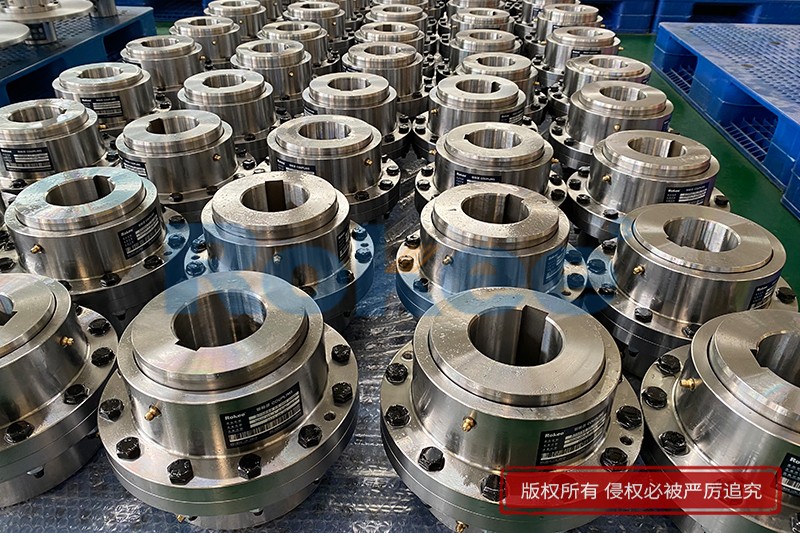
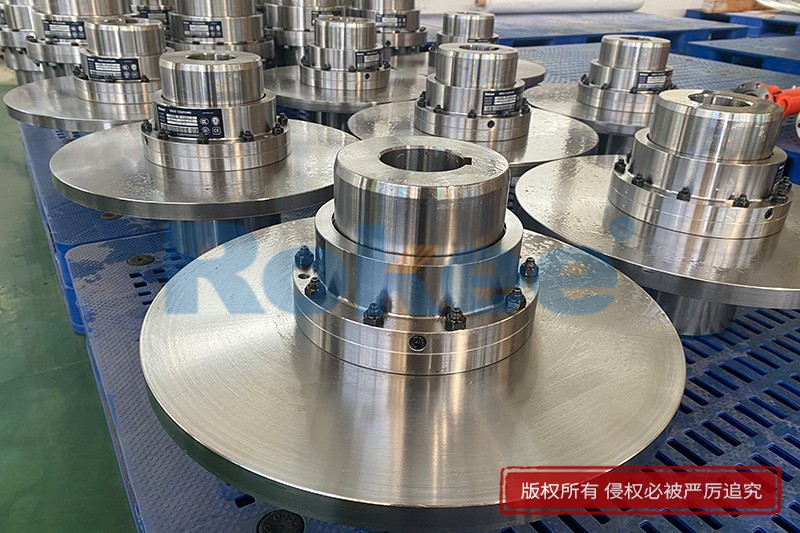

The basic structural composition of teeth coupling follows mature mechanical design logic, with ingenious details that determine its superior transmission performance. The overall structure is mainly composed of two outer gear hubs and an inner gear sleeve, forming a closed meshing transmission system. The outer gear hubs are fixedly installed on the driving shaft and driven shaft respectively, rotating synchronously with the shafts during equipment operation. The inner gear sleeve is sleeved on the outer sides of the two hubs, and the internal tooth profile meshes tightly with the external tooth profile of the hubs. This nested meshing structure abandons the simple connection mode of traditional rigid couplings and realizes flexible power transmission through the precise fit between gear teeth. In practical industrial designs, the external gear teeth are usually processed into involute or spherical drum-shaped structures. The drum-shaped tooth design optimizes the contact form between tooth surfaces, converting the linear contact of straight teeth into surface contact, which effectively expands the stress area of the meshing part and avoids local stress concentration during high-load operation. Meanwhile, the matching gap reserved between the inner and outer gear teeth provides a flexible adjustment space for the relative displacement of the two shafts, laying a structural foundation for its displacement compensation capability.
The working principle of teeth coupling is based on classic gear meshing transmission theory and adaptive displacement adjustment characteristics. When the mechanical equipment is started, the driving shaft drives the connected outer gear hub to rotate, and the torque is transmitted to the inner gear sleeve through the meshing action of the external teeth and the internal teeth. Subsequently, the inner gear sleeve drives the other outer gear hub and the connected driven shaft to rotate synchronously, thereby completing the continuous transmission of power and rotational motion between the shafts. In the ideal operating state, the two connected shafts maintain complete coaxiality, and the gear teeth mesh uniformly without relative sliding. However, in actual industrial production, due to machining errors of equipment parts, installation deviations, thermal deformation during long-term operation, and foundation settlement, it is almost impossible to achieve absolute coaxial alignment of the two shafts. Tiny angular, radial, and axial displacements are inevitable in the transmission process. Relying on the reserved meshing gap and the elastic sliding performance of the tooth surfaces, teeth coupling can adaptively adjust the meshing state of the gear teeth according to the real-time displacement of the shafts. When angular deviation occurs between the shafts, the spherical tooth surface can slide gently to compensate for the angle difference; when radial or axial displacement exists, the fit gap between the inner and outer teeth can absorb the offset, ensuring that the torque transmission process remains stable and continuous without severe vibration or transmission stagnation.
Compared with other types of shaft couplings, teeth coupling has prominent comprehensive performance advantages, which are the core reasons for its wide industrial application. First and foremost, it possesses ultra-high torque transmission efficiency and load-bearing capacity. The multi-tooth meshing structure enables the load to be evenly distributed on each meshing tooth surface during operation, avoiding the problem of excessive local stress in single-point contact transmission. Even under heavy load, fluctuating load, or instantaneous shock load conditions, it can maintain stable transmission, effectively preventing tooth deformation, fracture or premature wear caused by concentrated stress. This excellent heavy-load resistance makes it suitable for large-scale industrial equipment that operates under harsh working conditions for a long time. Secondly, its multi-dimensional displacement compensation performance is far superior to ordinary rigid couplings. It can simultaneously adapt to angular deflection, radial offset and axial displacement of the transmission shaft, greatly reducing the additional mechanical stress generated by shaft misalignment on the equipment and transmission components, and effectively protecting the shaft, bearing and other core parts of the equipment from fatigue damage.
In addition, teeth coupling features a highly compact structural layout and excellent space utilization efficiency. Under the same torque transmission demand, its overall volume and occupied installation space are much smaller than those of belt couplings, chain couplings and flange couplings. The compact integrated structure does not require additional auxiliary positioning components, which simplifies the overall installation structure of the equipment and is very suitable for precision machinery and integrated equipment with limited internal installation space. Meanwhile, the structural stability of teeth coupling ensures low vibration and low noise operation during high-speed rotation. The smooth involute or drum-shaped tooth profile ensures uniform meshing and stable power transmission, avoiding jitter and impact in the transmission process. This low-vibration operating characteristic not only improves the running accuracy of the equipment but also reduces the noise pollution generated by mechanical operation, meeting the environmental protection and precision operation requirements of modern industrial production.
Lubrication and sealing are key factors that determine the service life and operating stability of teeth coupling, and are also crucial links in its daily operation and maintenance. The meshing operation of internal and external gear teeth belongs to high-frequency friction movement. Dry friction will cause rapid wear of tooth surfaces, generate high temperature, and even lead to tooth surface ablation and transmission failure in severe cases. Therefore, a closed lubrication system is designed for teeth coupling. The closed space formed by the inner gear sleeve and the two end hubs can store lubricating grease or lubricating oil, forming a continuous oil film on the meshing surface of the gear teeth. The oil film can isolate direct friction between metal tooth surfaces, reduce friction coefficient and wear loss, and at the same time take away the heat generated by friction during high-speed operation to avoid thermal deformation of parts. In terms of sealing, reliable sealing structures are installed at the assembly gaps of the coupling, which can effectively isolate external dust, moisture, corrosive gas and other impurities, prevent external pollutants from entering the meshing area to cause tooth surface corrosion and abrasive wear, and also avoid the leakage of internal lubricants, ensuring the long-term stability of the internal lubrication environment.
Teeth coupling is widely used in various industrial fields with complex working conditions and high transmission requirements, covering heavy industry, light industry, energy, transportation and other core industrial sectors. In metallurgical and mining machinery, large rolling mills, crushers and conveyor equipment need to bear long-term heavy load and intermittent shock load. Teeth coupling can stably transmit large torque and adapt to the slight shaft deviation caused by equipment vibration and load fluctuation, ensuring the continuous operation of production lines. In power energy equipment, such as wind power generation units, water turbine transmission systems and large fan equipment, the coupling needs to operate stably at high speed for a long time and adapt to the shaft displacement caused by equipment aging and thermal expansion. The low-wear and high-stability performance of teeth coupling effectively guarantees the long-cycle and trouble-free operation of energy equipment.
In addition, in engineering machinery, chemical equipment and marine transmission systems, teeth coupling also shows excellent environmental adaptability. Engineering machinery often operates in complex and changeable outdoor environments with large load fluctuations and severe vibration; chemical equipment faces corrosive working media and variable temperature environments; marine equipment needs to adapt to humid and salty corrosive environments. Relying on its stable structural strength, good sealing performance and wear and corrosion resistance, teeth coupling can maintain reliable working performance in these harsh environments, reduce the failure rate of transmission systems, and extend the overall service life of equipment. In precision mechanical transmission systems such as machine tools and automated production lines, its low-vibration and high-precision transmission characteristics ensure the accuracy of motion transmission, avoiding processing errors and equipment operation deviations caused by unstable power transmission.
Although teeth coupling has excellent inherent performance, its long-term stable operation is still inseparable from standardized installation and scientific daily maintenance. The installation accuracy directly affects the operating state and service life of the coupling. During the installation process, the coaxiality of the driving shaft and driven shaft must be strictly calibrated to avoid excessive initial deviation exceeding the compensation range of the coupling, which will cause abnormal wear of gear teeth. The assembly tightness of the inner gear sleeve and the hub should be moderate, ensuring flexible rotation without looseness and displacement. After installation, a trial operation is required to check for abnormal vibration, noise and temperature rise to eliminate potential installation hidden dangers.
Daily maintenance focuses on lubrication status inspection and regular replacement of lubricating media. With the extension of operating time, the lubricant will gradually age, deteriorate and be mixed with metal wear debris, which will reduce the lubrication effect and accelerate tooth surface wear. It is necessary to regularly check the sealing performance of the coupling, replenish lubricant in time, and replace the aging lubricant and damaged sealing parts periodically. At the same time, the operating temperature and vibration state of the coupling should be monitored during equipment operation. Once abnormal high temperature, excessive vibration or abnormal noise is found, the equipment should be shut down for inspection in time to check for gear tooth wear, deformation, displacement or sealing failure, so as to avoid minor faults evolving into major equipment failures and affecting the overall production progress.
In the context of the continuous upgrading of modern industrial manufacturing towards high precision, high efficiency and high reliability, the technical optimization and performance improvement of teeth coupling are also advancing continuously. Traditional straight-tooth coupling products are gradually upgraded to drum-shaped tooth structures, with further optimized tooth profile curvature and contact area, stronger displacement compensation ability and higher load-bearing limit. At the same time, with the application of new high-strength alloy materials and advanced surface heat treatment processes, the surface hardness, wear resistance and corrosion resistance of gear teeth have been significantly improved, enabling the coupling to adapt to more extreme working conditions. The optimized sealing and lubrication structure further reduces maintenance frequency and improves the operational economy of the equipment.
As an indispensable basic transmission component in industrial systems, teeth coupling connects every link of mechanical power transmission. Its performance directly affects the operating efficiency, stability and service life of the entire mechanical equipment. Its unique gear meshing transmission principle, excellent load-bearing performance, flexible displacement compensation capability and compact structural advantages make it irreplaceable in heavy-load, high-speed and long-cycle industrial transmission scenarios. In the future, with the continuous development of intelligent manufacturing and high-end equipment manufacturing technology, teeth coupling will continue to realize technological iteration and performance upgrading, adapt to more diversified and high-standard industrial transmission needs, and provide more solid basic support for the stable operation and efficient production of modern industrial machinery.
« Teeth Couplings » Update Date: 2026/7/15
Contact
If you require custom machined couplings, please contact Rokee via the contact information below for inquiries.
Email: https://www.gshmdpq.com
 WeChat