Tire Couplings
Rokee is a manufacturer of tire couplings from china, we can provide non-standard custom tire couplings based on parameters or drawings supplied by customers, with export support available.

In the complex and precise operating system of modern industrial machinery, the stability, efficiency and durability of power transmission components directly determine the overall operating quality of equipment. As a key flexible transmission component, tire coupling has gradually become an indispensable core part of various mechanical transmission systems relying on its unique elastic structure, excellent misalignment compensation capability and superior vibration and shock absorption performance. Different from rigid couplings that pursue high rigidity and precise transmission and other flexible couplings with single buffering performance, tire coupling realizes the organic integration of efficient torque transmission, multi-dimensional displacement adaptation and dynamic load protection through the special tire-shaped elastic rubber structure, solving many common pain points in industrial transmission such as shaft misalignment, operational vibration, instantaneous impact load and equipment wear and tear. It plays a vital role in extending the service life of mechanical equipment, reducing operational failures, lowering maintenance costs and improving the stability of industrial production.

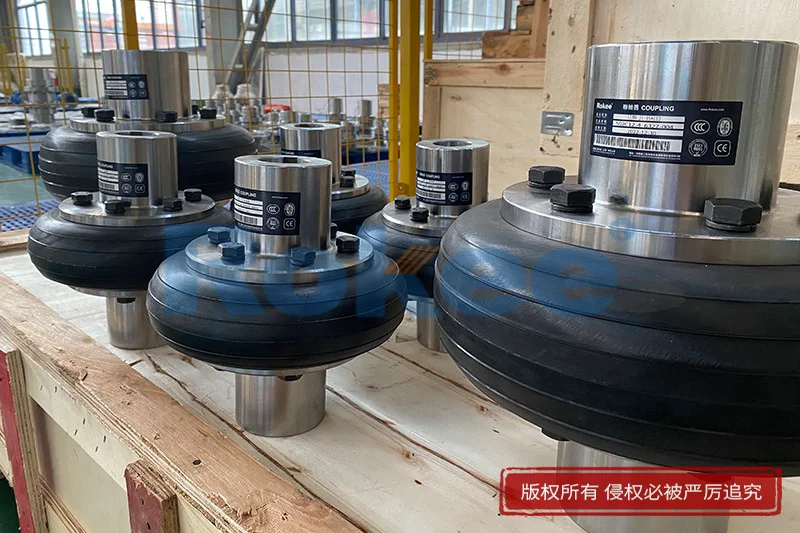

The basic composition and working mechanism of tire coupling endow it with unique technical advantages in the field of mechanical transmission. The overall structure of the coupling is concise and compact, mainly composed of high-elasticity rubber tire components and matched metal flanges. The rubber tire element is processed through professional vulcanization technology, which forms a tight and integrated connection with the metal flange structure. This composite structure abandons the complex spring and tooth-shaped structures of traditional flexible couplings, and takes rubber elastic deformation as the core working principle to complete power transmission and mechanical protection. In the actual operating process, the driving shaft drives the metal flange on the driving side to rotate synchronously, and the torque generated by the power equipment is stably transmitted to the driven shaft through the rubber tire element. During this process, the elastic characteristics of the rubber material can effectively cope with various displacement deviations between the driving shaft and the driven shaft caused by equipment installation errors, mechanical vibration and thermal deformation of parts.
The most prominent structural feature of tire coupling is its all-dimensional misalignment compensation ability, which covers angular deviation, radial deviation and axial deviation that are ubiquitous in mechanical shaft connection scenarios. In industrial production, it is almost impossible to achieve absolute coaxiality of two connected shafts during equipment installation and long-term operation. Slight installation errors, structural deformation caused by long-term load operation, and axial displacement generated by thermal expansion and contraction of metal parts will lead to different degrees of misalignment between shafts. Rigid couplings cannot adapt to such deviations, which will cause additional mechanical stress during equipment operation, resulting in abnormal wear of bearings and shafts, increased operational vibration, and even mechanical fatigue damage and equipment failure in severe cases. The tire coupling, with its flexible tire-shaped rubber structure, can rely on mild elastic deformation to adapt to various misalignment states without generating additional restrictive stress, ensuring that the torque transmission process remains smooth and stable under non-ideal installation and operating conditions. This unique adaptive capability greatly reduces the installation and debugging difficulty of mechanical equipment and improves the fault tolerance of the transmission system.
In addition to multi-dimensional misalignment compensation, excellent vibration damping and shock absorption performance is another core advantage of tire coupling, which is the key to its wide application in complex working conditions. Most industrial mechanical equipment will generate periodic vibration during operation, and frequent start-stop, sudden load changes and impact loads in production processes will produce instantaneous torsional vibration and mechanical impact. These dynamic loads will not only cause noise pollution in the production environment, but also form alternating stress inside mechanical parts, accelerating the fatigue aging of key components such as shafts, bearings and gears. The high-elasticity rubber material of tire coupling has good energy absorption and damping characteristics, which can effectively absorb and consume the vibration energy and impact force generated in the transmission process. When instantaneous impact load occurs, the rubber tire element produces reversible elastic deformation to buffer the impact force, avoid the direct transmission of impact torque to the whole equipment system, and protect the precision components of the equipment from impact damage. For the mechanical systems with frequent variable load operation and intermittent start-stop working mode, this buffering and damping effect can significantly optimize the operating state of the equipment and reduce the failure rate caused by vibration impact.
The material characteristics and structural design of tire coupling determine its excellent environmental adaptability and operational stability, enabling it to maintain reliable working performance in various harsh industrial scenarios. The rubber tire element adopts high-quality vulcanized rubber formula, which has good aging resistance, oil resistance and temperature adaptability. It can work stably for a long time in conventional industrial temperature environments and resist the erosion of common industrial media such as lubricating oil and cooling water. The metal flange part is made of high-strength cast iron or steel materials, which has high structural rigidity and compressive resistance, and can bear large torque load without structural deformation. The integrated vulcanization molding process avoids the problem of loose connection and performance attenuation caused by the assembly of multiple parts, ensuring the overall structural stability of the coupling in long-term high-load operation. Compared with other elastic couplings that are prone to aging, deformation and failure after long-term use, tire coupling has longer service life and more stable performance attenuation law, and can continuously maintain efficient transmission and protection capabilities in long-cycle industrial production.
The simple structural design of tire coupling also brings outstanding advantages in equipment installation, daily maintenance and later replacement, which greatly reduces the comprehensive operational cost of industrial equipment. The overall assembly structure of the coupling is simple and intuitive, without complex matching parts and precise transmission structures. The installation process does not require complicated debugging procedures and professional precision calibration equipment, and can complete shaft connection and fixing efficiently, which greatly shortens the equipment assembly and commissioning cycle. In terms of daily use and maintenance, tire coupling realizes maintenance-free operation in conventional working conditions, without regular lubrication, oil replacement and gap adjustment required by gear couplings and chain couplings. There is no friction and wear of precision transmission pairs inside the structure, and the daily maintenance work is extremely simple, only needing regular visual inspection of the rubber element for aging, cracking and abnormal deformation. When the parts reach the service life and need to be replaced, the disassembly and assembly process is convenient and fast, which can quickly complete the replacement operation, reduce the equipment downtime caused by maintenance, and effectively improve the operating efficiency of the production line.
Relying on the above comprehensive performance advantages, tire coupling has been widely applied in multiple industrial fields, covering conventional civil machinery and heavy industrial equipment, and has formed irreplaceable application value in different working condition scenarios. In the field of fluid power equipment such as pumps and fans, the operating equipment has the characteristics of continuous operation, slight vibration during operation and certain axial displacement during start-up and operation. The tire coupling can effectively adapt to the shaft misalignment caused by equipment operation and vibration, absorb the operating vibration of the equipment, reduce the operating noise of the unit, and ensure the long-term stable operation of pumps and fans. In the conveying machinery industry such as belt conveyors and screw conveyors, the equipment often faces frequent start-stop, load fluctuation and instantaneous impact load during material conveying. The shock absorption and buffering performance of tire coupling can well cope with such variable load working conditions, avoid transmission failure and part damage caused by impact load, and improve the continuity and stability of material conveying.
In heavy industrial fields such as metallurgy, mining and cement manufacturing, the working environment is harsh, with heavy dust, variable load and long-term high-intensity operation. The high structural strength and environmental adaptability of tire coupling enable it to adapt to harsh working conditions, maintain stable torque transmission capacity in high-load operation, and effectively buffer the mechanical impact generated by heavy equipment start-up and load switching. In the power industry such as compressors and generator sets, the stability of the transmission system is directly related to the safety of power output. The tire coupling can eliminate torsional vibration in the transmission process, ensure the uniformity and stability of power transmission, avoid power fluctuation caused by transmission vibration, and guarantee the safe and stable operation of power equipment. In addition, in food processing, chemical industry, light industry and other fields that require stable equipment operation and low noise, tire coupling also relies on its excellent damping performance and stable transmission capacity to meet the precise operation requirements of mechanical equipment.
In the context of the continuous upgrading of modern industrial intelligent manufacturing and the continuous improvement of equipment precision and stability requirements, the application advantages of tire coupling are further highlighted, and its technical connotation is also constantly optimized and upgraded. Traditional mechanical transmission systems often focus on the torque transmission efficiency of couplings, while ignoring the dynamic protection of equipment and the adaptability of working conditions. With the improvement of industrial production efficiency and equipment refinement standards, the industry has put forward higher requirements for the comprehensive performance of transmission components, including vibration reduction and noise reduction, fault tolerance of installation errors, adaptability of variable working conditions, and low maintenance cost. The comprehensive performance of tire coupling just conforms to this development trend. It not only meets the basic high-efficiency torque transmission demand of industrial equipment, but also solves many hidden problems in the long-term operation of equipment from the perspective of dynamic protection, effectively reducing the mechanical failure rate caused by transmission system problems, and reducing the overall operation and maintenance cost of enterprise equipment.
In terms of technical iteration, with the continuous progress of rubber material science and mechanical processing technology, the performance of tire coupling is also continuously optimized and improved. The new modified rubber materials further enhance the high temperature resistance, aging resistance and fatigue resistance of the elastic elements, expand the applicable temperature range and service life of the coupling. The optimized structural design makes the stress distribution of the rubber tire more uniform in the process of torque transmission and deformation, avoiding local stress concentration and premature damage, and further improving the structural stability and load-bearing capacity of the product. At the same time, the standardized and refined production process ensures the consistency of product performance, making the quality of tire coupling more stable and reliable in batch application, which can meet the matching needs of different types and specifications of mechanical equipment.
In the whole life cycle of mechanical equipment, tire coupling plays a subtle but crucial protective role. As a vulnerable part of the transmission system, it undertakes the buffering and protection functions in the equipment operation process. When the equipment is overloaded or impacted abnormally, the elastic deformation of the tire coupling can absorb most of the impact energy, and even play a certain overload protection role, avoiding the damage of core precision parts such as motors, reducers and working machines due to sudden load changes. For long-term operating industrial equipment, this protective effect can effectively delay the aging speed of equipment, prolong the overall service life of the unit, and create higher economic benefits for industrial production. In addition, the excellent vibration damping performance can reduce the resonance phenomenon of mechanical equipment, optimize the on-site production environment, reduce mechanical noise pollution, and meet the environmental protection and safety production requirements of modern industrial workshops.
Compared with diaphragm couplings, gear couplings and spring couplings commonly used in the market, tire coupling has obvious comprehensive cost performance and working condition adaptability advantages. Diaphragm couplings have high transmission precision but poor shock absorption performance, and are only suitable for stable working conditions with small load fluctuation; gear couplings have large torque transmission capacity but need regular lubrication and maintenance, with high later operation cost and large operating noise; spring couplings have limited vibration damping effect and poor adaptability to multi-dimensional misalignment. Tire coupling perfectly balances
« Tire Couplings » Update Date: 2026/7/15
Contact
If you require custom machined couplings, please contact Rokee via the contact information below for inquiries.
Email: https://www.gshmdpq.com
 WeChat