Types of Pin Couplings
Rokee® is a well-known high-quality pin coupling supplier from china, learn more about types of pin couplings, pls contact Rokee technology. Rokee has been established in China since 1999, over the years, with excellent quality, we have been continuously providing many pin coupling products of various categories and uses complying with multiple standards and a full range of services, from the pin coupling selection to final installation and operation, for the industry fields of ferrous metallurgy, nuclear power, gas turbine, wind power, ropeway construction, lifting transportation, general equipment, etc.

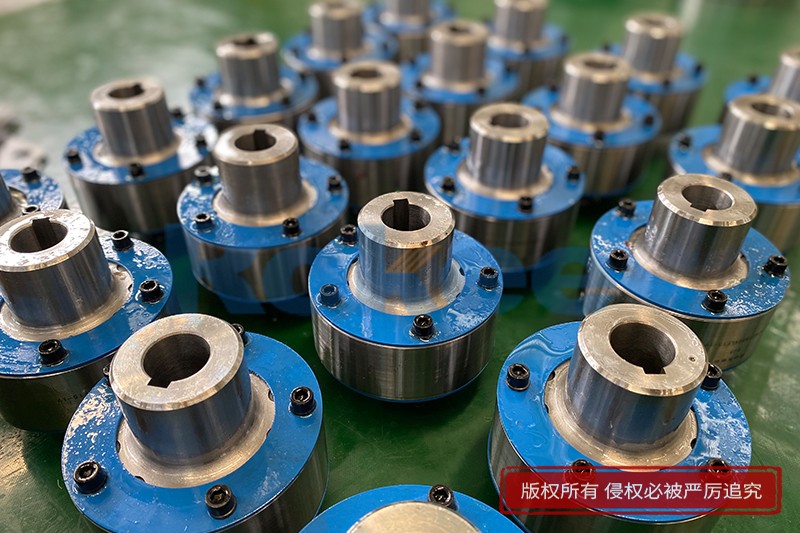
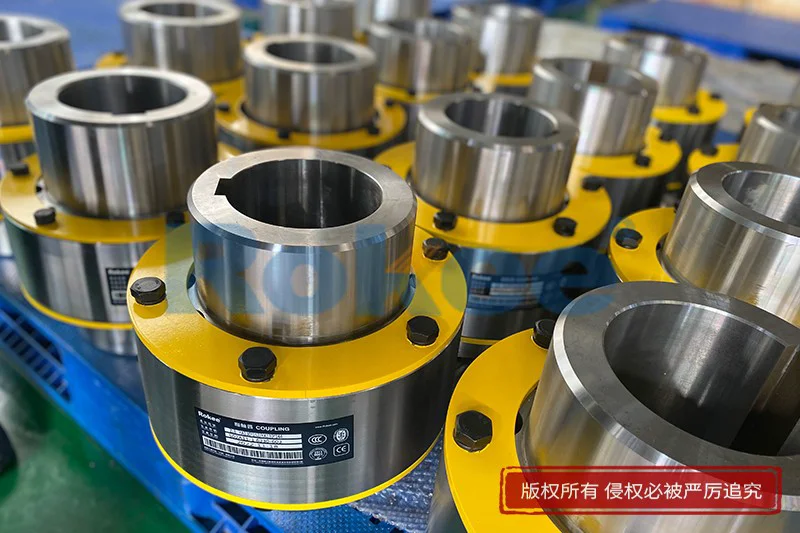
The pin coupling is a type of power transmission mechanical coupling used to connect two shafts together at their ends for the purpose of transmitting power.
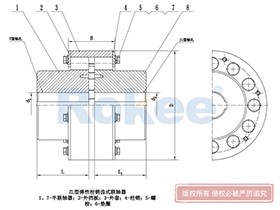
The pin gear coupling is designed with non-metallic flexible pin, two toothed semi-couplings and a toothed sleeve ring with an outer ring. It uses non-metallic flexible deformation to transfer torque and cushion shock and compensate angular displacement.
The flexible pin coupling is a basic transmission parts that has simple structure, needs no lubrication, and is easy to manufacture, install and disassemble the flexible pin. It uses two semi-couplings with flange holes and a non-metallic flexible pin for crane to transmit torque, suitable for low-to-medium speed and low-to-medium torque occasions.
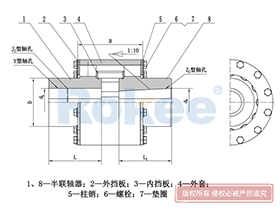
The design of the elastic sleeve pin coupling is simple and clever in design and has wide applicability. It uses the pin with elastic sleeve to connect two semi-couplings with pin holes to realize torque transmission and larger angular compensation. At the same time, it has good shock absorption and buffering performance, which can be used in high-speed occasions without lubrication and requiring easy pin sleeve replacement.
Pin Coupling Products
-
![LZ/ZL Pin Gear Coupling,Types of Pin Couplings]()
LZ/ZL Pin Gear Coupling
Basic Type
LZ Pin Gear Coupling is the basic form of this series of couplings.View More -
![LZD/ZLD Pin Gear Coupling,Types of Pin Couplings]()
LZD/ZLD Pin Gear Coupling
Conical Shaft Hole
One end of the LZD Pin Gear Coupling is designed with a conical shaft hole, and the clearance between the semi-couplings is increased to facilitate the fixing space at the shaft end.View More -
![LZZ/ZLL Pin Gear Coupling,Types of Pin Couplings]()
LZZ/ZLL Pin Gear Coupling
With Brake Wheel
LZZ Pin Gear Coupling is designed with a brake wheel, suitable for situations where braking is required.View More -
![LX/HL Flexible Pin Coupling,Types of Pin Couplings]()
LX/HL Flexible Pin Coupling
Basic Type
LX(HL) Flexible Pin Coupling is the basic form of this series of couplings.View More -
![LXZ/HLL Flexible Pin Coupling,Types of Pin Couplings]()
LXZ/HLL Flexible Pin Coupling
With Brake Wheel
LXZ(HLL) Flexible Pin Coupling is designed with a brake wheel, suitable for situations where braking is required.View More -
![LT/TL Elastic Sleeve Pin Coupling,Types of Pin Couplings]()
LT/TL Elastic Sleeve Pin Coupling
Basic Type
LT Elastic Sleeve Pin Coupling is the basic form of this series of couplings.View More -
![LTZ/TLL Elastic Sleeve Pin Coupling,Types of Pin Couplings]()
LTZ/TLL Elastic Sleeve Pin Coupling
With Brake Wheel
LTZ Elastic Sleeve Pin Coupling is designed with a brake wheel, suitable for situations where braking is required.View More
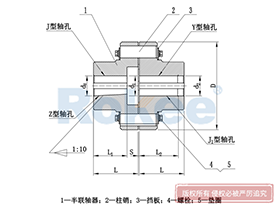
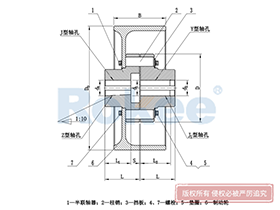
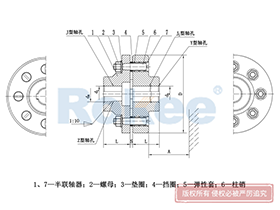
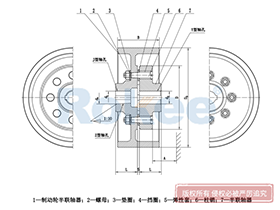
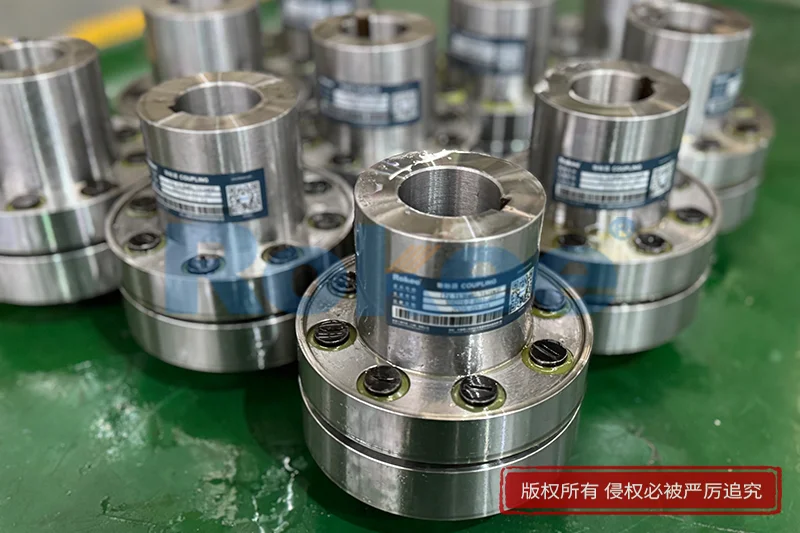
In the field of mechanical power transmission, pin couplings stand as fundamental components that bridge two rotating shafts, enabling the efficient transfer of torque while addressing common operational challenges such as misalignment, vibration, and shock loads. Unlike complex coupling designs that rely on intricate gear systems or flexible membranes, pin couplings operate on a straightforward principle: using cylindrical pins as the core connecting element to link two hub assemblies, creating a durable and adaptable transmission interface. This simplicity not only streamlines manufacturing and maintenance processes but also allows for diverse structural variations tailored to different industrial operating conditions, giving rise to a wide range of pin coupling types each with distinct performance traits and application suitability.
At the broadest level, pin couplings are primarily categorized based on their flexibility and structural design, with the two core classifications being rigid pin couplings and flexible pin couplings. Rigid pin couplings represent the most basic iteration of this component family, engineered to deliver a firm, non-yielding connection between shafts. Structurally, they consist of two solid hubs, each equipped with precisely machined pin holes, and hardened steel pins that fit tightly into these aligned holes to lock the two hubs together. The absence of flexible elements in this design means that rigid pin couplings prioritize torque transmission efficiency and positional accuracy above all else; they can transfer substantial torque loads with minimal torsional backlash, making them ideal for applications where shaft alignment is strictly maintained and precise rotational synchronization is critical. However, this rigidity also limits their functionality: they cannot accommodate radial, angular, or axial misalignment between shafts, and they offer no damping effect for vibration or shock generated during machinery operation. As a result, rigid pin couplings are best suited for stationary, heavy-duty equipment with perfectly aligned shafts, such as fixed industrial drive systems, large-scale conveyor drives, and precision mechanical setups where external forces that cause misalignment are negligible. Their robust construction also lends them to high-load applications, as the solid metal pins and hubs resist deformation under sustained torque, reducing the risk of premature failure in demanding operating environments.
In contrast, flexible pin couplings are engineered to overcome the limitations of rigid designs by integrating compliant elements into the pin assembly, making them the more widely adopted variant across general and specialized industrial applications. The defining feature of flexible pin couplings is the incorporation of elastic sleeves, bushings, or cushioned pin components, typically crafted from durable rubber, polyurethane, or high-strength engineering plastics, which surround the metal transmission pins. These flexible inserts act as a buffer between the rigid metal hubs and pins, introducing a controlled degree of give in the transmission system that delivers three key benefits: misalignment compensation, vibration damping, and shock absorption. Within the flexible pin coupling category, there are several distinct sub-types differentiated by the design of the flexible elements, pin configuration, and intended operational use, each optimized to address specific performance requirements. One of the most prevalent sub-types is the elastic sleeve pin coupling, which features a simple yet effective design where each metal pin is encased in a thick elastic sleeve before being inserted into the matching holes of the two flanged hubs. This elastic sleeve creates a soft interface between the pin and hub, allowing for small to moderate amounts of radial, angular, and combined misalignment without imposing excessive stress on the shafts or bearings. The elastic material also absorbs transient shock loads—such as those caused by sudden starts, stops, or load fluctuations—and dampens resonant vibration that can damage adjacent machinery components. Elastic sleeve pin couplings are valued for their ease of installation and maintenance; worn elastic sleeves can be replaced quickly without disassembling the entire hub assembly, minimizing equipment downtime. They are widely deployed in light to medium-duty applications, including centrifugal pumps, fans, blowers, small conveyors, and motor-driven auxiliary equipment, where consistent torque transfer and vibration reduction are prioritized over maximum load capacity.
Another prominent sub-type of flexible pin coupling is the pin and bush coupling, which refines the flexible pin design for enhanced durability and higher torque transmission capabilities. Unlike the full elastic sleeve of the standard elastic sleeve pin coupling, pin and bush couplings feature precision-machined outer bushes (usually made of wear-resistant rubber or composite materials) paired with hardened steel inner pins. The bushes are seated in tapered or cylindrical holes in the coupling hubs, creating a tight, self-centering fit that distributes torque evenly across all pins in the assembly. This design not only improves misalignment tolerance but also extends the service life of the flexible components, as the hardened pins resist abrasion and the bushes maintain their elastic properties over prolonged use. Pin and bush couplings strike a balanced performance profile, offering higher torque density than basic elastic sleeve designs while retaining excellent vibration-damping characteristics. They are well-suited for medium to heavy-duty applications involving intermittent loads and moderate misalignment, such as gearboxes, crushers, mixers, agricultural machinery, and marine propulsion auxiliary systems. Their rugged construction also makes them suitable for harsh operating environments, including those with dust, moisture, and moderate temperature fluctuations, as the flexible bushes resist degradation from common industrial contaminants.
Beyond these mainstream flexible designs, there are specialized pin coupling variants tailored to unique operational demands, such as the flexible pin gear coupling and the single/double pin coupling for light-duty applications. Flexible pin gear couplings merge the benefits of pin flexibility with the robust torque transfer of gear-based couplings, featuring a toothed outer sleeve that interacts with pinned hubs to accommodate larger misalignment values while transmitting heavy torque loads. This hybrid design is ideal for heavy industrial machinery, including large crushers, mills, and heavy conveyor systems, where both high load capacity and significant misalignment compensation are required. On the opposite end of the spectrum, single pin and double pin couplings represent compact, lightweight solutions for low-torque, small-scale equipment. As the name suggests, single pin couplings utilize a single central pin to connect two small hubs, making them suitable for miniature drive systems, light-duty conveyors, and small household or workshop machinery. Double pin couplings add a second pin for increased torque capacity and improved stability, bridging the gap between single pin designs and multi-pin flexible couplings for light to medium small-scale applications. These compact pin coupling variants prioritize space efficiency and cost-effectiveness, making them a practical choice for equipment with limited installation space and modest power transmission requirements.
When evaluating pin coupling types for a specific application, several key factors must be considered to ensure optimal performance and longevity, rather than relying on a one-size-fits-all approach. First and foremost is torque capacity: each pin coupling type has a defined torque range, and selecting a model that matches or slightly exceeds the peak torque of the machinery is critical to avoid overloading and premature failure. Rigid pin couplings and heavy-duty flexible pin gear couplings handle higher torque loads, while elastic sleeve and single/double pin couplings are reserved for lower torque scenarios. Misalignment tolerance is another vital consideration; machinery with inherent shaft misalignment—due to manufacturing tolerances, thermal expansion, or operational wear—requires flexible pin couplings with sufficient elastic give, while perfectly aligned systems can utilize rigid pin couplings for enhanced precision. Operating speed also plays a role, as high-speed rotating systems demand dynamically balanced pin couplings with minimal rotational imbalance to prevent excessive vibration; flexible pin couplings with precision-machined hubs and evenly spaced pins are better suited for high-speed applications than basic rigid designs. Environmental conditions, including temperature extremes, exposure to chemicals, dust, and moisture, also influence selection: couplings with chemical-resistant elastic bushes or corrosion-resistant metal hubs are preferred for harsh industrial settings, while standard designs suffice for clean, controlled environments.
Maintenance practices also vary across different pin coupling types, and adhering to type-specific maintenance protocols is essential to preserve performance and extend service life. Rigid pin couplings require minimal maintenance, primarily consisting of periodic inspections to check for pin wear, hub loosening, and shaft alignment shifts; tightening mounting fasteners and replacing worn pins are the only routine tasks needed. Flexible pin couplings, however, demand more regular attention due to their elastic components, which degrade over time from cyclic loading, temperature exposure, and mechanical stress. Inspections should focus on checking the condition of elastic sleeves or bushes for cracks, hardening, or excessive wear, as degraded flexible elements lose their damping and misalignment compensation properties. Worn elastic components should be replaced promptly to prevent increased stress on shafts and bearings, and pin surfaces should be inspected for signs of galling or abrasion to ensure smooth torque transfer. Additionally, proper alignment during installation is critical for all pin coupling types; even flexible designs have limits to misalignment tolerance, and poor initial alignment will accelerate wear on both pins and flexible elements, leading to reduced efficiency and early component failure. Taking the time to achieve precise shaft alignment during setup can significantly reduce long-term maintenance needs and operational disruptions.
The versatility of pin couplings is further highlighted by their widespread adoption across diverse industrial sectors, with each type finding its niche in specific equipment setups. In manufacturing and processing industries, elastic sleeve pin couplings are the go-to choice for auxiliary equipment such as pumps, fans, and small conveyors, where reliable power transfer and vibration reduction are essential for smooth production workflows. In heavy industries like mining, construction, and material handling, pin and bush couplings and flexible pin gear couplings excel in heavy-duty machinery, enduring high torque loads, shock impacts, and harsh operating conditions. Agricultural machinery relies heavily on flexible pin couplings, particularly pin and bush designs, to handle the uneven loads and moderate misalignment common in tractors, harvesters, and irrigation systems, while marine and offshore applications use corrosion-resistant pin couplings for auxiliary drive systems, where moisture and salt exposure demand durable, low-maintenance components. Even in light-duty and precision equipment, compact single and double pin couplings provide a cost-effective, space-efficient solution for small-scale power transmission needs.
In summary, pin couplings are a diverse yet cohesive family of power transmission components, with each type engineered to address specific operational challenges and performance requirements. Rigid pin couplings offer uncompromising torque transfer and precision for perfectly aligned systems, while flexible pin couplings—including elastic sleeve, pin and bush, and specialized gear-pin designs—deliver the flexibility to handle misalignment, vibration, and shock for a broader range of applications. Compact light-duty pin couplings cater to small-scale, low-power needs, filling out the product portfolio to cover nearly every industrial power transmission scenario. The enduring popularity of pin couplings stems from their simple, reliable design, ease of maintenance, and adaptability, making them a staple in mechanical engineering across global industries. As machinery design evolves to meet demands for greater efficiency, durability, and versatility, pin couplings will continue to play a vital role, with ongoing refinements to materials and structural design further enhancing their performance and expanding their application potential. Selecting the right type of pin coupling requires a thorough assessment of operational conditions, load requirements, and environmental factors, but with the wide array of available designs, there is a pin coupling solution to suit nearly every power transmission need.
« Types of Pin Couplings » Update Date: 2026/3/7
URL: http:/en/blog/types-of-pin-couplings.html
Tags: Elastic Pin Couplings , Shear Pin Couplings , Flexible Pin Couplings , Crown Pin Couplings , Pin Couplings , sandwich panel machine