Pump Flexible Couplings
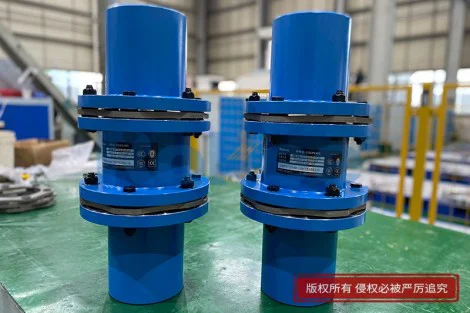
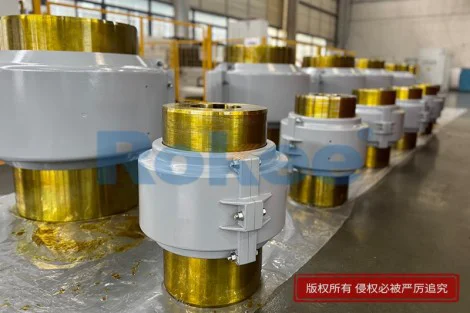
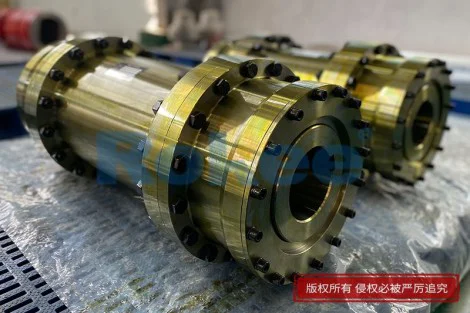
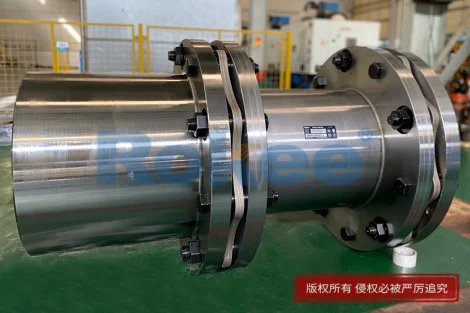
Rokee is a manufacturer of pump flexible couplings from china, we can provide non-standard custom pump flexible couplings based on parameters or drawings supplied by customers, with export support available.

In modern industrial fluid transmission systems, pump units stand as core equipment responsible for medium transportation, and the stable operation of the entire pump system largely depends on the reliability of power transmission components. Among these key components, flexible couplings dedicated to pumps serve as indispensable connecting intermediaries between drive motors and pump bodies, undertaking the dual core missions of efficient torque transmission and operational buffer protection. Unlike rigid connecting structures that pursue absolute rigidity and precise alignment, pump flexible couplings are designed with compliant and deformable structures, which can adapt to various subtle deviations and dynamic changes in the operation of pump equipment, effectively solving many inherent pain points in the power transmission process of pump units. They are not merely simple connecting parts, but critical functional components that determine the service life, operating stability and failure rate of the entire fluid transmission system.

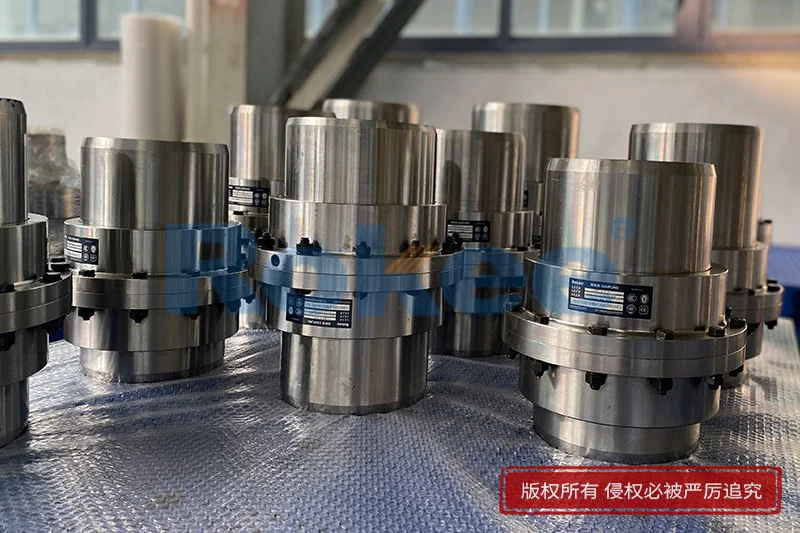

The most fundamental function of a pump flexible coupling is to stably transmit rotational torque from the driving motor shaft to the pump shaft, ensuring the continuous and consistent operation of fluid transportation. In the working state of pump equipment, the motor outputs stable rotational power, and the coupling acts as a power transfer bridge to completely and efficiently transmit torque without obvious power loss, driving the impeller inside the pump body to rotate at a synchronous speed. What distinguishes flexible couplings from traditional rigid couplings is their unique adaptive compensation capability. In actual industrial application scenarios, it is almost impossible to achieve absolute perfect alignment between the motor shaft and the pump shaft. Installation deviations during equipment assembly, subtle structural deformation caused by long-term static placement, axial displacement generated by thermal expansion and contraction of metal components during high-load operation, and radial and angular offset caused by foundation settlement and equipment vibration will all lead to different types of shaft misalignment. Rigid couplings cannot tolerate such deviations, which will cause severe additional mechanical stress, shaft friction and component wear, while pump flexible couplings rely on the elastic deformation of internal flexible components to subtly offset these misalignments, realizing error-free power transmission under non-ideal alignment conditions.
The internal structure and working mechanism of pump couplings endow them with excellent vibration damping and shock absorption performance, which is particularly critical for the long-term stable operation of pump units. During the start-stop cycle and load switching process of pump equipment, instantaneous torque impact and mechanical vibration will be generated. Sudden start-up will produce instantaneous peak torque, while sudden shutdown will cause inertial vibration of the rotating shaft system. In addition, the high-speed rotation of the pump impeller and the friction and impact between the fluid medium and the pump body will continuously generate cyclic vibration during continuous operation. These vibrations and impact forces will be directly transmitted along the rigid shaft system, causing fatigue wear of bearings, shaft deformation, loose connection of parts, and even abnormal noise and equipment jitter. The flexible elements inside the coupling, usually made of high-elasticity polymer materials or special flexible metal structures, can effectively absorb and buffer these instantaneous impact forces and high-frequency vibrations. Through reversible elastic deformation, the coupling dissipates vibration energy, isolates the mutual transmission of vibration between the motor and the pump body, and avoids the formation of resonant vibration in the entire unit, thereby greatly optimizing the operating environment of the pump system.
Based on different structural forms and flexible working principles, pump flexible couplings can be divided into two mainstream categories: material flexible type and mechanical flexible type, both of which have unique application advantages in different pump working conditions. Material flexible couplings rely on the elastic deformation of non-rigid materials to realize misalignment compensation and vibration damping, and are the most widely used type in medium and small pump equipment. The core of this type of coupling is the elastic intermediate component, which is clamped and fixed by metal hubs at both ends. Common elastic materials include rubber, polyurethane and other high-elasticity polymer materials. These materials have good toughness, fatigue resistance and elastic recovery ability, and can produce uniform and stable deformation under small stress. They can effectively compensate for axial stretching displacement, radial offset and angular deflection between shafts, and show excellent performance in vibration reduction and noise reduction. The overall structure of material flexible couplings is simple, with no complex sliding or meshing parts, so the failure rate is low during operation, and they can maintain stable working performance under conventional continuous operation conditions.
Mechanical flexible couplings realize misalignment adaptation through the relative movement of internal mechanical structures, without relying on the elastic deformation of materials, and are more suitable for high-power, high-torque and heavy-duty pump working conditions. This type of coupling is composed of multiple precision matching mechanical parts, and the flexible performance is realized through the reserved movement gap and relative displacement between components. During the operation of the pump unit, the subtle misalignment of the shaft system is adapted by the small sliding, rotating or meshing displacement between the internal structures of the coupling. Compared with material flexible couplings, mechanical flexible couplings can bear higher torque load and have stronger structural rigidity while retaining a certain degree of flexibility. They are not prone to aging and deformation under long-term high-load operation, and have better high-temperature resistance and corrosion resistance. However, due to the complex matching structure, this type of coupling has higher requirements for assembly precision and lubrication maintenance, and regular inspection of the matching gap and wear state of internal parts is required in daily operation.
The adaptive performance of pump flexible couplings in complex working conditions is one of the core reasons for their wide popularization in industrial fluid systems. In actual production scenarios, pump equipment often needs to operate in variable working environments, including temperature fluctuation, load change and medium impact. In high-temperature working environments, the metal shaft and base of the pump unit will produce thermal expansion of different degrees, leading to real-time changes in shaft alignment accuracy. The flexible structure of the coupling can follow the thermal deformation of the equipment for synchronous adaptive adjustment, avoiding additional thermal stress caused by thermal expansion constraint. In variable-load operation modes such as intermittent start-stop and variable-speed operation of pumps, the torque transmitted by the shaft system fluctuates frequently, and the flexible coupling can buffer the torque mutation through its own deformation, protect the motor and pump shaft from fatigue damage caused by frequent load impact, and reduce the risk of shaft breakage and thread loosening.
In terms of equipment protection and service life extension, pump flexible couplings play an irreplaceable protective role for core pump components. The shaft system, bearing and seal components of the pump body are precision vulnerable parts, which are extremely sensitive to additional stress and vibration. Long-term operation under misalignment and vibration conditions will accelerate the wear of bearing rollers and raceways, reduce the rotation precision of the shaft system, and cause eccentric operation of the pump impeller. The eccentric operation of the impeller will further aggravate the friction between the impeller and the pump shell, increase the operating load of the motor, and even cause medium leakage and equipment failure in severe cases. Flexible couplings can isolate most of the harmful additional stress and vibration, make the pump shaft operate in a stable stress state, keep the impeller running at a uniform center, reduce the friction loss of internal components, and effectively extend the service cycle of bearings, seals and impellers. At the same time, the buffering effect of the coupling can reduce the operating load of the motor, lower the energy consumption of the pump unit during operation, and realize energy-saving and efficient operation of the equipment.
The installation precision and matching rationality of pump flexible couplings directly affect the operating state of the entire pump system. Although flexible couplings have excellent misalignment tolerance, they cannot completely rely on their flexible compensation performance to offset excessive installation deviation. Excessive initial misalignment will make the flexible components of the coupling be in a severe deformed state for a long time, resulting in accelerated fatigue aging of elastic materials, increased wear of mechanical structures, and even early failure of the coupling. Therefore, in the installation process of pump units, it is necessary to strictly control the parallelism, coaxiality and axial spacing of the motor shaft and pump shaft within a reasonable range, and give full play to the adaptive compensation advantage of the coupling on the basis of precise basic alignment. Reasonable installation and matching can make the coupling work in the optimal deformation range, ensure stable torque transmission, minimize additional stress, and maximize the service life of the coupling and the entire pump equipment.
Daily maintenance and inspection are key links to ensure the long-term stable performance of pump flexible couplings. For material flexible couplings dominated by elastic components, the core of maintenance is to check the aging, cracking and deformation of elastic materials. Long-term operation, environmental humidity, temperature change and medium corrosion will all cause aging and hardening of elastic materials, resulting in reduced elasticity and weakened buffering compensation ability. In daily inspection, it is necessary to observe whether the elastic parts have cracks, permanent deformation, peeling and other abnormal phenomena, and replace the aging parts in time to avoid failure during equipment operation. For mechanical flexible couplings, the focus of maintenance is to check the wear degree of internal matching parts, the tightness of connecting fasteners and the lubrication state. Long-term relative movement will cause subtle wear of mechanical matching surfaces, and insufficient lubrication will aggravate component wear and produce operating noise. Regular cleaning, lubrication and fastening inspection can effectively maintain the working precision and flexible performance of mechanical flexible couplings.
With the continuous upgrading of industrial fluid transmission technology, the performance design of pump flexible couplings is also constantly optimized and iterated. Modern pump flexible couplings are developing towards high elasticity, high torque resistance, fatigue resistance and environmental adaptability. New elastic polymer materials and optimized mechanical structures enable the couplings to adapt to more extreme working conditions, including low-temperature cold resistance, high-temperature heat resistance, chemical corrosion resistance and long-term continuous fatigue operation. At the same time, the integrated and lightweight design of couplings further simplifies the installation and maintenance process, reduces the overall structural weight of the pump unit, and optimizes the dynamic balance performance of the rotating shaft system. The continuous progress of coupling technology provides more reliable basic support for the high-efficiency, stable and long-life operation of modern industrial pump systems.
In conclusion, pump flexible couplings are small but core functional components in fluid transmission equipment, integrating efficient power transmission, misalignment compensation, vibration damping and impact protection. They solve many practical problems in the operation of pump units caused by installation deviation, thermal deformation, vibration impact and load fluctuation, provide effective protection for precision components of pump equipment, reduce equipment failure rate and operation and maintenance costs, and improve the overall operating efficiency and stability of the system. In all scenarios involving pump fluid transportation, from conventional civil water supply and drainage to industrial medium transmission, pump flexible couplings are essential guarantees for the safe and stable operation of the equipment. Their unique flexible working mechanism and excellent comprehensive performance make them an indispensable key part of modern mechanical transmission systems, and their technical optimization and application innovation will continue to promote the high-quality development of the fluid transmission industry.
« Pump Flexible Couplings » Update Date: 2026/7/17
Contact
If you require custom machined couplings, please contact Rokee via the contact information below for inquiries.
Email: https://www.gshmdpq.com
 WeChat