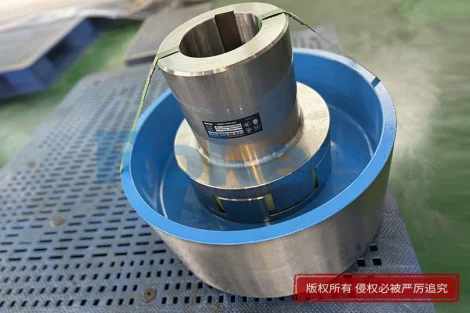
Nylon Sleeve Couplings
Rokee is a manufacturer of nylon sleeve couplings from china, we can provide non-standard custom nylon sleeve couplings based on parameters or drawings supplied by customers, with export support available.

In the intricate ecosystem of mechanical power transmission, coupling components serve as indispensable connecting bridges between rotating shafts, enabling the smooth transfer of torque while adapting to the dynamic operating conditions of industrial equipment. Among a wide array of coupling types, nylon sleeve couplings have emerged as a uniquely practical and versatile transmission component, striking a perfect balance between structural stability, operational flexibility, and economical applicability. Unlike rigid metal couplings that prioritize extreme structural hardness and elastic couplings that focus solely on vibration buffering, nylon sleeve couplings integrate the robust torque-bearing capacity of metal frameworks with the excellent elastic damping properties of polymer materials, making them widely adopted in diverse mechanical transmission scenarios ranging from light-duty precision equipment to medium-load industrial machinery. Their distinctive hybrid structural design and material characteristics endow them with irreplaceable advantages in solving common transmission problems such as shaft misalignment, operational vibration, and impact load interference, laying a solid foundation for the stable and long-term operation of mechanical systems.
The basic structural composition of nylon sleeve couplings is simple yet scientifically sophisticated, consisting mainly of two symmetric metal hubs and a precision-molded nylon sleeve that fits tightly between the hubs. The metal hubs, processed with precise external tooth structures, form a meshing fit with the internal tooth grooves of the nylon sleeve, creating a closed torque transmission loop. This embedded meshing structure abandons the traditional bolt and pin connection modes used in many conventional couplings, eliminating loose connecting parts that are prone to wear and aging during long-term operation. The overall assembled structure is compact and streamlined, with no protruding components, which effectively saves installation space and adapts to limited mechanical assembly environments. The dimensional matching between the nylon sleeve and metal hubs is highly precise, ensuring zero idle rotation during torque transmission while retaining a reasonable elastic tolerance range, which is the core reason why this type of coupling can simultaneously achieve efficient power transmission and flexible deformation compensation.
The working mechanism of nylon sleeve couplings revolves around the elastic transmission characteristics of nylon materials and the precise tooth meshing structure. During equipment operation, the driving shaft drives the connected metal hub to rotate, and torque is stably transmitted to the nylon sleeve through the meshing of external teeth on the hub and internal teeth of the sleeve. Subsequently, the nylon sleeve transfers the torque to the other metal hub connected to the driven shaft, thereby realizing the synchronous rotation of the two shafts and completing the entire power transmission process. In this operating cycle, the nylon sleeve undertakes multiple core functions beyond simple power conduction. When the mechanical system generates instantaneous impact loads due to startup, shutdown, or sudden load changes, the nylon material undergoes micro elastic deformation to absorb and buffer instantaneous impact force, avoiding rigid collision and stress concentration between metal components. This flexible transmission mode fundamentally reduces the impact of load fluctuations on the transmission system and effectively protects shafts, bearings, and other precision matching parts from fatigue damage caused by alternating impact forces.
One of the most prominent functional advantages of nylon sleeve couplings is their excellent misalignment compensation capability, which addresses a common pain point in mechanical assembly and operation. In actual industrial production, absolute precise alignment between two connecting shafts is almost impossible to achieve due to machining errors, assembly deviations, equipment aging deformation, and foundation settlement. Tiny axial, radial, and angular misalignments are ubiquitous in shaft connection structures, and long-term operation under misalignment conditions will cause severe eccentric wear, increased transmission noise, and reduced equipment operating efficiency, even leading to shaft fracture and equipment shutdown in severe cases. The nylon sleeve’s elastic flexibility allows it to produce adaptive micro-deformation during operation, effectively compensating for various minor misalignments between the driving and driven shafts. This automatic compensation function does not require manual real-time adjustment, enabling the coupling to maintain stable transmission efficiency even in slightly deviated operating states, greatly improving the fault tolerance of the entire mechanical transmission system.
Material properties are the core pillar of the superior performance of nylon sleeve couplings. As a high-performance engineering polymer, nylon possesses unique physical and chemical properties that make it far more suitable for flexible transmission scenarios than ordinary rubber and plastic materials. First of all, nylon has excellent wear resistance and mechanical toughness, with strong resistance to friction and fatigue aging. Under long-term continuous rotation and periodic friction conditions, the nylon sleeve can maintain stable structural integrity and dimensional accuracy, avoiding rapid wear, deformation, or aging failure. Secondly, nylon features outstanding vibration and noise reduction effects. Its internal polymer molecular structure can effectively absorb and dissipate mechanical vibration energy generated during equipment operation, reducing vibration transmission between shafts and lowering overall operating noise. Compared with all-metal couplings that easily produce resonant noise and rigid vibration during operation, nylon sleeve couplings can significantly optimize the operating environment of mechanical equipment and reduce noise pollution in the working space.
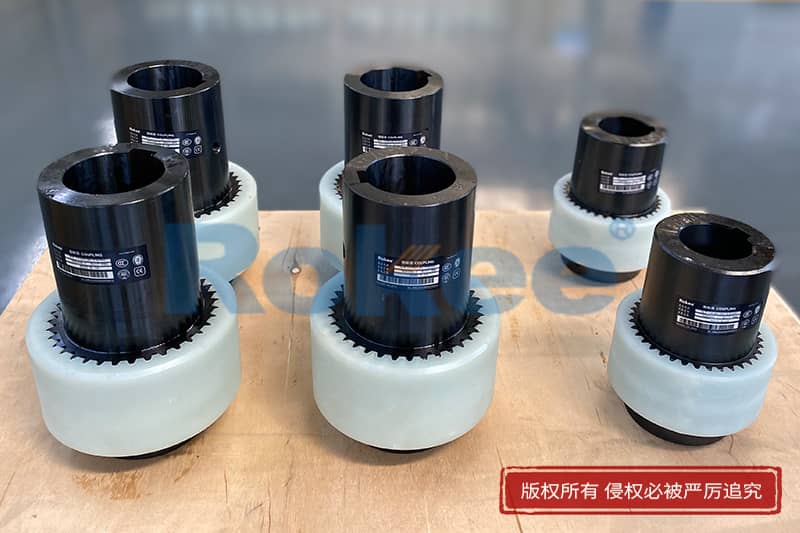
In addition to mechanical performance advantages, nylon materials also exhibit excellent environmental adaptability and chemical stability. Nylon sleeves are resistant to daily industrial corrosive media including common lubricating oils, hydraulic fluids, and mild alkaline and acidic solutions, avoiding corrosion, deterioration, or performance degradation caused by contact with industrial media during equipment operation. Meanwhile, the material has good low and medium temperature resistance, maintaining stable elastic performance and structural toughness within a wide ambient temperature range, without brittle fracture in low-temperature environments or softening and deformation in conventional high-temperature working environments. Moreover, nylon materials have excellent insulation and non-magnetic properties, which enable nylon sleeve couplings to operate stably in special working scenarios with electromagnetic interference and electrical insulation requirements, expanding their application boundaries in precision and special mechanical fields.
Maintenance-free operation is another key competitive advantage of nylon sleeve couplings, which greatly reduces the daily operation and maintenance costs of mechanical equipment. Most traditional metal couplings and gear couplings require regular lubrication and oil replacement to reduce meshing wear and prevent metal rust and corrosion, which not only increases daily maintenance workload and material consumption but also requires frequent equipment shutdown for maintenance, affecting continuous production efficiency. In contrast, nylon sleeve couplings completely eliminate the need for lubrication during the entire service cycle. The self-lubricating property of nylon materials ensures low-friction meshing between the sleeve and metal hubs, with no need for additional grease or lubricating oil. This lubrication-free design avoids equipment failures caused by lubricant deterioration, leakage, or insufficient oil supply, and also saves a large amount of maintenance time and operating costs for enterprises. The overall structure is highly durable with low failure probability, achieving long-term stable operation with minimal manual intervention.
The versatile applicability of nylon sleeve couplings enables their wide penetration in multiple industrial fields and mechanical equipment types. In light industrial and precision machinery fields, they are widely used in textile machinery, printing equipment, and packaging machinery. These devices require stable low-noise operation and high-precision power transmission, and the vibration damping and misalignment compensation functions of nylon sleeve couplings can effectively avoid operational jitter and transmission deviation, ensuring the precision and consistency of product processing. In medical equipment and laboratory precision instruments, the non-magnetic, insulating, and low-vibration characteristics of nylon sleeve couplings fully meet the strict operating requirements of precision medical devices and testing equipment, avoiding electromagnetic interference and mechanical vibration interference with experimental and medical detection results.
In medium-load industrial machinery scenarios such as conveyor equipment, pumping systems, and fan devices, nylon sleeve couplings also demonstrate excellent operating performance. These types of equipment often operate continuously for a long time with frequent load fluctuations and certain assembly misalignments. The high toughness and impact resistance of nylon sleeves can cope with long-term continuous operating conditions and instantaneous load impacts, while the good wear resistance ensures long service life under high-frequency operating states. In addition, the compact structural design makes them suitable for vertical installation, hidden assembly, and other complex installation environments, with strong adaptability to diverse equipment layout requirements. The simple assembly structure also facilitates daily inspection and replacement, enabling rapid maintenance without large-scale disassembly of equipment, which greatly improves equipment maintenance efficiency.
Compared with other types of elastic couplings, nylon sleeve couplings have obvious comprehensive performance advantages in practical application. Rubber elastic couplings are prone to aging, hardening, and cracking after long-term use, with poor temperature resistance and low load-bearing capacity, making them only suitable for extremely light-load transmission scenarios. Polyurethane couplings have improved wear resistance but poor low-temperature toughness and are susceptible to hydrolysis and corrosion in humid environments. In contrast, nylon sleeve couplings balance load-bearing capacity, environmental adaptability, and service life. They not only retain the flexible damping and misalignment compensation functions of elastic couplings but also have higher structural strength and torque transmission capacity than most polymer elastic couplings, able to adapt to medium-load transmission work that ordinary plastic and rubber couplings cannot bear. At the same time, compared with metal elastic couplings, they have better vibration and noise reduction effects and lower maintenance costs, with higher comprehensive cost performance in long-term industrial application.
In terms of operational stability and service life, the integrated molding process of nylon sleeves ensures uniform internal material structure and stable performance, avoiding local stress concentration and uneven deformation. The tooth structure of the sleeve and metal hubs is precisely molded and processed, with smooth meshing surfaces that reduce friction resistance and wear degree during operation. The matched metal hubs undergo fine surface treatment, which effectively prevents rust and corrosion, further improving the overall durability of the coupling assembly. Under standard operating conditions, nylon sleeve couplings can maintain stable transmission performance for a long time, with slow performance attenuation and no sudden failure problems, which greatly improves the overall operational reliability of mechanical systems and reduces unplanned equipment shutdown losses caused by coupling failure.
With the continuous upgrading of industrial machinery towards precision, high efficiency, and low energy consumption, the market demand for high-performance and low-maintenance transmission components is constantly increasing. Nylon sleeve couplings, with their unique material advantages, structural characteristics, and comprehensive performance, perfectly fit the development trend of modern industrial equipment. Their flexible transmission, vibration reduction and noise reduction, misalignment compensation, maintenance-free operation, and wide environmental adaptability make them an ideal choice for medium and light-load power transmission systems. Whether in traditional industrial manufacturing fields or emerging precision machinery and special equipment fields, nylon sleeve couplings can provide stable and efficient transmission support for mechanical equipment, helping mechanical systems achieve more efficient, stable, and low-consumption operation. As material technology and processing technology continue to progress, the performance of nylon sleeve couplings will be further optimized, and their application scope will continue to expand, playing a more important role in the field of mechanical power transmission.
« Nylon Sleeve Couplings » Update Date: 2026/7/17
Contact
If you require custom machined couplings, please contact Rokee via the contact information below for inquiries.
Email: https://www.gshmdpq.com
 WeChat