Flexible Couplings
Rokee is a manufacturer of flexible couplings from china, we can provide non-standard custom flexible couplings based on parameters or drawings supplied by customers, with export support available.

In the intricate operating system of modern mechanical equipment, the stable transmission of power is the core guarantee for the continuous and efficient operation of all industrial machinery. As a key connecting component between rotating shafts, flexible coupling has become an indispensable basic mechanical part in the field of mechanical transmission by virtue of its unique elastic deformation performance and structural flexibility. Different from rigid connection structures that pursue absolute rigidity and precise alignment, flexible coupling abandons the rigid constraint of zero displacement tolerance, and realizes efficient torque transmission while tolerating and compensating for various minor deviations in the operation of mechanical systems. This unique mechanical characteristic makes it widely applicable in complex and variable industrial working conditions, effectively solving many pain points such as vibration impact, shaft misalignment and component wear that are common in traditional transmission systems, and supporting the long-term stable operation of various mechanical equipment.
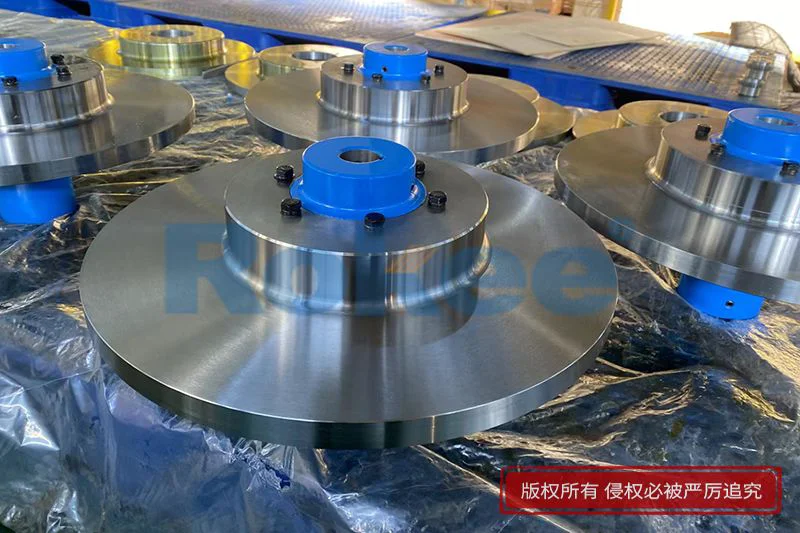
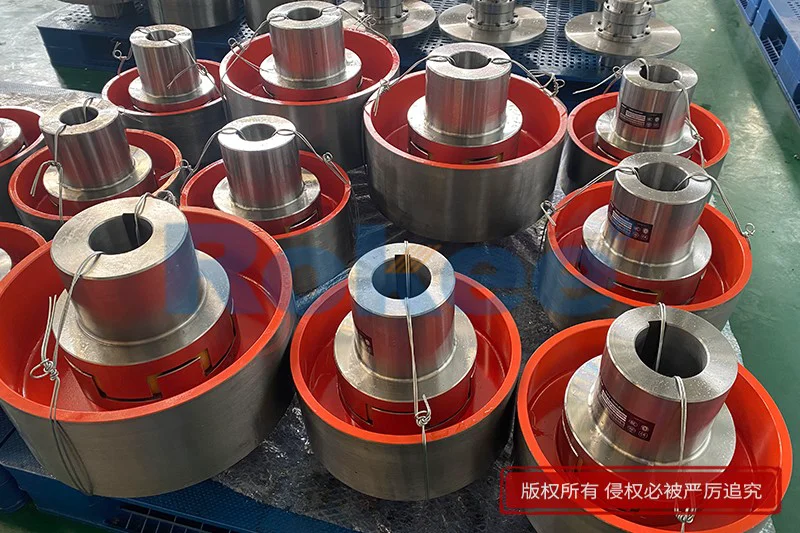

To understand the working logic of flexible coupling, it is necessary to start with the inherent defects of mechanical transmission systems in actual operation. In theory, the driving shaft and driven shaft of mechanical equipment should maintain absolute coaxial alignment to ensure loss-free power transmission. However, in actual industrial production, perfect alignment is almost impossible to achieve. Various objective factors will lead to different degrees of misalignment between shafts. The installation deviation in equipment assembly is the most intuitive cause. Even with high-precision processing and assembly technology, tiny position errors are inevitable in manual and mechanical installation processes. In addition, the equipment will generate continuous heat during long-term high-speed operation, causing thermal expansion and contraction of metal components, which will change the relative position of the two shafts. The structural deflection caused by long-term load-bearing operation and the slight wear of supporting parts such as bearings and bases will also gradually aggravate the shaft misalignment problem. These deviations cannot be eliminated by conventional debugging means, and if they are forcibly constrained by rigid connection structures, they will be converted into huge internal stress inside the equipment, causing rigid friction and collision between components, accelerating the wear of bearings, seals and other vulnerable parts, and even triggering equipment vibration, noise and intermittent failure in severe cases, greatly shortening the service life of mechanical systems.
Flexible coupling perfectly solves the above problems through its ingenious structural design and elastic working mechanism. Its core working principle is to rely on the elastic elements inside the structure to produce reversible elastic deformation during the operation of the equipment. This elastic deformation will not damage the basic structural stability of the coupling nor reduce the efficiency of torque transmission, but can effectively offset angular deviation, parallel deviation and axial displacement between the driving shaft and the driven shaft. When the equipment starts and stops suddenly or bears sudden load changes, the instantaneous rigid impact force and vibration energy generated by the system will be quickly absorbed and converted into elastic potential energy stored in the elastic elements of the coupling. When the operating load tends to be stable and the impact disappears, the elastic elements will automatically recover to their initial state and release the stored energy gently, realizing the buffering and damping of the transmission system. This working mode of combining rigid power transmission and flexible vibration isolation fundamentally avoids the hard contact and rigid stress accumulation between mechanical components, and builds a stable buffer barrier for the operation of the mechanical system.
The functional advantages of flexible coupling are fully reflected in the whole life cycle of mechanical equipment operation and maintenance. First of all, it has excellent vibration and noise reduction performance. In high-speed rotating machinery, tiny shaft misalignment and load fluctuation will induce continuous mechanical vibration, which will not only produce harsh operating noise and affect the on-site working environment, but also cause fatigue damage to precision mechanical parts over time. The elastic structure of flexible coupling can effectively suppress the resonance phenomenon inside the transmission system, attenuate vibration energy in real time, reduce the vibration amplitude of the equipment during operation, and significantly reduce the operating noise of the unit. Secondly, it has outstanding overload protection capability. When the equipment encounters unexpected overload, jamming and other abnormal working conditions, the elastic deformation of the coupling can release instantaneous overload stress, prevent the excessive torque from being directly transmitted to the driving and driven equipment, avoid the burnout of power components and the fracture of transmission parts, and play a reliable protective role for the core equipment of the system.
In terms of equipment operation cost control, the application value of flexible coupling is also very prominent. Traditional rigid transmission systems are prone to severe component wear due to uncompensated shaft misalignment and vibration impact, resulting in frequent replacement of vulnerable parts, increased maintenance frequency and long equipment downtime, which brings huge invisible economic losses to industrial production. Flexible coupling can greatly reduce the wear and fatigue loss of bearings, gears, seals and other key components by eliminating internal stress and vibration impact inside the system, effectively extending the service life of the whole machine. At the same time, it reduces the frequency of equipment failure and routine maintenance, shortens the downtime caused by equipment maintenance and debugging, and significantly improves the continuous operation efficiency and comprehensive utilization rate of industrial equipment. In addition, the adaptability of flexible coupling to installation errors also reduces the precision requirements of equipment assembly, simplifies the installation and debugging process of mechanical equipment, and saves human and time costs in the equipment deployment stage.
Different types of flexible couplings have subtle differences in structural design and performance characteristics, enabling them to adapt to diversified industrial working conditions and meet the differentiated needs of different mechanical transmission systems. Some flexible couplings adopt elastic element structures with high toughness, which are suitable for medium and low torque transmission scenarios with frequent start-stop and obvious load fluctuation, and can provide excellent buffering and damping effects. Some structural forms rely on precise mechanical gap coordination to realize flexible compensation, which are more suitable for high-speed, high-precision and stable transmission working conditions, ensuring the accuracy and consistency of torque transmission while compensating for shaft deviation. There are also flexible coupling designs optimized for special working environments, which can maintain stable elastic performance and structural reliability in high temperature, low temperature, humidity and dusty harsh environments, and are not easy to aging and failure, adapting to the complex environmental conditions of heavy industry production, outdoor operation and other scenarios.
The industrial application scenarios of flexible coupling cover almost all fields involving mechanical power transmission, showing strong universal applicability. In the field of industrial manufacturing and processing, it is widely used in various processing equipment, conveyor systems and automated production lines. The automated production line has high requirements for the stability and continuity of equipment operation, and the flexible coupling can eliminate the vibration and impact generated by the frequent operation of automated equipment, ensure the stable operation of transmission components, and avoid processing errors and equipment jitter caused by mechanical vibration, so as to guarantee the processing accuracy and production consistency of products. In the field of fluid power equipment such as pumps and fans, the long-term continuous operation of the equipment is easy to produce thermal deformation and shaft displacement. The compensation performance of flexible coupling can effectively offset the shaft misalignment caused by thermal expansion, ensure the stable operation of fluid transmission equipment, and reduce the failure rate of equipment such as water pump jamming and fan vibration.
In the field of power transmission and energy equipment, flexible coupling also plays an irreplaceable role. Power generation equipment such as turbines and generators runs at a high speed for a long time, and the transmission system bears huge torque and alternating load. The flexible connection mode can absorb the vibration generated by high-speed operation, avoid the resonance of the whole unit, and protect the precision power generation components from fatigue damage. In the transmission system of new energy equipment, the efficient and stable torque transmission and flexible vibration isolation performance of flexible coupling can adapt to the variable load operation characteristics of new energy power equipment, and improve the operational stability and energy utilization efficiency of the system. In addition, in the fields of engineering machinery, transportation equipment and agricultural machinery, due to the complex and changeable operating conditions, the equipment often bears impact load and uneven load. The flexible coupling can adapt to this harsh operating environment, buffer the impact stress generated by complex working conditions, and improve the reliability and durability of engineering and agricultural machinery equipment.
With the continuous progress of industrial manufacturing technology and the continuous upgrading of mechanical equipment towards high speed, high precision and high intelligence, the performance requirements for flexible coupling are also constantly improving. Modern mechanical systems pay more attention to transmission efficiency, operational stability and equipment energy-saving performance, which puts forward higher standards for the elastic performance, compensation accuracy, fatigue resistance and environmental adaptability of flexible coupling. The continuous innovation of material technology also provides technical support for the performance upgrading of flexible coupling. New high-elasticity, high-strength and aging-resistant materials enable flexible couplings to maintain stable working performance under higher speed, larger torque and harsher working environments, and further expand their application scope in high-end precision equipment and extreme working condition scenarios.
In the whole mechanical transmission system, flexible coupling is not a core power component, but it undertakes the key task of connecting and protecting the whole transmission system. Its flexible compensation and vibration damping performance are the key to resolve the inherent mechanical contradictions in the operation of rotating equipment. Many equipment failures that are attributed to mechanical aging and improper operation in actual production are essentially caused by long-term uncompensated shaft misalignment and accumulated vibration stress. The popularization and application of flexible coupling fundamentally solves this problem, provides a reliable operational guarantee for the stable and efficient operation of mechanical equipment, and creates important value for industrial production in terms of improving equipment efficiency, reducing failure rate, saving maintenance costs and extending equipment service life.
Looking forward to the development trend of industrial machinery, with the continuous development of intelligent manufacturing and high-precision industrial production, mechanical equipment will develop in the direction of more refined operation, more efficient transmission and longer service life. As an important basic connecting component, flexible coupling will also continue to iterate and upgrade in structural design, material application and performance optimization. It will always take balancing transmission efficiency and operational stability as the core, continuously adapt to the evolving industrial working conditions and equipment performance requirements, and provide more reliable and professional basic support for the stable operation of modern mechanical systems and the high-quality development of industrial manufacturing industry. The unique mechanical flexibility and comprehensive protection performance of flexible coupling determine that it will always be an indispensable key component in the field of mechanical transmission, and continue to play an important supporting role in the progress of industrial machinery technology.
« Flexible Couplings » Update Date: 2026/7/15
Contact
If you require custom machined couplings, please contact Rokee via the contact information below for inquiries.
Email: https://www.gshmdpq.com
 WeChat