Serpentine Spring Couplings
Rokee is a manufacturer of serpentine spring couplings from china, we can provide non-standard custom serpentine spring couplings based on parameters or drawings supplied by customers, with export support available.

In the intricate ecosystem of mechanical transmission systems, flexible couplings serve as indispensable connecting components that bridge driving and driven equipment, undertaking core tasks such as torque transmission, vibration absorption, and operational error compensation. Among numerous coupling types, the serpentine spring coupling stands out as a high-performance metallic flexible transmission component, renowned for its unique wave-shaped elastic transmission structure, adaptive load-bearing capacity, and exceptional environmental adaptability. It has become a preferred solution for heavy-duty, variable-load, and high-stability mechanical transmission scenarios, widely applied in industrial manufacturing, mining, metallurgy, energy, and general mechanical equipment fields. Different from traditional rigid couplings that lack buffering flexibility and ordinary elastic couplings with limited torque resistance, the serpentine spring coupling integrates the advantages of metallic elastic deformation and mechanical meshing transmission, achieving a perfect balance between high-efficiency power transmission and reliable vibration damping, which endows modern mechanical systems with stronger operational stability and longer service life.
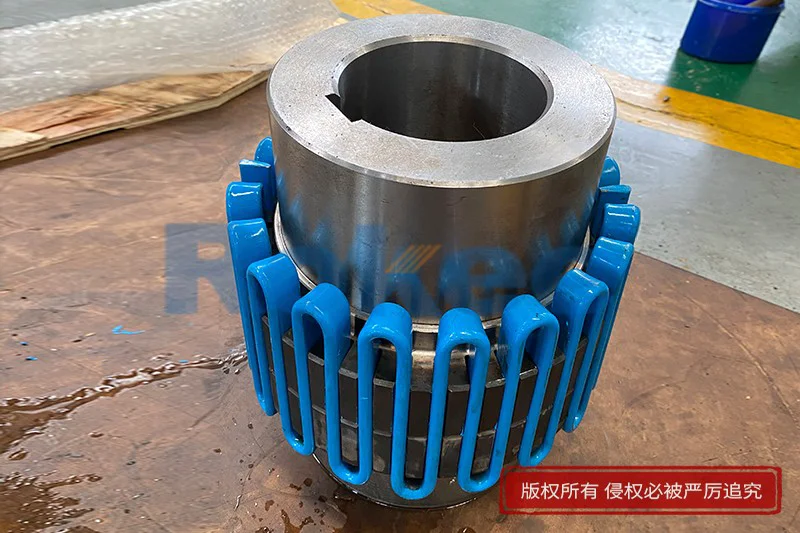
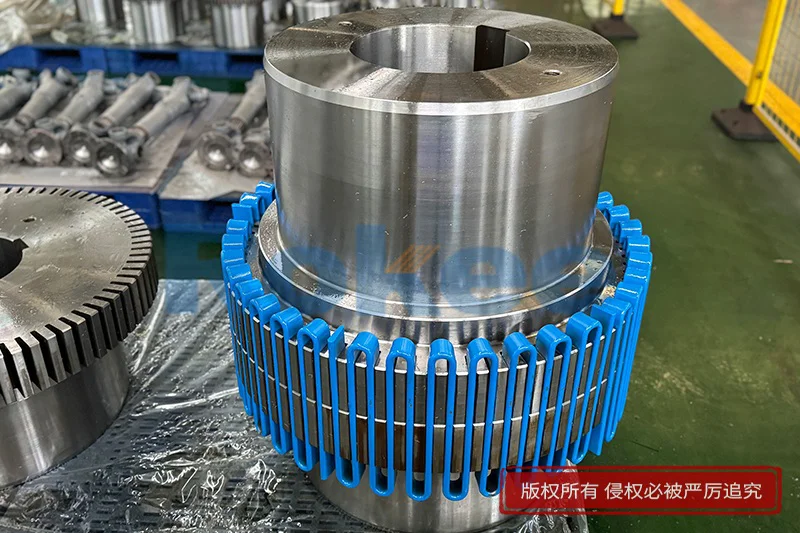
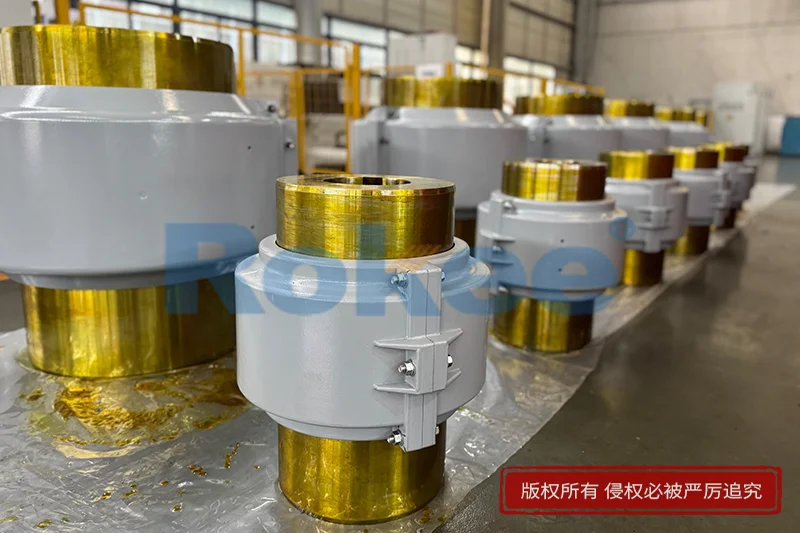
The core operational logic of the serpentine spring coupling stems from the synergistic effect of its specialized structural composition and controllable elastic deformation. Its overall structure is concise and scientific, mainly composed of two symmetrical half couplings, a set of integrated serpentine spring elements, protective sealing shells, and auxiliary sealing components. All core parts are manufactured with high-precision machining technology, ensuring dimensional accuracy and structural coordination during long-term operation. The half couplings feature uniformly distributed precision tooth grooves on the circumferential surface, which are the key meshing structures for torque transmission. The serpentine spring, forged from high-grade alloy spring steel with superior fatigue resistance and tensile strength, presents a continuous wavy serpentine shape, perfectly embedded in the tooth grooves of the two half couplings to form a flexible transmission connection. The external sealing shell wraps the internal spring and tooth groove structure, cooperating with internal sealing rings to build a fully sealed internal cavity, which stably stores lubricating media and isolates external dust, moisture, and corrosive substances.
During equipment operation, the torque generated by the driving shaft is first transmitted to the active half coupling, and the circumferential tooth grooves drive the embedded serpentine spring to bear mechanical load. Under the action of rotational thrust, the wavy spring produces mild and controllable elastic deformation along its structural curvature, and the elastic restoring force generated by the deformation steadily transfers torque and power to the driven half coupling, finally realizing the synchronous operation of the entire transmission system. This unique transmission mode fundamentally changes the rigid force transmission of traditional couplings. The elastic deformation of the serpentine spring is not fixed but adaptively adjusted according to the magnitude of the transmitted load. When the equipment starts, stops, or encounters sudden load changes, the spring can produce greater deformation to absorb instantaneous impact force; during stable operation with constant load, it maintains micro-elastic deformation to ensure efficient and lossless torque transmission. This variable stiffness transmission characteristic enables the coupling to cope with complex and fluctuating working conditions that ordinary couplings cannot adapt to.
The unique structural design and transmission mechanism grant the serpentine spring coupling a series of irreplaceable performance advantages in industrial applications. First and foremost, it possesses excellent vibration damping and impact buffering capabilities. Mechanical vibration and impact load are inevitable in the operation of various mechanical equipment, and long-term unbuffered impact will cause fatigue damage to transmission shafts, bearings, reducers, and other core components, reducing equipment accuracy and service life. The serpentine spring’s multi-wave elastic structure can effectively absorb and dissipate vibration energy generated by equipment operation, start-up impact, and load fluctuation, restrain resonance phenomenon in the transmission system, and protect the entire mechanical system from rigid impact damage. Compared with non-metallic elastic couplings such as rubber couplings, its metallic elastic element avoids aging, deformation, and failure caused by high temperature, low temperature, or long-term fatigue, boasting more stable damping performance and longer service life.
Secondly, the serpentine spring coupling has outstanding torque transmission efficiency and load adaptability. Benefiting from the uniform contact between the serpentine spring and the tooth groove surface, the stress distribution during torque transmission is extremely uniform, avoiding local stress concentration and excessive wear that are common in traditional coupling transmission structures. This uniform stress state allows the coupling to bear large torque loads while maintaining high transmission efficiency, with power transmission loss kept at an extremely low level. More importantly, its variable stiffness characteristic enables it to adapt to frequent load changes. In working scenarios with alternating light and heavy loads, the coupling can automatically adjust the elastic deformation degree and contact stress, ensuring stable and continuous power transmission without slipping or torque attenuation. This performance makes it far more adaptable to variable load working conditions than ordinary rigid and elastic couplings.
In addition, the serpentine spring coupling has excellent error compensation performance. In the installation and operation of mechanical equipment, absolute coaxiality between the driving shaft and driven shaft is difficult to achieve due to machining errors, installation deviations, equipment vibration, and thermal deformation during operation. Slight axial, radial, and angular deviations will cause additional alternating stress in the transmission system, accelerating component wear and reducing operational stability. The flexible wave structure of the serpentine spring can effectively compensate for various minor installation and operational deviations, eliminate additional stress caused by shaft misalignment, and ensure the smooth operation of the transmission system. This reliable error compensation ability greatly reduces the installation and debugging difficulty of mechanical equipment and lowers the failure rate caused by installation errors.
Reliable sealing performance and environmental adaptability are also important competitive strengths of the serpentine spring coupling. The fully sealed shell structure matched with high-precision sealing rings completely isolates the internal transmission structure from the external working environment. On the one hand, it prevents the internal lubricating grease from leakage, maintains a stable lubrication state between the spring and tooth groove surfaces for a long time, reduces friction and wear during operation, and ensures continuous and stable transmission performance. On the other hand, it effectively blocks external dust, metal debris, moisture, and corrosive gases from entering the internal cavity, avoiding corrosion, abrasion, and clamping stagnation of core components. This superior sealing structure enables the coupling to operate stably in harsh working environments such as high dust, high humidity, and slight corrosion, which is difficult for many ordinary couplings to achieve. Whether in outdoor open-air equipment, underground mining machinery, or industrial production workshops with severe dust pollution, it can maintain stable working performance and strong environmental tolerance.
The practical application value of the serpentine spring coupling is fully reflected in its wide scenario adaptability and long-term operational reliability. In heavy industrial fields such as mining and metallurgy, mechanical equipment often faces harsh working conditions of heavy load, frequent start-stop, and violent vibration. Traditional couplings are prone to fatigue fracture, severe wear, and failure under such working conditions, leading to frequent equipment shutdown and maintenance. The serpentine spring coupling’s strong impact resistance, vibration damping performance, and heavy-load bearing capacity can well adapt to the operational characteristics of crushers, conveyors, mixers, and heavy-duty reducers in the mining and metallurgy industry, effectively reducing equipment failure rates and improving continuous production capacity.
In the field of energy and power equipment, the stability of power transmission is directly related to the operational safety and efficiency of the entire system. Fans, water pumps, generators, and other energy equipment usually run continuously for a long time, with high requirements for transmission stability and fatigue resistance. The serpentine spring coupling can eliminate periodic vibration during long-term operation, avoid system resonance, ensure stable output of power and torque, and reduce the amplitude of equipment operation vibration, thus extending the service life of power equipment and reducing energy consumption caused by unstable transmission. At the same time, its low wear and low failure characteristics greatly reduce the downtime loss of continuous operating equipment, bringing significant economic benefits to industrial production.
In general machinery manufacturing and transportation equipment fields, the excellent error compensation and flexible transmission performance of the serpentine spring coupling also play an important role. A large number of general mechanical equipment has high requirements for installation convenience and operational stability. The coupling’s good shaft deviation compensation ability reduces the precision requirements of equipment installation, improves installation efficiency, and avoids equipment operation jitter and noise caused by installation errors. Its stable elastic transmission performance can also reduce mechanical operation noise, optimize the working environment of the equipment, and meet the environmental protection and low-noise operation requirements of modern industrial equipment.
From the perspective of equipment operation and maintenance, the serpentine spring coupling has obvious advantages in later-stage use cost and maintenance convenience. Its overall structural design is simple and reasonable, with few matching parts and a compact layout. The detachable shell structure makes daily inspection and component replacement extremely convenient. When the spring component reaches the service life or suffers accidental wear and damage, it can be quickly replaced without disassembling a large number of matching equipment, greatly shortening maintenance time and reducing maintenance labor costs. In addition, due to the good lubrication maintenance effect of the sealed structure, the wear rate of core components is extremely low, and the service cycle of the coupling is far longer than that of ordinary elastic couplings. It does not need frequent lubrication supplementation and component replacement in the daily operation process, which effectively reduces the daily operation and maintenance cost of the equipment.
In terms of material performance and structural durability, the serpentine spring coupling has inherent advantages. The core elastic component is made of special alloy spring steel processed through multiple heat treatment processes, which has ultra-high tensile strength, fatigue resistance, and elastic stability. It can maintain stable elastic performance after millions of times of deformation and recovery, without elastic fatigue failure or permanent deformation. The tooth groove parts of the half couplings are processed through precision finishing and surface strengthening treatment, with high surface hardness and wear resistance, which can resist long-term friction and impact wear. The matching shell and sealing components also adopt industrial high-strength materials, with strong structural rigidity and anti-aging ability, ensuring that the whole coupling can maintain stable structural performance in long-term and high-intensity industrial operation.
With the continuous upgrading of modern industrial manufacturing towards high precision, high efficiency, and high reliability, the technical requirements for mechanical transmission components are also constantly improving. Traditional transmission couplings are gradually unable to meet the operational needs of new intelligent and high-load mechanical equipment due to their single performance, poor adaptability, and short service life. As a mature and high-performance flexible transmission component, the serpentine spring coupling perfectly adapts to the development trend of modern industrial equipment by virtue of its composite performance of vibration damping, impact resistance, error compensation, high efficiency transmission, and harsh environment resistance.
In the future development of industrial transmission technology, the serpentine spring coupling will further expand its application scope with the continuous optimization of material technology and structural design. The upgrading of high-strength and high-toughness alloy materials will further improve its load-bearing capacity and fatigue resistance; the optimization of sealing and lubrication structure will enhance its adaptability in more extreme working environments such as high temperature, low temperature, and strong corrosion; and the refined structural design will further reduce transmission loss and improve the overall energy-saving effect of mechanical equipment. As a key basic component of mechanical transmission systems, it will continue to provide reliable technical support for the stable and efficient operation of various industrial equipment and become an indispensable core component in the field of modern mechanical transmission.
« Serpentine Spring Couplings » Update Date: 2026/7/15
Contact
If you require custom machined couplings, please contact Rokee via the contact information below for inquiries.
Email: https://www.gshmdpq.com
 WeChat