Elastic Couplings
Rokee is a manufacturer of elastic couplings from china, we can provide non-standard custom elastic couplings based on parameters or drawings supplied by customers, with export support available.

In the sophisticated ecosystem of modern mechanical transmission systems, the stability, durability, and operational precision of equipment hinge on countless subtle structural components that bear dynamic loads and regulate power transfer. Among these core components, elastic coupling stands out as a pivotal flexible transmission unit, serving as a critical connecting bridge between driving and driven rotating shafts. Unlike rigid coupling structures that pursue absolute rigidity and precise alignment, elastic couplings rely on controllable elastic deformation to realize torque transmission, displacement compensation, vibration absorption and impact buffering. This unique flexible working mechanism makes them indispensable in industrial equipment ranging from high-precision automated machinery to heavy-duty engineering devices. As industrial manufacturing continues to advance toward high speed, high precision and high load operation, the intrinsic value and application significance of elastic couplings have been further highlighted, becoming a key guarantee for the long-term stable operation of mechanical shaft systems.
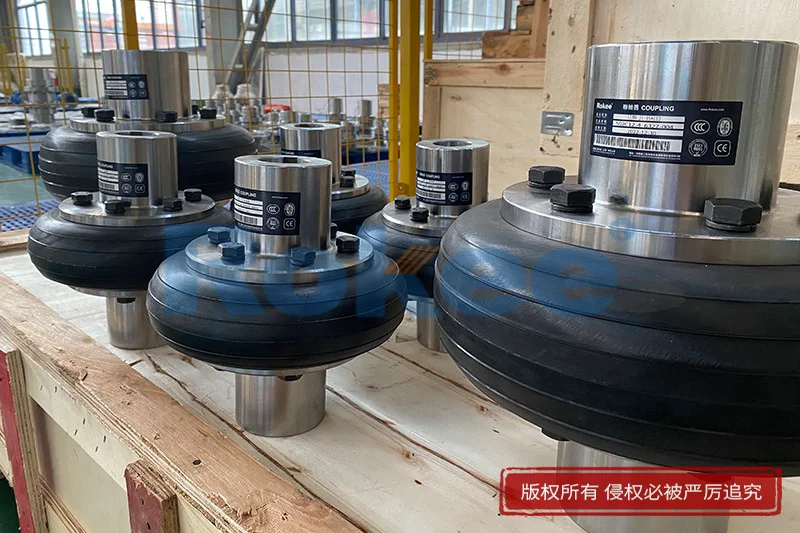

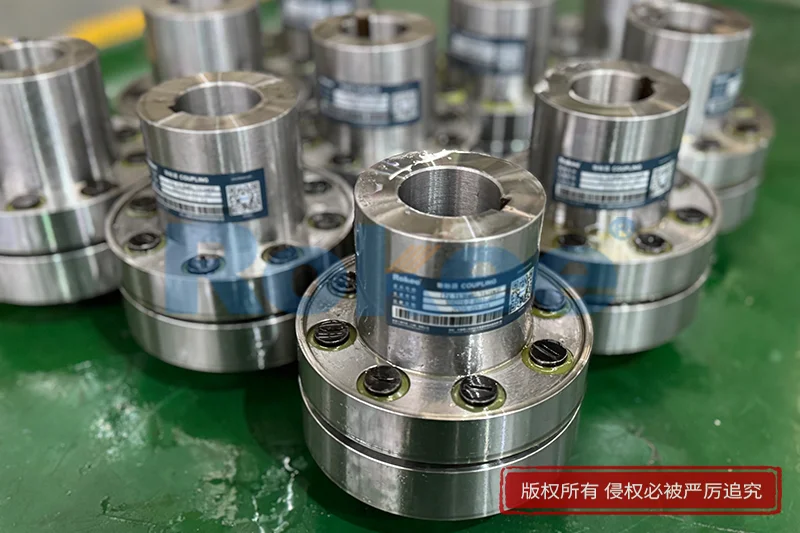
The working logic of elastic couplings is rooted in basic elastic mechanics and shaft system dynamics, with elastic deformation as the core medium to realize efficient and safe power transmission. The basic structure of most elastic couplings follows a concise and efficient integrated design concept, mainly composed of two rigid half-coupling bodies and intermediate elastic elements. The two rigid parts are respectively fixed on the driving shaft and driven shaft to undertake the positioning and connection functions, while the intermediate elastic elements, made of high-elasticity polymer materials or special elastic alloys, bear the core tasks of deformation buffering and power conduction. In the conventional operating state of mechanical equipment, the rotation of the driving shaft drives the rigid half-coupling to move synchronously, and the torque is transmitted to the driven shaft through the micro-deformation of the elastic elements. This transmission mode abandons the rigid hard connection of traditional couplings, avoiding rigid friction and rigid impact between shaft parts during power transmission.
What makes elastic couplings uniquely advantageous in industrial applications is their excellent misalignment compensation capability, which solves the ubiquitous shaft alignment deviation problem in mechanical operation. In actual industrial production, absolute precise alignment of two rotating shafts is almost impossible to achieve. Installation errors, thermal expansion and contraction of metal components caused by long-term operation, structural micro-deformation of equipment under continuous load, and mechanical wear after long-time service will all lead to different degrees of axial, radial and angular misalignment between the driving shaft and driven shaft. For rigid coupling systems, even tiny misalignments will generate additional alternating stress on the shaft body, bearings and transmission parts. Long-term accumulation of such stress will aggravate component wear, produce severe mechanical vibration and noise, and even cause shaft deformation, bearing damage or equipment shutdown in severe cases. Elastic couplings perfectly resolve this pain point through the flexible characteristics of elastic elements. The controllable elastic deformation can adapt to various minor misalignments of the shaft system, offset additional stress generated by deviation, and ensure the continuous and stable transmission of torque without damaging the mechanical structure.
Vibration damping and impact absorption are another core functional advantage of elastic couplings, which effectively optimize the dynamic operating environment of mechanical equipment. Most industrial mechanical systems will produce torsional vibration and mechanical impact during start-stop, load switching and variable-speed operation. For example, the instantaneous torque surge when the equipment starts, the sudden load change during operation, and the periodic vibration generated by the high-speed rotation of the shaft system will form fluctuating dynamic loads. These unstable loads will not only reduce the operating accuracy of the equipment, but also cause fatigue damage to mechanical parts over time, shortening the overall service life of the equipment. The elastic elements of elastic couplings have excellent energy storage and dissipation properties. When the mechanical system generates vibration and impact energy, the elastic elements will deform to store part of the impact energy, and gradually dissipate the energy in the form of elastic recovery and internal friction of materials. This process effectively suppresses torsional vibration of the shaft system, buffers instantaneous impact load, reduces vibration and noise during equipment operation, and realizes smooth power transmission. In high-speed rotating equipment and precision transmission scenarios, this vibration-damping performance can significantly improve the operating stability of the equipment and ensure the processing and operation accuracy of mechanical systems.
Material characteristics determine the basic performance boundaries of elastic couplings, and diversified material designs enable them to adapt to complex and variable industrial working conditions. Common elastic element materials include high-performance rubber and polymer elastomers, aluminum alloy, stainless steel and special spring steel. Different materials endow elastic couplings with differentiated mechanical properties and application adaptability. Elastomer-based elastic couplings have outstanding vibration damping and noise reduction effects, with good flexibility and low-temperature resistance, and are suitable for light-load, medium-high-speed and low-impact working scenarios such as automated production equipment, precision instrumentation and small transmission devices. Metal elastic element couplings represented by alloy materials have higher structural strength, fatigue resistance and high-temperature resistance, can withstand large torque and heavy-load impact, and are widely used in heavy machinery, engineering equipment, metallurgical transmission systems and other high-load, high-strength operating scenarios. In addition, with the progress of material technology, new composite elastic materials have been gradually applied to coupling manufacturing, balancing the flexibility of polymer materials and the strength of metal materials, further expanding the application range of elastic couplings in extreme working conditions such as high temperature, low temperature and strong corrosion.
In terms of operational performance and mechanical protection, elastic couplings bring comprehensive optimization to the entire mechanical transmission system. On the one hand, its flexible transmission characteristic can effectively reduce the starting load of the power device. When the equipment is started, the elastic element slowly releases energy through gradual deformation, avoiding the instantaneous overload impact of the motor and transmission parts, protecting the power core components of the equipment, and reducing the failure rate of starting links. On the other hand, the elastic buffering structure can filter out high-frequency fluctuating loads in the transmission process, make the torque output more uniform and stable, and improve the transmission efficiency and operation consistency of the mechanical system. Compared with rigid transmission structures, elastic couplings can effectively reduce the friction loss and fatigue wear of shaft bodies, bearings, gears and other matching parts, greatly extend the maintenance cycle and overall service life of mechanical equipment, and reduce the comprehensive operation and maintenance cost of industrial production.
The industrial application scenarios of elastic couplings cover almost all fields involving mechanical power transmission, showing strong universal applicability and scenario adaptability. In the field of precision automation and intelligent manufacturing, a large number of high-precision transmission devices such as robotic arms, precision machine tools, and automated assembly lines require extremely high operating stability and positioning accuracy. Elastic couplings eliminate micro-vibration and shaft deviation interference in the transmission process, ensure the accurate execution of mechanical actions, and meet the high-precision operation requirements of intelligent equipment. In the field of fluid power equipment such as pumps and fans, the equipment will generate continuous vibration and hydraulic impact during long-term continuous operation. The vibration-damping and buffering performance of elastic couplings can stabilize the operating state of the equipment, reduce the vibration transmission of the unit, and avoid resonance damage of the equipment structure.
In heavy industry and engineering machinery fields including mining equipment, construction machinery and metallurgical transmission equipment, the operating environment is harsh with frequent load changes and strong instantaneous impact. Elastic couplings rely on high-strength elastic deformation capacity to bear huge fluctuating torque and impact load, protect the transmission shaft system and power components from overload damage, and improve the operational reliability of heavy equipment under complex working conditions. In addition, in the field of transportation power transmission, packaging machinery, agricultural equipment and other civilian and industrial general machinery, elastic couplings also play an irreplaceable role, providing stable and safe flexible transmission guarantee for various mechanical equipment.
In the whole life cycle of mechanical equipment, the reasonable selection and application of elastic couplings is an important link to optimize system performance. The core selection logic is to match the elastic performance, torque bearing capacity, deformation range and material adaptability of the coupling with the actual working conditions of the equipment, including operating speed, load characteristics, working temperature, vibration intensity and alignment error range. A properly matched elastic coupling can give full play to the advantages of vibration damping, deviation compensation and impact resistance, and maximize the operational efficiency and service life of the equipment. On the contrary, unreasonable selection will lead to insufficient deformation capacity or excessive rigidity of the coupling, unable to effectively buffer vibration and compensate deviation, and even cause accelerated damage to the coupling itself and supporting mechanical parts, affecting the normal operation of the entire equipment.
With the continuous upgrading of modern industrial manufacturing technology, the performance optimization and structural innovation of elastic couplings are also advancing continuously. Traditional elastic coupling products are gradually optimized in structural design, material formula and processing technology to achieve higher precision, stronger load resistance, better fatigue resistance and longer service life. At the same time, in response to the development trend of intelligent and ultra-precision mechanical equipment, new elastic coupling structures with higher sensitivity, more accurate deformation control and stronger environmental adaptability are constantly emerging. These innovative designs further improve the dynamic performance of mechanical transmission systems, meet the increasingly stringent industrial production standards, and provide more reliable basic component support for the high-quality development of modern manufacturing industry.
From the perspective of mechanical system design, elastic coupling is not only a simple connecting component, but also an important dynamic adjustment unit in the transmission system. It builds a flexible and efficient power transmission channel between rigid mechanical structures, resolves the contradiction between rigid power transmission and flexible structural protection, and realizes the organic unity of transmission efficiency and system stability. In the complex mechanical shaft system, it undertakes the important functions of error compensation, vibration isolation and energy buffering, effectively solves various dynamic problems easily ignored in rigid transmission systems, and improves the overall robustness and environmental adaptability of mechanical equipment.
In conclusion, elastic coupling, as a classic and efficient flexible transmission component, relies on its unique elastic deformation working mechanism to realize multiple core functions such as torque transmission, misalignment compensation, vibration damping and impact buffering. Its excellent comprehensive performance makes it widely used in various industrial mechanical transmission scenarios, providing a solid guarantee for the stable, efficient and long-life operation of mechanical equipment. With the continuous progress of industrial technology and the continuous improvement of equipment operation requirements, the technical value and application scope of elastic couplings will be further expanded. The continuous innovation and optimization of its structure and materials will continue to empower the upgrading of modern mechanical transmission systems, and become an indispensable basic support for the high-speed, precise and intelligent development of industrial manufacturing.
« Elastic Couplings » Update Date: 2026/7/15
Contact
If you require custom machined couplings, please contact Rokee via the contact information below for inquiries.
Email: https://www.gshmdpq.com
 WeChat