Grid Couplings
Rokee is a manufacturer of grid couplings from china, we can provide non-standard custom grid couplings based on parameters or drawings supplied by customers, with export support available.
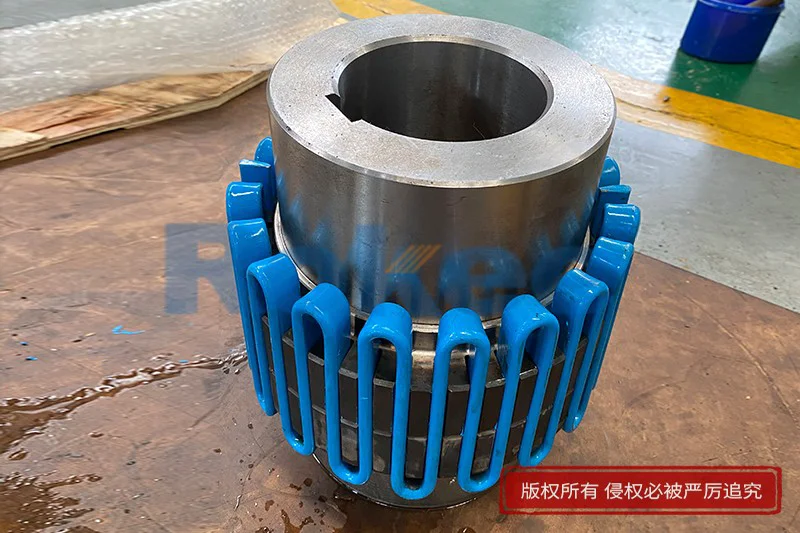
In the complex and interconnected system of modern industrial power transmission, the stability, flexibility, and durability of shaft connection components determine the overall operational efficiency and service life of mechanical equipment. Among various flexible transmission components, grid coupling has emerged as a core indispensable part of industrial transmission systems by virtue of its unique structural design, excellent shock absorption performance, and reliable misalignment compensation capability. As a classic all-metal flexible coupling form, it perfectly balances rigid torque transmission efficiency and flexible mechanical protection, solving many pain points of traditional rigid and semi-flexible couplings in long-term industrial operation, such as poor vibration damping effect, low misalignment tolerance, and easy damage to matching equipment. With the continuous upgrading of industrial manufacturing and the gradual expansion of high-load, high-frequency, and variable-speed operating scenarios, the application value and technical advantages of grid coupling have been further highlighted, making it widely used in basic industrial fields such as mechanical transmission, power equipment, and automated production lines.

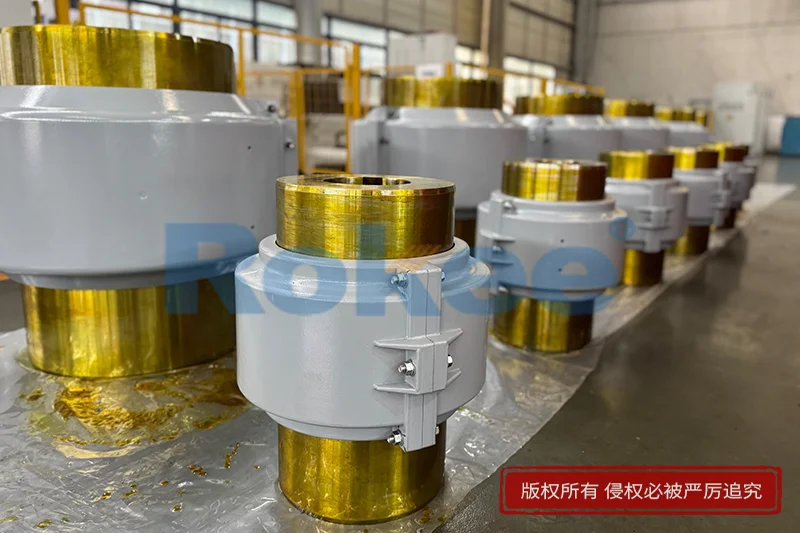
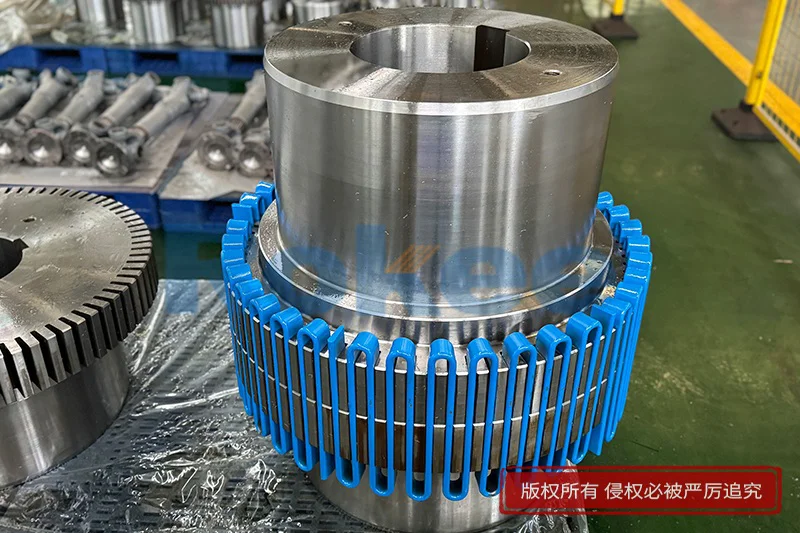
The core operating logic of grid coupling originates from the organic integration of rigid mechanical transmission and flexible elastic buffering, which realizes dual functions of efficient power transmission and equipment safety protection. Different from rigid couplings that rely entirely on hard contact for torque transmission and elastic sleeve couplings that depend on non-metallic materials for buffering, the basic structure of grid coupling is composed of two symmetric hubs with precision machined grooves and a high-strength alloy steel grid element. The accordion-like flexible grid strip is clamped in the matching grooves of the two hubs, forming a closed and integrated transmission structure. During equipment operation, the driving shaft drives one hub to rotate, and the torque is stably transmitted to the driven hub and the connected driven shaft through the elastic deformation of the metal grid, thereby realizing synchronous operation of the entire transmission system. This unique transmission mode abandons the single rigid contact mode, and the controllable elastic deformation of the metal grid becomes the key to its excellent performance.
In the actual power transmission process, the flexible characteristics of the grid element endow the coupling with outstanding adaptive adjustment capabilities. When the equipment is started, stopped, or switched operating conditions, the instantaneous impact load generated by torque fluctuation will cause micro-deformation of the metal grid. This elastic deformation can effectively absorb and buffer mechanical shock energy, avoid the instantaneous sharp increase of transmission stress, and prevent rigid impact damage to shafts, bearings, and core transmission components. In the long-term continuous operation state, the grid element can always maintain stable torsional compliance, effectively dampen high-frequency vibration generated by equipment operation, reduce vibration noise in the transmission system, and avoid mechanical fatigue damage caused by long-term vibration resonance. More importantly, the structural flexibility of the grid allows it to automatically compensate for multiple types of installation and operation deviations, including axial displacement, radial parallel misalignment, and angular deflection between the driving and driven shafts. In industrial scenarios, absolute coaxiality of shaft installation is difficult to achieve due to installation errors, equipment aging, foundation settlement, and thermal expansion and contraction of components. Grid coupling can adapt to these minor deviations within the allowable range, eliminate additional friction and bending stress caused by misalignment, and ensure the continuous and stable operation of the transmission system.
Compared with other common coupling types in the industrial field, grid coupling has comprehensive performance advantages in terms of load resistance, environmental adaptability, and service stability. Rigid couplings have high transmission efficiency but cannot tolerate any shaft misalignment and have no vibration damping and shock absorption capabilities. Slight installation deviation or equipment operation vibration will cause severe wear of components and even shaft deformation and fracture. Rubber and polyurethane elastic couplings rely on non-metallic materials for buffering, but they are prone to aging, deformation, and fatigue damage in high-temperature, low-temperature, or harsh chemical environments, with limited load-bearing capacity and short service life. Gear couplings have strong load-bearing performance but complex structures, high processing and assembly accuracy requirements, poor vibration damping effects, and high operating noise. In contrast, grid coupling adopts an all-metal structural design, which has excellent environmental adaptability and can maintain stable working performance in high-temperature, low-temperature, dusty, and slightly corrosive industrial environments without being affected by environmental factors such as temperature change and medium erosion. Its integrated grid structure can bear large torque and variable load impact, and the overall structural stability is far superior to non-metallic flexible couplings.
In terms of overload protection, grid coupling has unique inherent safety characteristics, which can serve as a natural safety barrier for mechanical equipment. When the equipment encounters extreme working conditions such as sudden overload, stuck operation, and abnormal torque surge, the elastic deformation of the grid element will reach the limit state first. Under excessive load, the grid will produce controllable structural failure to cut off the torque transmission path, avoiding continuous overload damage to high-value core equipment such as motors, reducers, and transmission shafts. This passive protection mechanism can effectively reduce the failure loss of the transmission system. Compared with external overload protection devices such as torque limiters, the built-in overload protection function of grid coupling does not require additional control systems and mechanical accessories, with simpler structure, more sensitive response, and higher operational reliability, which can greatly reduce the probability of major equipment failures in industrial production.
The excellent comprehensive performance of grid coupling makes it suitable for a wide range of industrial transmission scenarios, especially for working conditions with frequent start-stop, variable load operation, high vibration, and certain installation misalignment. In the field of industrial manufacturing and automated production, it is widely applied to the transmission connection of conveyor equipment, processing machinery, and automated assembly lines. These devices often face frequent start-stop and variable load impact during operation, and the vibration damping and buffering performance of grid coupling can effectively stabilize the transmission state, reduce equipment failure rates, and improve production continuity. In the field of power and energy equipment, grid coupling is used for the shaft connection of fans, pumps, compressors, and power transmission machinery. Such equipment runs continuously for a long time, and minor shaft misalignment and operating vibration will be amplified in long-term operation. The misalignment compensation and vibration damping capabilities of grid coupling can reduce component wear and extend the service cycle of the entire equipment.
In heavy industry fields such as metallurgy, mining, and building materials, mechanical equipment usually operates under heavy load, high impact, and harsh environmental conditions. The high torque resistance and structural durability of grid coupling can adapt to severe working conditions such as heavy load impact and dusty environment, maintaining stable transmission efficiency in long-term high-intensity operation. In addition, in the field of precision mechanical transmission that requires low vibration and low noise, the excellent vibration damping performance of grid coupling can effectively suppress transmission system vibration and noise, improve the operating accuracy of precision equipment, and meet the high-precision operation requirements of modern intelligent manufacturing equipment. Whether it is continuous stable operation under conventional working conditions or adaptive operation under complex and harsh working conditions, grid coupling can show reliable comprehensive performance, which is why it has become a mainstream transmission component in the industrial field for a long time.
In terms of installation, maintenance and operational economy, grid coupling also has prominent practical advantages that are suitable for large-scale industrial applications. Its overall structure is simple and compact, with few matching parts, and the assembly and disassembly process does not require complex professional tools and complicated operation procedures. The precise matching structure of the hub and grid strip enables quick positioning and installation, which can effectively shorten the equipment assembly cycle and improve production and maintenance efficiency. In daily operation and maintenance, the wearing parts of grid coupling are single and easy to replace. Compared with gear couplings and other products that require overall disassembly and complex maintenance, the later maintenance cost and time cost of grid coupling are greatly reduced. Moreover, the all-metal wear-resistant structure greatly reduces the frequency of component replacement, and the long service life can effectively reduce the overall operating cost of industrial equipment, bringing stable economic benefits to industrial production.
With the in-depth development of industrial intelligence and green manufacturing, the technical iteration and performance optimization of grid coupling are also constantly advancing. Modern industrial production puts forward higher requirements for transmission components, including higher precision, stronger environmental adaptability, lower energy consumption, and longer service life. In terms of material optimization, high-strength alloy materials with better wear resistance, fatigue resistance and corrosion resistance are gradually applied to grid coupling manufacturing. Through precise heat treatment processes, the structural strength and elastic stability of the grid element are further improved, enabling the coupling to adapt to more extreme working conditions and prolonging the fatigue service life under variable load operation.
In terms of structural optimization, the groove structure of the hub and the structural form of the grid strip are continuously optimized through mechanical simulation and dynamic torque analysis. The improved structural design can make the torque transmission more uniform, reduce local stress concentration during operation, further improve the misalignment compensation accuracy and vibration damping effect, and reduce transmission energy consumption. At the same time, the lightweight and compact design has become an important development direction. On the premise of ensuring load-bearing performance, reducing the overall volume and weight of the coupling can effectively reduce the structural load of the equipment, optimize the dynamic performance of the transmission system, and meet the lightweight and high-efficiency development needs of modern industrial equipment.
In terms of intelligent matching application, grid coupling is gradually combined with modern industrial monitoring technology to realize intelligent operation and maintenance. By matching vibration monitoring and torque sensing components, the operating state of the coupling can be monitored in real time, including vibration amplitude, torque load, and component fatigue state. The real-time data feedback can help equipment managers judge the operating health of the transmission system, realize early warning of potential failures such as grid fatigue wear and excessive misalignment, and change the traditional passive maintenance mode of post-fault repair to active predictive maintenance. This intelligent operation and maintenance mode can further improve the operational reliability of industrial equipment, reduce unplanned downtime, and provide strong support for the stable and efficient operation of intelligent production lines.
In the context of global industrial upgrading and energy conservation and emission reduction, the application value of grid coupling is also reflected in energy-saving and efficient operation. The efficient and stable torque transmission characteristic reduces power loss and mechanical friction loss in the transmission process, effectively improving the energy utilization efficiency of mechanical equipment. The excellent vibration damping performance reduces the mechanical fatigue loss of equipment components, reduces the energy consumption caused by vibration and impact, and helps industrial equipment achieve green and low-carbon operation. With the continuous improvement of industrial energy efficiency standards, high-efficiency and low-loss transmission components represented by grid coupling will become more widely popularized in the industrial field.
In conclusion, grid coupling, as a mature and high-performance flexible transmission component, relies on its unique all-metal flexible structure, excellent shock absorption and buffering performance, reliable misalignment compensation capability, and perfect overload protection mechanism to solve many key problems in industrial power transmission. It has irreplaceable application advantages in terms of operational stability, environmental adaptability, safety protection, and economic maintenance. From traditional heavy industry to modern intelligent manufacturing, from conventional continuous operation to complex variable load working conditions, grid coupling can always adapt to diverse industrial scenarios and provide stable and efficient transmission support for mechanical equipment. With the continuous progress of material technology, structural optimization technology and intelligent monitoring technology, the performance of grid coupling will be further improved, and its application scope and industrial value will be continuously expanded. It will continue to serve as an important basic component of modern industrial transmission systems, promoting the stable, efficient and intelligent development of industrial manufacturing.
« Grid Couplings » Update Date: 2026/7/15
Contact
If you require custom machined couplings, please contact Rokee via the contact information below for inquiries.
Email: https://www.gshmdpq.com
 WeChat