Barrel Coupling Brands
In the intricate ecosystem of industrial power transmission, mechanical coupling components serve as the silent backbone of rotational machinery systems, enabling seamless torque transfer, structural stability, and operational consistency across diverse heavy-duty applications. Among the wide array of coupling designs available for industrial use, barrel couplings have emerged as a uniquely reliable and high-performance solution, distinguished by their specialized structural mechanics, superior load-bearing capacity, and exceptional tolerance for mechanical misalignment. As global industrial infrastructure continues to advance toward higher efficiency, longer operational lifespans, and more rigorous safety standards, the technological evolution and market competition surrounding barrel coupling solutions have become increasingly prominent, driving continuous innovation in material science, structural optimization, and manufacturing precision throughout the industry.
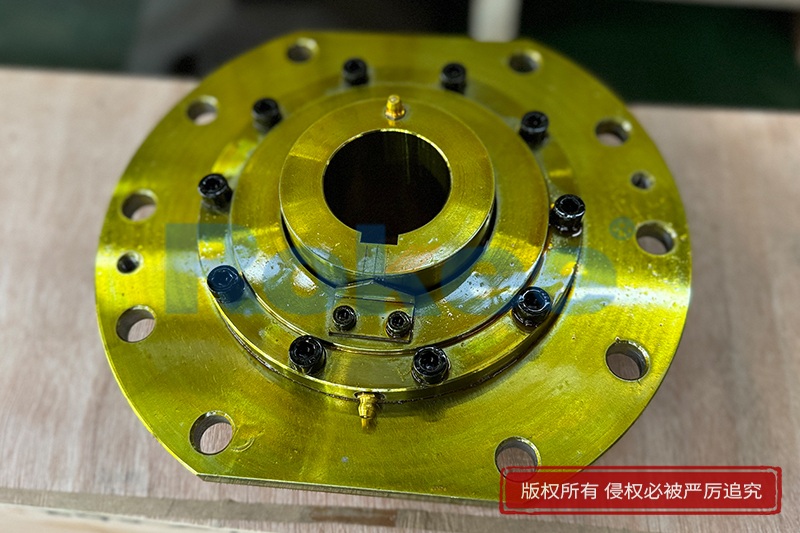
Unlike conventional coupling mechanisms that rely on rigid meshing, linear contact structures, or elastic component deformation to transmit torque, barrel couplings adopt a revolutionary curved surface contact design centered on barrel-shaped roller pins. This fundamental structural difference redefines the mechanical performance boundaries of industrial couplings, addressing many inherent flaws of traditional transmission connection components. Conventional straight-pin couplings typically generate concentrated stress at linear or point contact points during operation, leading to localized fatigue accumulation, material wear, and premature component failure under long-term heavy-load conditions. In contrast, the barrel-style contact structure of modern couplings distributes mechanical pressure evenly across a broad curved contact surface, effectively eliminating stress concentration points, reducing friction loss, and significantly enhancing the overall structural durability of the transmission system. This core structural advantage forms the primary foundation for the widespread adoption of barrel couplings in high-intensity industrial scenarios.
The industrial value of barrel couplings extends far beyond basic torque transmission functionality, encompassing multi-dimensional adaptive capabilities that cater to complex and harsh operating environments. In practical industrial operation, mechanical equipment inevitably produces subtle axial displacement, angular deviation, and radial misalignment due to structural deformation, foundation settlement, component wear, and continuous vibration. These minor mechanical deviations, if left uncompensated, will generate additional structural stress on transmission shafts, bearings, and gear systems, accelerating equipment aging and increasing the risk of sudden operational failures. Barrel couplings are uniquely engineered to actively compensate for these common mechanical misalignments, maintaining stable power transmission while protecting the entire mechanical system from abnormal stress damage. This adaptive compensation performance makes them irreplaceable core components in continuous-operation industrial equipment.
The global industrial barrel coupling market has maintained steady growth in recent years, driven by the rapid expansion of heavy industry, infrastructure construction, and automated manufacturing sectors. The rising demand for high-reliability transmission components in mining, metallurgy, port handling, construction machinery, and energy production industries has continuously fueled the technological upgrading and market iteration of barrel coupling products. Modern industrial production increasingly emphasizes equipment continuity, safety stability, and maintenance economy, which has prompted the entire barrel coupling industry to shift from simple standardized production to customized, high-precision, and long-life product development. Industrial procurement standards now focus more on comprehensive performance indicators such as structural stability, fatigue resistance, environmental adaptability, and after-sales service support, rather than merely basic parameter matching.
Manufacturing excellence in barrel coupling production hinges on three core dimensions: material selection, precision processing, and quality control systems. High-performance barrel couplings require raw materials with excellent tensile strength, wear resistance, and fatigue resistance to withstand long-term high-torque impact and cyclic mechanical loading. Advanced alloy steel materials with precise heat treatment processes are universally adopted in premium product manufacturing, achieving optimal balance between structural hardness and toughness to avoid brittle fracture or excessive wear under extreme working conditions. Meanwhile, ultra-precision machining technologies ensure the dimensional accuracy of barrel pins, contact surfaces, and assembly structures, guaranteeing consistent contact coordination and stable torque transmission during high-speed and heavy-load operation. Strict quality inspection systems covering raw material testing, semi-finished product monitoring, and finished product performance verification further ensure the unified quality and reliable performance of batch products.
Harsh industrial operating environments pose stringent tests for the environmental adaptability of barrel couplings. In mining and metallurgical production scenarios, equipment operates continuously in high-dust, high-vibration, and variable-temperature environments for extended periods, placing extremely high requirements on the dust resistance, corrosion resistance, and structural stability of transmission components. In port and marine engineering applications, equipment faces humid, salt-spray corrosive environments, demanding excellent anti-corrosion performance and environmental aging resistance from coupling components. Modern barrel coupling manufacturing technologies incorporate specialized surface treatment processes and sealed structural designs to effectively isolate dust, moisture, and corrosive media, ensuring long-term stable operation in complex working conditions without frequent maintenance or replacement. This robust environmental adaptability has become a key competitive indicator for mainstream industrial coupling solutions.
Lifting and material handling machinery represents the most typical application scenario for barrel couplings, where their structural advantages are fully demonstrated. Hoisting equipment such as industrial cranes, winding hoists, and conveyor drum systems requires stable connection between reducer output shafts and winding drums, undertaking dual tasks of high-torque transmission and radial load bearing. Rigid connection structures commonly used in traditional equipment are prone to statically indeterminate mechanical states under multi-point bearing conditions, generating additional structural stress that damages bearings and gear components. The flexible connection characteristics of barrel couplings perfectly solve this mechanical problem, realizing precise torque transmission while allowing reasonable mechanical displacement, effectively protecting key transmission components and extending the overall service life of lifting equipment. In automated logistics and bulk material conveying systems, barrel couplings also ensure the stable operation of long-distance conveying equipment, reducing equipment failure rates caused by mechanical vibration and misalignment.
Mining and mineral processing industries constitute another major application field for high-performance barrel couplings. Large-scale mining machinery including excavators, crushers, grinding mills, and mineral processing conveying equipment operates under extreme heavy-load and high-vibration conditions throughout the production cycle. The traditional coupling structures often struggle to withstand continuous impact loads and frequent mechanical vibration, resulting in short service life and high maintenance frequency. Barrel couplings, with their superior heavy-load resistance, vibration damping performance, and misalignment compensation capability, can adapt to the harsh working conditions of mining sites, maintaining efficient and stable power transmission for crushing, grinding, and conveying systems. Their reliable operation effectively reduces equipment downtime caused by coupling failure, improving the continuous operation efficiency of the entire mining production line and reducing overall operational costs.
Energy production and industrial manufacturing sectors also rely heavily on high-quality barrel coupling solutions. In thermal power, wind power, and new energy equipment transmission systems, stable and consistent power transmission is critical to ensuring energy conversion efficiency and equipment operational safety. Barrel couplings can adapt to variable load operation states and frequent start-stop working conditions, avoiding power transmission fluctuations and component fatigue damage caused by load changes. In heavy manufacturing equipment such as metallurgical rolling machinery, forging equipment, and large-scale machine tools, the precise torque transmission and structural stability of barrel couplings guarantee the processing accuracy and operational stability of industrial equipment, meeting the high-precision production requirements of modern manufacturing industry.
Industry standardization and certification systems play a vital guiding role in the standardized development of the barrel coupling sector. A series of international industrial standards and mechanical protection specifications have established unified technical benchmarks for product design, manufacturing, and performance testing, promoting the overall upgrading of industry product quality. Modern high-quality barrel coupling products strictly comply with international industrial manufacturing norms, with complete performance traceability systems and standardized performance certification indicators. These standardized technical requirements not only regulate the production behaviors of manufacturing enterprises but also provide reliable judgment basis for industrial users in product selection, effectively avoiding performance risks caused by non-standard products in industrial operation.
Technological innovation has always been the core driving force for the iterative upgrading of barrel coupling products. With the continuous progress of industrial manufacturing technology, the barrel coupling industry is constantly exploring optimized structural designs, new material applications, and intelligent manufacturing processes. Innovative structural designs further optimize contact mechanics and stress distribution, improving product load-bearing efficiency and fatigue resistance. The application of new high-strength, wear-resistant, and corrosion-resistant materials further enhances the environmental adaptability and service life of products. The popularization of intelligent precision manufacturing technologies such as digital processing and automated assembly effectively improves product dimensional accuracy and batch consistency. Meanwhile, the integrated design of wear monitoring and fault early warning functions has become a new development trend, enabling real-time perception of component operating status and further improving the safety and maintainability of equipment operation.
Market competition in the barrel coupling industry is gradually shifting from traditional single performance competition to comprehensive strength competition covering technology research and development, manufacturing quality, customized service, and after-sales support. With the continuous refinement of industrial application scenarios, standardized general-purpose products can no longer fully meet the differentiated needs of special working conditions. More and more industrial users tend to choose customized barrel coupling solutions designed and manufactured according to specific equipment parameters and working environment characteristics. This market change urges industry manufacturers to continuously strengthen technical research and development capabilities, improve customized design and production levels, and provide targeted transmission component solutions for different industrial scenarios.
The development prospect of the global barrel coupling industry remains promising in the long term. The continuous advancement of global industrialization, accelerated construction of intelligent factories, and continuous upgrading of heavy industrial equipment will generate sustained and stable market demand for high-performance barrel couplings. Meanwhile, the industry’s continuous exploration in lightweight design, high-efficiency transmission, long-life durability, and intelligent monitoring will further expand the application boundary of barrel coupling products. In the future, barrel coupling technology will develop toward higher precision, stronger adaptability, longer service life, and more intelligent operation, providing more reliable core support for the safe, efficient, and stable operation of modern industrial transmission systems.
In summary, barrel couplings, as a special type of high-performance flexible coupling, occupy an indispensable core position in the field of industrial power transmission by virtue of their unique structural advantages, excellent comprehensive performance, and wide scenario adaptability. Behind the steady development of the industry lies the continuous innovation of manufacturing technology, strict control of product quality, and in-depth insight into industrial application needs. As modern industrial equipment continues to develop toward large-scale, high-efficiency, and intelligent operation, the technical value and market importance of high-quality barrel coupling solutions will continue to rise, becoming an important fundamental guarantee for the stable operation of global industrial infrastructure.
Tags: Barrel Couplings , sandwich panel machine , pu sandwich panel line
« Barrel Coupling Brands » Update Date: 2026/7/15
Contact
If you require custom machined couplings, please contact Rokee via the contact information below for inquiries.
Email: https://www.gshmdpq.com
 WeChat
Industrial Couplings
You may also like
- Plate Couplings Engineering Drawing
- Tooth Couplings Working Principle
- Universal Coupling Joints Assembly Drawing
- Cardan Shaft Alignment Tolerances
- Tyre Coupling Gap Chart
- Working Principle of Bush Pin Type Flexible Coupling
- Universal Cross Joint Coupling Structural Diagram
- Universal Coupling Joint Uses
- Cross Cardan Shafts 3D Model
- Universal Joint Shaft Coupling Schematic Diagram