Flexible Coupling For Pumps
Rokee is a manufacturer of flexible coupling for pumps from china, we can provide non-standard custom flexible coupling for pumps based on parameters or drawings supplied by customers, with export support available.

In modern fluid handling systems, pumps serve as the core power equipment responsible for medium transportation across industrial, commercial, and municipal scenarios. The stable operation of pump units directly determines the efficiency, safety, and service life of the entire fluid system. Among all supporting components of pump systems, flexible couplings are often regarded as inconspicuous auxiliary parts, yet they undertake the critical task of connecting pump shafts and motor shafts, transmitting rotational torque, and buffering various operational stresses. Unlike rigid couplings that pursue absolute structural rigidity, flexible couplings rely on elastic deformation and structural flexibility to adapt to complex dynamic operating conditions, solving multiple pain points in the operation of pump transmission systems, including shaft misalignment, vibration impact, and mechanical fatigue. With the continuous upgrading of industrial equipment towards high efficiency, low energy consumption, and long service life, the application value and technical importance of flexible couplings for pumps have become increasingly prominent, becoming an indispensable key guarantee for the reliable operation of modern pump equipment.

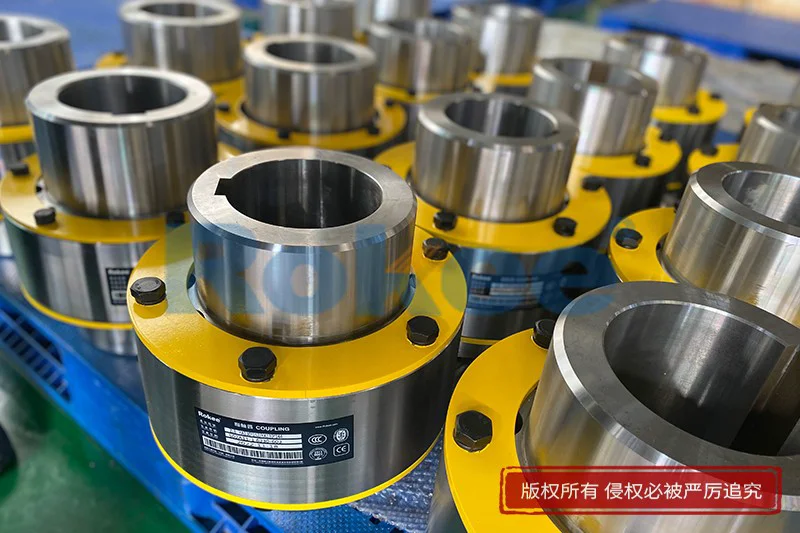

The fundamental design logic of flexible couplings for pumps originates from the inherent mechanical defects of rigid transmission connections in pump operation. During the installation and long-term operation of pump units, absolute coaxial alignment between the motor driving shaft and the pump driven shaft is theoretically unattainable. Minor deviations in horizontal and vertical angles, axial displacement, and radial offset are inevitable due to manual installation errors, equipment foundation settlement, thermal expansion and contraction of metal components during operation, and long-term mechanical wear. Rigid couplings cannot compensate for these subtle misalignments, which will cause continuous alternating stress on the shaft, bearings, and mechanical seals during high-speed rotation. This long-term stress impact will gradually induce equipment vibration, increase operating noise, accelerate the wear of bearing assemblies and sealing components, and even lead to shaft deformation or equipment shutdown failure in severe cases. Flexible couplings perfectly make up for this defect through their unique flexible structure, retaining the basic torque transmission function while providing reliable misalignment compensation capability, realizing flexible connection and stable power output of the pump transmission system.
The working mechanism of pump couplings mainly relies on the elastic deformation of internal flexible components to achieve multi-dimensional adaptive adjustment and energy dissipation. Most flexible coupling structures are composed of metal rigid hubs and elastic flexible elements, where the rigid hubs are stably fixed with the motor shaft and pump shaft respectively to ensure accurate torque transmission, while the intermediate flexible elements are usually made of rubber, polyurethane, elastic metal sheets and other materials with excellent damping and deformation recovery properties. When the pump is started, stopped, or operates with fluctuating loads, the flexible elements can produce tiny elastic deformation to absorb and buffer instantaneous impact loads, avoiding rigid collision and stress concentration between the driving and driven shafts. In the continuous rotating operation of the equipment, the flexible structure can automatically adapt to the slight axial, radial and angular misalignment of the two shafts, offset the additional mechanical stress caused by misalignment, and ensure that the torque is always transmitted uniformly and stably. At the same time, the flexible elements can effectively absorb the vibration energy generated by the pump during fluid transportation, isolate the vibration transmission between the motor and the pump body, and reduce the overall vibration amplitude of the unit.
The unique structural and performance advantages of flexible couplings endow pump equipment with comprehensive operational optimization effects, covering equipment protection, operating efficiency, noise control and life extension. In terms of equipment protection, the damping and buffering performance of flexible elements can effectively resist the impact of sudden load changes during pump start-stop and variable-frequency operation, protect precision components such as pump shafts, bearings and mechanical seals from fatigue damage, and greatly reduce the failure rate of vulnerable parts in the transmission system. In traditional rigid connection pump systems, mechanical seal damage and bearing ablation caused by shaft misalignment and vibration account for most of the daily maintenance failures, while the application of flexible couplings can fundamentally reduce such abnormal losses. In terms of noise and vibration control, the elastic damping structure can dissipate high-frequency vibration energy generated by mechanical operation and fluid turbulence, reduce the resonance risk of the entire pump unit and pipeline system, and significantly lower the operating noise of the equipment, which is particularly suitable for working scenarios with high environmental noise requirements such as municipal water supply and commercial buildings.
In terms of long-term operation economy, flexible couplings have outstanding maintenance advantages compared with rigid transmission structures. Most pump flexible couplings adopt a maintenance-free structural design, without the need for regular lubrication, sealing replacement and other routine maintenance work, which greatly reduces the daily operation and maintenance cost and labor investment of the equipment. The elastic materials used in mainstream flexible couplings have excellent oil resistance, aging resistance and weather resistance, and can maintain stable mechanical performance in complex working environments such as high temperature, low temperature, humid and dusty conditions, avoiding performance attenuation caused by environmental changes. Although the structural design of flexible couplings is relatively sophisticated, their overall stability and durability make the pump unit achieve longer continuous operation cycles, reduce frequent shutdown maintenance times, and effectively improve the overall operating efficiency and production continuity of the fluid system.
Flexible couplings for pumps have formed a variety of structural forms in long-term engineering applications, adapting to different power levels, rotating speeds and working condition requirements of pump equipment. According to the flexible implementation mode, they can be divided into material flexible couplings and mechanical flexible couplings. Material flexible couplings mainly rely on the elastic deformation of non-metallic or metal elastic materials to realize flexibility compensation, including elastic sleeve pin couplings, plum blossom couplings, diaphragm couplings and other common types. Such couplings have simple structure, good damping effect and low operation noise, and are widely used in small and medium-sized water pumps, chemical delivery pumps and civil fluid transportation equipment with medium and low torque and conventional rotating speed. Mechanical flexible couplings realize misalignment compensation through the relative movement of internal mechanical structures such as gears and pins, featuring high torque bearing capacity and strong structural rigidity, and are mostly applicable to large industrial pumps, high-pressure delivery pumps and heavy-duty fluid equipment with high power, high rotating speed and severe load fluctuation.
Different types of flexible couplings show distinct performance characteristics and scenario adaptability in practical pump matching. Elastic sleeve pin couplings have compact structure and convenient installation and disassembly, with good adaptability to frequent start-stop and light impact working conditions, and are very suitable for conventional circulating pumps and water supply pumps in building HVAC systems. Plum blossom elastic couplings adopt integrated elastic buffer structure, with uniform stress distribution and excellent vibration damping performance, which can effectively adapt to the slight vibration and misalignment of pump equipment during long-term continuous operation, and are widely used in industrial circulating water systems and sewage treatment pump stations. Diaphragm couplings use metal thin-wall elastic components for flexible transmission, with high temperature resistance, corrosion resistance and no aging failure risk of non-metallic materials, and can maintain stable transmission accuracy in high-temperature fluid delivery and chemical corrosive working environments, becoming the preferred matching part for industrial precision pump equipment.
The rational selection of flexible couplings is the premise to ensure the efficient and stable operation of pump systems, and the selection process needs to comprehensively consider multiple core factors such as pump operating parameters, working environment and load characteristics. First of all, the matching of torque and rotating speed is the basic index for selection. The flexible coupling needs to meet the rated torque and peak torque requirements of the pump during start-up and variable-load operation, and its allowable rotating speed range must cover the full-speed operation range of the pump to avoid structural deformation or performance failure caused by overload and overspeed operation. Secondly, the misalignment compensation capability of the coupling should match the actual installation and operation state of the pump unit. For pump equipment with large foundation vibration or easy settlement, a flexible coupling with larger compensation range needs to be selected to cope with dynamic shaft offset in long-term operation.
The adaptability of working environment is also a key factor that cannot be ignored in coupling selection. In conventional normal temperature and dry working environments, ordinary non-metallic elastic flexible couplings can meet the operation requirements and have high cost performance. In high-temperature, low-temperature, humid or corrosive medium working environments, it is necessary to select couplings with special material formulas or metal elastic structures to avoid elastic material aging, deformation and corrosion failure. In addition, for pump equipment with frequent start-stop, alternating load and impact load, priority should be given to flexible couplings with excellent buffer energy absorption performance and fatigue resistance, so as to eliminate the mechanical stress damage caused by frequent load changes and extend the service life of the entire transmission system.
Standardized installation and calibration are crucial to give full play to the performance advantages of flexible couplings for pumps. Many operational failures of pump units are not caused by coupling quality problems, but by unreasonable installation and alignment. During the installation process, although flexible couplings have certain misalignment tolerance, excessive shaft offset and angle deviation will still cause accelerated wear of flexible components, increased equipment vibration and reduced transmission efficiency. Professional installation operations need to complete the precise alignment of the motor shaft and pump shaft through special detection tools, control the misalignment error within the optimal allowable range of the coupling, and ensure the uniform stress of the flexible components during operation. At the same time, the fastening degree of the coupling hub and the shaft, the assembly gap of elastic components need to be strictly standardized to avoid abnormal vibration and noise caused by loose assembly or excessive friction.
Daily maintenance and inspection of flexible couplings can further optimize the operating state of pump equipment and avoid potential failures. Although most flexible couplings are maintenance-free, regular visual inspection and operational state detection are still required in long-term industrial operation. The inspection focus includes whether the elastic components have aging deformation, crack damage and fatigue wear, whether the hub has loose deflection, and whether the coupling has abnormal vibration and noise during operation. For pump equipment operating in high-load and harsh environments, the aging degree of elastic components should be checked regularly, and worn and failed parts should be replaced in a timely manner to prevent sudden equipment shutdown caused by coupling failure. In addition, after the equipment is overhauled, the shaft alignment state of the coupling needs to be recalibrated to eliminate the misalignment deviation caused by equipment disassembly and assembly, and restore the optimal transmission state of the system.
With the rapid development of industrial intelligent manufacturing and fluid transmission technology, the technical upgrading of flexible couplings for pumps is also advancing continuously. Modern pump equipment is developing towards high speed, high precision, energy saving and intelligence, which puts forward higher requirements for the comprehensive performance of supporting couplings. The new generation of flexible coupling products adopt optimized elastic material formulas and structural design, with higher misalignment compensation accuracy, better vibration damping and energy dissipation effect, and stronger fatigue resistance and environmental adaptability. At the same time, with the integration of lightweight design and precision processing technology, the overall structure of flexible couplings is more compact, the transmission efficiency is further improved, and the energy consumption loss in the pump transmission process is effectively reduced, which conforms to the development trend of industrial energy conservation and emission reduction.
In the field of industrial application, the popularization and application of high-performance flexible couplings have brought significant comprehensive benefits to pump fluid systems. It not only solves the common mechanical failure problems of traditional pump transmission systems, reduces the frequency of equipment maintenance and replacement of vulnerable parts, and cuts down the overall operation cost of the system, but also effectively improves the operating stability and working efficiency of pump equipment, reduces energy consumption loss caused by vibration and misalignment, and extends the overall service life of pump units. In many key industrial fields such as petrochemical industry, water supply and drainage, HVAC refrigeration, and pharmaceutical and food processing, flexible couplings have become a standard supporting component for pump equipment, and their application quality directly affects the operational reliability and economic benefits of the entire fluid system.
In conclusion, flexible couplings are the core adaptive components of modern pump transmission systems, and their flexible compensation, vibration damping and impact resistance performance provide a solid mechanical guarantee for the stable, efficient and long-life operation of pump equipment. From solving basic shaft misalignment problems to optimizing system vibration noise, reducing operation and maintenance costs, and improving system operation efficiency, flexible couplings play an irreplaceable role in the entire life cycle of pump equipment. With the continuous progress of mechanical design technology and material science, the performance of pump flexible couplings will be further optimized, and their application scope and technical value will be continuously improved, providing more reliable support for the efficient and safe operation of various fluid transmission systems in industrial and civil fields. In the daily operation and management of pump equipment, attaching importance to the rational selection, standardized installation and scientific maintenance of flexible couplings is an important means to realize refined equipment management, reduce operational risks and improve equipment operation benefits.
« Flexible Coupling For Pumps » Update Date: 2026/7/16
Contact
If you require custom machined couplings, please contact Rokee via the contact information below for inquiries.
Email: https://www.gshmdpq.com
 WeChat