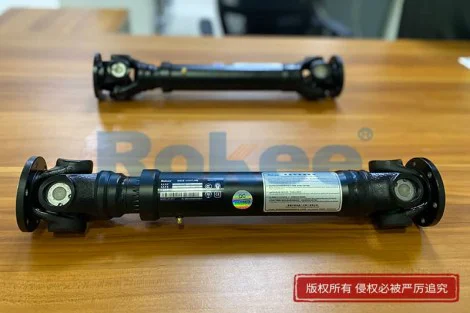
Pump Couplings
Rokee is a manufacturer of pump couplings from china, we can provide non-standard custom pump couplings based on parameters or drawings supplied by customers, with export support available.

In modern industrial fluid transmission systems, pump units serve as the core power equipment for medium transportation, covering water supply, chemical processing, petroleum transportation, environmental protection treatment and many other key fields. The stable operation of pump systems depends not only on the performance of pumps and prime movers themselves, but also on the reliability of auxiliary connecting components. As a key mechanical component connecting the motor driving shaft and the pump driven shaft, pump coupling undertakes the critical task of torque transmission, vibration buffering and operation error compensation, and is an indispensable link to ensure the efficient and long-term stable operation of the entire fluid transmission system. Although the pump coupling is small in volume and simple in structural form compared with main equipment, its operating state directly affects the energy consumption, operation stability and service life of the pump unit, and even determines the safety and continuity of the entire production process in industrial scenarios.
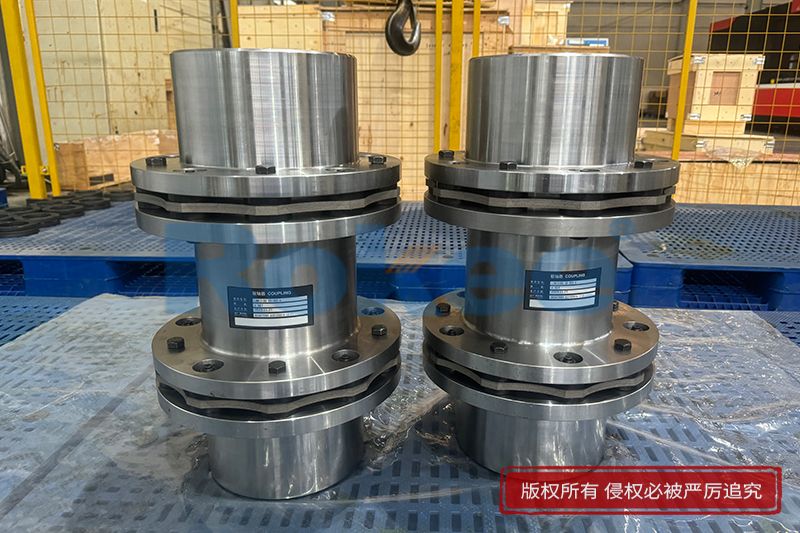
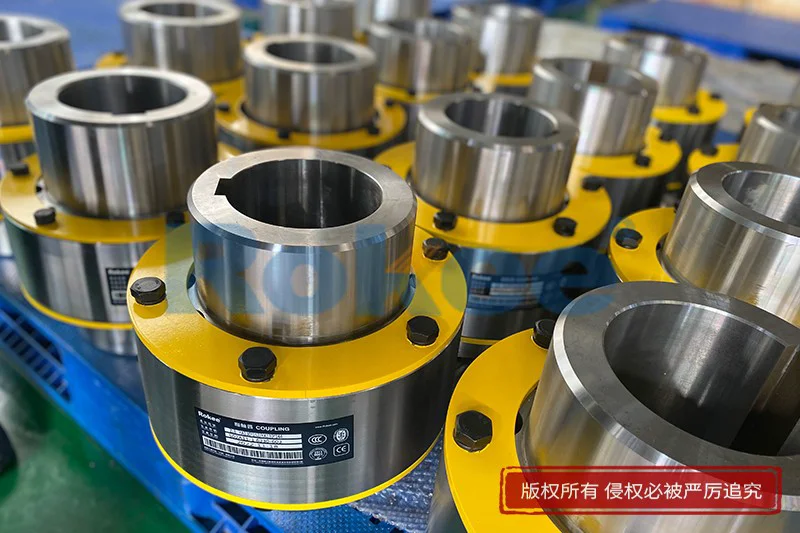
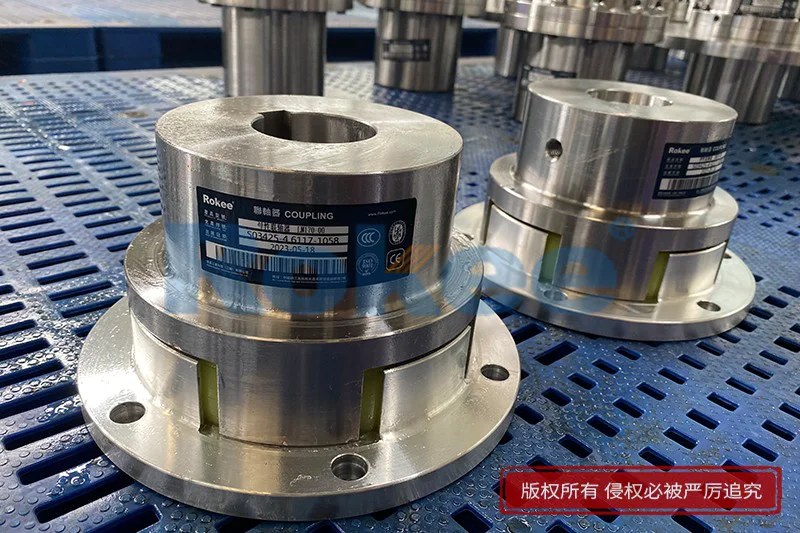
The fundamental working principle of pump coupling is to build a flexible or rigid mechanical connection between two independent rotating shafts, so as to realize the synchronous transmission of rotational torque and speed between the prime mover and the pump. In the working process of the pump system, the motor converts electrical energy into mechanical rotational energy, and this energy needs to be accurately and stably transmitted to the pump impeller through the coupling to drive the impeller to rotate at a constant speed, complete the suction and pressurization of the fluid medium, and finally realize the continuous transportation of the medium. In the ideal working state, the driving shaft and the driven shaft should maintain absolute coaxial rotation without any position deviation. However, in actual industrial installation and operation, absolute coaxiality is almost impossible to achieve. Installation errors, foundation settlement, thermal expansion and contraction of equipment during long-term operation, and slight deformation of the unit structure under load will cause different degrees of misalignment between the two shafts. The core value of pump coupling is to adapt to these inevitable deviations, ensure uninterrupted power transmission under dynamic working conditions, and avoid equipment failure caused by shaft offset.
In addition to the basic torque transmission function, pump coupling also bears multiple auxiliary protection functions in the system operation process. Firstly, it can effectively buffer the impact load generated during equipment start-up, shutdown and variable-speed operation. The instantaneous torque fluctuation of the motor during start-up will form a strong impact on the pump shaft and internal components. The coupling can absorb part of the impact force through its own structural deformation, avoid rigid collision between shafts, and protect precision components such as pump bearings and mechanical seals from damage. Secondly, the coupling has excellent vibration isolation performance. High-speed rotation of the motor and fluid turbulence inside the pump will generate mechanical vibration and fluid vibration respectively. The coupling can isolate the mutual transmission of vibration between the two equipment sets, prevent the vibration from superimposing and amplifying, reduce the overall operation noise of the unit, and avoid loose connection and structural fatigue caused by long-term vibration. In addition, partial coupling structures have overload protection characteristics. When the pump is blocked by foreign matters or overloaded, the coupling will produce buffer deformation or limit torque transmission, which can prevent the motor from burning out due to excessive load and avoid major mechanical failure of the pump body.
According to structural characteristics, deformation forms and working principles, pump couplings can be divided into three mainstream categories in industrial applications: rigid couplings, flexible couplings and magnetic couplings, each with unique performance characteristics and applicable working conditions. Rigid couplings are the most basic type of pump coupling, which form an integral rigid connection between the driving shaft and the driven shaft through fastening structures. This type of coupling has no elastic deformation space and displacement compensation capability, and can realize zero-loss torque transmission with high transmission efficiency and strong torsional rigidity. In the working state, the rigid coupling can ensure the absolute synchronization of the two shafts in rotation speed and angle, without rotation hysteresis or position deviation. However, its application conditions are extremely strict, requiring high-precision coaxial alignment during installation, and it cannot adapt to any installation deviation and operation displacement. Once shaft misalignment occurs, rigid connection will cause additional bending stress on the shaft, accelerate bearing wear and shaft fatigue deformation, and even cause shaft fracture in severe cases. Therefore, rigid couplings are mostly used in low-speed, high-torque, stable-load pump equipment with accurate installation and fixed operation conditions, and are rarely used in variable working condition scenarios.
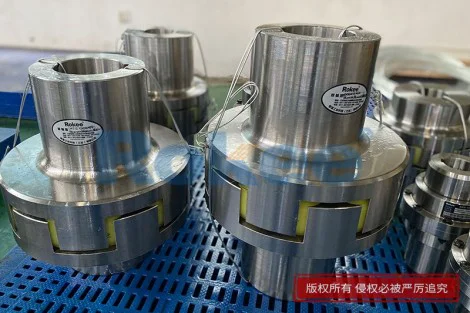
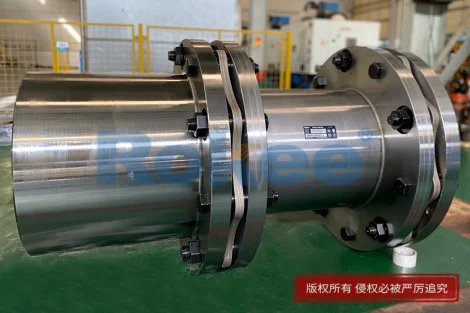
Flexible couplings are the most widely used type in industrial pump systems, which rely on the elastic deformation of internal elastic elements to realize displacement compensation and vibration buffering. Different from rigid couplings, flexible couplings have good adaptability to axial, radial and angular misalignment between shafts, and can automatically offset the position deviation caused by installation errors, thermal expansion and dynamic load changes during operation. The internal elastic elements of flexible couplings are diverse, including elastic pins, rubber spiders, disc springs and grid structures. Different elastic structures endow the couplings with different compensation capabilities and buffering effects. Most flexible couplings have simple structures, convenient assembly and disassembly, and low maintenance costs. While ensuring stable torque transmission, they can effectively reduce equipment vibration and impact load, and prolong the service life of pump units and motors. It is worth noting that different flexible couplings have differentiated performance advantages: pin-type flexible couplings have large axial displacement compensation capacity, suitable for pump equipment with frequent axial expansion and contraction; jaw-type couplings have excellent vibration damping performance, applicable to medium and low-speed pump systems with unstable load; disc-type flexible couplings have high precision and fatigue resistance, and can adapt to medium and high-speed continuous operation scenarios. Due to its comprehensive performance advantages, flexible couplings cover most conventional pump application scenarios and become the mainstream choice of industrial fluid transmission systems.
Magnetic couplings are a new type of non-contact pump coupling developed in recent years, which completely subverts the physical connection structure of traditional couplings. This type of coupling relies on magnetic field force to realize non-contact torque transmission between the driving end and the driven end, without any direct mechanical contact between the two shafts. The core structure of magnetic coupling includes an active magnetic rotor, a driven magnetic rotor and a isolation sleeve. The active rotor rotates with the motor shaft, and the magnetic field generated by the permanent magnet drives the driven rotor to rotate synchronously, so as to realize power transmission. The biggest advantage of magnetic coupling is zero leakage and zero mechanical wear. Since there is no penetrating shaft connection and physical friction between components, it completely solves the fluid leakage problem of traditional shaft connection structures, and fundamentally avoids mechanical wear and fatigue loss caused by contact transmission. In addition, the non-contact structure can isolate vibration and impact to the greatest extent, with ultra-low operation noise and extremely stable transmission state. Magnetic couplings are widely used in high-standard industrial scenarios such as chemical corrosive fluid transportation, pharmaceutical sterile fluid transmission, petroleum volatile medium transportation and ultra-pure water supply, which have strict requirements on sealing performance, cleanliness and equipment stability. Limited by magnetic field transmission characteristics, magnetic couplings have certain limitations in torque bearing capacity, and are not suitable for ultra-high torque heavy-duty pump equipment, but they have irreplaceable advantages in high-precision, high-sealing and low-wear working scenarios.
The scientific selection of pump coupling is the key to give full play to its performance and ensure the long-term stable operation of the pump system. The selection process needs to comprehensively consider multiple factors such as pump operation parameters, working medium characteristics, installation environment and load characteristics. Firstly, the basic operation parameters including equipment rotation speed, transmission torque and shaft diameter must be matched. The coupling’s allowable torque and speed range must be higher than the maximum operating parameters of the pump unit to avoid coupling failure caused by overload and overspeed operation. For high-speed rotating pump equipment, it is necessary to prioritize couplings with good dynamic balance performance and small vibration, while heavy-duty low-speed pump units need couplings with high torsional rigidity and strong load-bearing capacity. Secondly, the alignment accuracy of the equipment installation foundation is an important selection basis. For installation scenarios with limited construction conditions and unavoidable small misalignment, flexible couplings with strong displacement compensation ability must be selected; for precision-installed fixed pump units with stable foundations, rigid couplings can be selected to obtain higher transmission efficiency.
The working environment and medium characteristics also restrict the selection of pump couplings. In conventional water supply and drainage scenarios with normal temperature and ordinary atmosphere, ordinary elastic flexible couplings can meet the operation requirements. In harsh environments such as high temperature, low temperature, high humidity and dust corrosion, it is necessary to select couplings with special material treatment, such as stainless steel structural couplings and high-temperature resistant elastic component couplings, to avoid structural aging, corrosion and failure of the coupling in harsh environments. For pump systems transporting corrosive, volatile and toxic media, magnetic couplings with fully sealed non-contact structure should be preferentially selected to eliminate leakage risks and ensure production safety. In addition, the load fluctuation characteristics of the equipment need to be considered. For pump units with frequent start-stop, variable load and impact load, flexible couplings with good buffering and fatigue resistance should be selected to reduce the impact of alternating load on the entire transmission system; for constant-load continuous operation equipment, the focus is on the stability and durability of the coupling.
Daily maintenance and fault diagnosis of pump couplings are crucial to extend the service life of equipment and reduce operation failure rate. In the long-term operation process, affected by mechanical vibration, medium corrosion and alternating load, couplings will have aging, wear, deformation and loose fastening, which will lead to increased vibration of the pump unit, reduced transmission efficiency, abnormal noise and even shaft stuck failure. Daily maintenance work mainly includes regular inspection of coupling operation state, fastening degree of connecting parts and aging degree of elastic components. For flexible couplings, it is necessary to regularly check whether the elastic elements have cracks, deformation, wear and aging failure, and replace the damaged parts in time to avoid displacement compensation failure. For rigid couplings, the coaxiality of the two shafts should be regularly calibrated to prevent equipment wear caused by offset operation. For magnetic couplings, the sealing performance of the isolation sleeve and the magnetic stability of the magnetic rotor need to be checked regularly to avoid transmission failure caused by magnetic attenuation and sleeve damage.
Common faults of pump couplings in operation include abnormal vibration and noise, transmission lag, shaft heating and power transmission failure. Excessive vibration and noise are mostly caused by shaft misalignment, aging and hardening of elastic components, loose coupling fastening or foreign matter jamming. Timely calibration of shaft coaxiality, replacement of aging parts and fastening of connecting bolts can effectively solve such problems. Transmission lag and insufficient power output are usually due to serious wear of coupling components, insufficient torque bearing capacity or magnetic field attenuation of magnetic couplings, which need to be inspected and replaced in time. Long-term misalignment operation will cause friction and extrusion between coupling components, resulting in excessive heating of the shaft end, which will accelerate component aging and even cause safety hazards. Regular maintenance and timely fault handling can effectively avoid minor faults evolving into major equipment failures, reduce equipment downtime and maintenance costs, and improve the overall operation efficiency of the pump system.
With the continuous upgrading of industrial manufacturing technology and the improvement of energy-saving and environmental protection requirements, the technical iteration of pump couplings is also accelerating, and the development trend of high precision, high durability, energy saving and environmental protection, and intelligent adaptation is increasingly obvious. Traditional couplings are gradually optimized in structural design and material technology. New high-strength elastic materials and corrosion-resistant alloy materials are widely used in coupling manufacturing, which effectively improve the wear resistance, corrosion resistance and fatigue resistance of products, and adapt to more harsh industrial working conditions. At the same time, the integrated and compact structural design reduces the overall volume of the coupling, saves installation space, and further improves the transmission efficiency and operation stability. In addition, with the development of intelligent industrial equipment, some new pump couplings are equipped with state monitoring structures, which can real-time monitor the operation vibration, temperature and offset state of the coupling, realize early warning of potential faults, and greatly improve the intelligent operation and maintenance level of pump systems.
In the entire industrial fluid transmission field, pump couplings, as small core connecting components, undertake the important mission of connecting power and ensuring stable operation. Its performance quality and matching degree with equipment directly affect the operating efficiency, energy consumption level and operation safety of pump units. Reasonable type selection, standardized installation and scientific maintenance are the key to give full play to the performance of pump couplings, reduce equipment operation faults, and extend the service life of fluid transmission equipment. In the future, with the continuous development of industrial automation and high-precision manufacturing technology, pump coupling technology will continue to innovate and upgrade, providing more reliable, efficient and energy-saving technical support for the stable operation of various industrial fluid systems, and becoming an indispensable basic guarantee for the high-quality development of modern industrial fluid transmission industry.
« Pump Couplings » Update Date: 2026/7/16
Contact
If you require custom machined couplings, please contact Rokee via the contact information below for inquiries.
Email: https://www.gshmdpq.com
 WeChat