Rigid Couplings
Rokee is a manufacturer of rigid couplings from china, we can provide non-standard custom rigid couplings based on parameters or drawings supplied by customers, with export support available.
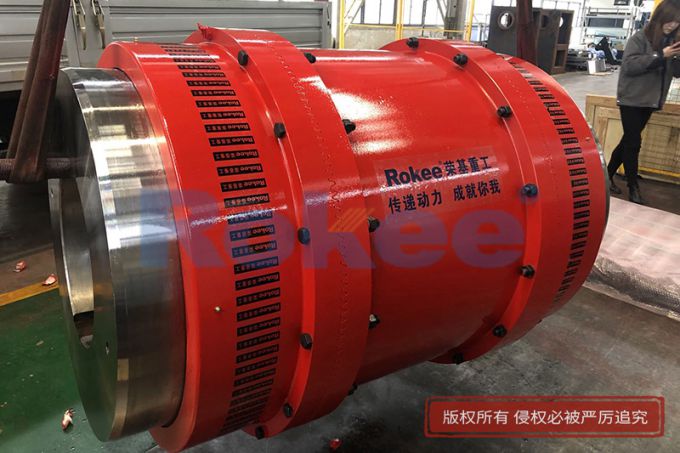
In the complex mechanical transmission system, shaft connection components undertake the core task of power and torque transmission, and determine the overall operating accuracy, stability and service life of mechanical equipment. As a classic and essential mechanical transmission component, rigid coupling has always occupied an irreplaceable position in precision manufacturing, industrial transmission and high-load mechanical scenarios. Different from flexible couplings that rely on elastic components to buffer vibration and compensate misalignment, rigid couplings realize integrated connection of driving and driven shafts through completely rigid mechanical constraint structures, eliminating all relative displacement and micro-movement between connected shafts. This unique working mechanism endows rigid couplings with outstanding torsional stiffness and efficient torque transmission capability, making them the preferred connection solution for mechanical systems that pursue high precision, high rigidity and zero transmission clearance.


The core working principle of rigid couplings is based on integral mechanical constraint and synchronous rotary transmission. After completing precise installation and fixing, the coupling integrates the driving shaft and the driven shaft into a single continuous mechanical unit. During the operation of the equipment, the torque generated by the power source is completely transmitted from the driving shaft to the coupling body through mechanical matching structures such as key connections, interference fit or clamping locking, and then synchronously transmitted to the driven shaft without any intermediate deformation, energy buffer or displacement compensation. In the entire power transmission process, there is no relative sliding, elastic deformation or angular deviation between the two shafts and the coupling, ensuring that the rotational speed, torque and angular displacement of the driving and driven shafts remain completely consistent at all times. This zero-clearance and synchronous transmission mode is the fundamental reason why rigid couplings can maintain high-precision operation of mechanical systems.
To realize stable rigid connection and efficient torque transmission, rigid couplings are mostly made of high-strength metal materials with excellent mechanical properties. Common manufacturing materials include high-quality carbon steel, alloy steel, stainless steel and high-strength ductile iron. These materials have high tensile strength, yield strength and surface hardness, which can withstand long-term high-load torque impact and cyclic shear force without plastic deformation or structural damage. The overall structural design of rigid couplings follows the concept of integrated force bearing, with compact structure, uniform force distribution and no vulnerable elastic parts. Compared with flexible couplings with rubber, spring or bellows structures, rigid couplings have stronger structural stability and environmental adaptability, and can work stably in harsh working environments such as high temperature, low temperature, high dust and strong corrosion for a long time.
According to different structural forms and installation and fixing methods, rigid couplings can be divided into three mainstream types in industrial applications, each with unique structural advantages and applicable scenarios. The first type is sleeve rigid coupling, also known as muff coupling, which is the simplest structural form of rigid coupling. It adopts an integral hollow cylindrical sleeve structure, and realizes shaft connection through interference fit or key connection between the sleeve and the shaft end. This type of coupling has an extremely simple structure, low processing and manufacturing difficulty, and small overall size, which is suitable for low-load, low-speed and simple precision mechanical transmission scenarios. However, due to the integral sleeve structure, its installation and disassembly process is cumbersome, and it is difficult to disassemble and maintain without moving the axial position of the equipment.
The second type is clamp rigid coupling, also called split sleeve coupling. It is improved on the basis of the integral sleeve structure, adopting a split open design and matching with high-strength locking bolts. During installation, the split sleeve is sleeved on the butt end of the two shafts, and the sleeve is tightly clamped on the shaft surface through the locking force of the bolts. The friction force and mechanical clamping force generated by tight fit are used to transmit torque. The biggest advantage of this structural design is the convenience of installation and disassembly. There is no need to displace the connected equipment axially, which greatly improves the efficiency of equipment assembly and later maintenance. At the same time, the clamping structure can realize uniform circumferential stress, avoid local stress concentration of the shaft, and protect the shaft structure from damage. It is widely used in medium-load and medium-speed mechanical transmission systems that require convenient maintenance.
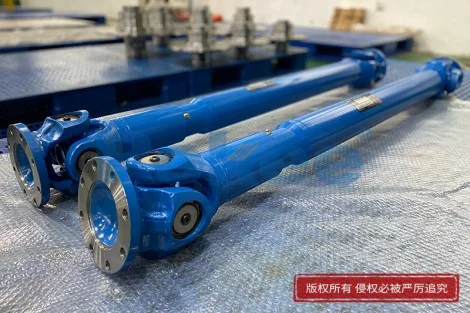
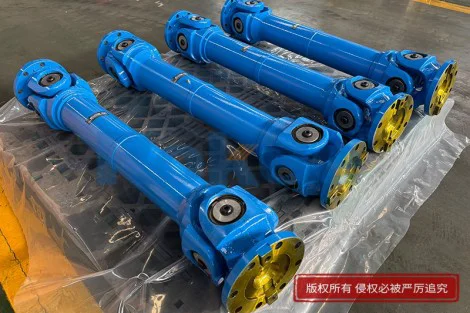
The third type is flange rigid coupling, which is a high-load and high-precision rigid connection structure. It consists of two independent flange discs and connecting bolts. The two flange discs are respectively fixed on the end faces of the driving shaft and the driven shaft through key connections or interference fit, and then the two flange discs are tightly locked into an integral structure through uniformly distributed high-strength bolts. The flange structure has large contact area and strong bearing capacity, can withstand ultra-high torque and impact load, and has excellent structural rigidity and connection stability. In addition, the flange coupling can effectively limit the axial displacement of the shaft while ensuring synchronous rotation, and has high positioning accuracy. It is the mainstream choice for heavy-duty mechanical equipment, high-power transmission systems and precision machine tool equipment.
Rigid couplings have prominent performance advantages in mechanical transmission, which are concentrated in precision transmission, structural rigidity and torque transmission efficiency. First of all, the zero-clearance rigid connection mode completely eliminates the transmission error caused by elastic deformation and gap displacement, ensuring ultra-high synchronous rotation accuracy of the two connected shafts. In precision machining equipment and testing instruments, this high-precision transmission characteristic can effectively guarantee the machining tolerance and detection accuracy of equipment, and avoid product quality problems caused by transmission deviation. Secondly, the all-metal rigid structure has extremely high torsional stiffness, no elastic deformation during operation, stable torque transmission, and can effectively resist rotational vibration and micro-shake caused by load changes, ensuring the smooth operation of the equipment.
In terms of transmission efficiency, rigid couplings have almost no energy loss in the torque transmission process. Unlike flexible couplings that need to consume part of energy to overcome elastic deformation, rigid couplings can transmit more than 99% of the input torque to the driven shaft, which significantly improves the energy utilization efficiency of the mechanical system and reduces the operating energy consumption of the equipment. In addition, the rigid coupling has long service life and low failure rate. There are no easily aging and wearing vulnerable parts such as elastic elements and buffer parts. Under standard installation and normal operating conditions, it can maintain stable working performance for a long time, greatly reducing the frequency of equipment maintenance and parts replacement, and improving the overall operating efficiency of mechanical equipment.
However, rigid couplings also have obvious application limitations, which are key factors that must be fully considered in mechanical system design. The most prominent limitation is the extremely high requirement for shaft alignment accuracy. Since the rigid structure has no misalignment compensation capability, any parallel offset, angular deviation or axial displacement between the two connected shafts will not be buffered and absorbed. Even a tiny misalignment error will generate additional alternating stress and shear force at the shaft connection part during the high-speed operation of the equipment. These additional stresses will act on the shaft, bearing and coupling body for a long time, causing accelerated wear of bearings, bending deformation of shafts, fatigue damage of coupling structures, and even equipment vibration, noise and sudden failure in severe cases.
Relevant mechanical engineering verification shows that when the parallel misalignment of the two shafts exceeds the tiny tolerance range or the angular misalignment is too large, the service life of the supporting bearings of the equipment will be reduced by more than half, and the fatigue crack risk of the coupling will increase exponentially. In addition, rigid couplings have no vibration and shock buffering capability. When the equipment starts, stops or bears sudden load impact, the impact force will be directly transmitted to the entire transmission system without any attenuation, which may cause impact damage to precision parts of the equipment. At the same time, the rigid connection structure will directly transmit the vibration generated by the operation of a single equipment component to the entire shaft system, which may affect the stable operation of other precision components in the system.
Therefore, the installation and commissioning process of rigid couplings is extremely strict, and high-precision alignment construction is the core link to ensure their normal operation and service life. In the actual installation process, professional precision detection tools are required to calibrate the coaxiality, parallelism and angularity of the two connected shafts, and control the misalignment error within the micron-level tolerance range. After the preliminary installation and fixing, it is necessary to conduct repeated debugging and no-load trial operation, detect the vibration amplitude and rotational stability of the shaft system, and fine-tune the alignment state until the shaft system achieves the optimal coaxial state. Only by ensuring the precise alignment of the shafts can the performance advantages of rigid couplings be fully exerted and the risk of premature failure caused by installation errors be avoided.
In modern industrial systems, rigid couplings have extremely wide application scenarios, covering precision manufacturing, heavy industry transmission, automated production and mechanical testing fields. In precision machine tool equipment such as lathes, milling machines and grinding machines, rigid couplings are used to connect motor shafts and spindle shafts. The high-rigidity and high-precision transmission characteristics ensure the stable rotation of the spindle, avoid spindle runout and displacement deviation, and thus guarantee the high-precision machining of workpieces. In high-speed precision testing equipment and instrument transmission systems, rigid couplings eliminate transmission gaps and errors, ensuring the accuracy and stability of data detection and experimental results.
In heavy industrial equipment such as metallurgical machinery, mining machinery and lifting equipment, flange rigid couplings are widely used in high-power and high-load torque transmission systems. Their ultra-high torsional bearing capacity and structural stability can cope with long-term heavy-load operation and intermittent impact load working conditions, ensuring the reliable power output of large mechanical equipment. In automated production lines, conveyor equipment and servo transmission systems, clamp rigid couplings are favored for their convenient installation, stable transmission and easy maintenance, realizing efficient and synchronous operation of multi-stage transmission shafts.
In addition, rigid couplings also play an important role in new energy equipment, aerospace auxiliary machinery and precision robotic arm transmission systems. With the continuous improvement of industrial manufacturing precision and equipment operating efficiency requirements, the application scope of rigid couplings is still expanding, and their structural design and manufacturing process are also constantly optimized and upgraded.
In terms of daily operation and maintenance, rigid couplings have lower maintenance costs and simpler maintenance procedures compared with other types of couplings. Daily maintenance work mainly includes regular inspection of locking bolt tightness, detection of shaft system vibration and temperature changes, and cleaning of surface dust and corrosive substances. Since there are no wearing elastic parts, regular lubrication and part replacement are not required frequently. However, in high-load and long-term continuous operation scenarios, regular professional alignment calibration and structural fatigue detection are needed to eliminate hidden dangers of micro-deformation and misalignment caused by long-term load operation. Once abnormal vibration, noise or temperature rise of the equipment is found, the equipment should be shut down in time for inspection and recalibration to avoid fault expansion.
Looking at the development trend of mechanical transmission components, rigid couplings are evolving towards high precision, high strength, lightweight and intelligent optimization. With the progress of precision machining technology and new material technology, modern rigid couplings adopt more optimized integrated forging structures and high-performance alloy materials, which further improve structural rigidity, torque bearing capacity and fatigue resistance while reducing self-weight. At the same time, with the popularization of intelligent manufacturing technology, some optimized rigid coupling structures are combined with precision sensing technology, which can monitor the operating state, stress change and alignment deviation of the coupling in real time, realizing early warning of faults and intelligent maintenance.
In the field of mechanical design and engineering application, the correct selection of coupling types is crucial to the overall performance of the equipment. Rigid couplings are not suitable for all transmission scenarios, but they are irreplaceable in all working conditions that require high positioning accuracy, zero transmission gap, high rigidity and efficient torque transmission. Engineering designers need to comprehensively judge and select according to equipment operating speed, load characteristics, alignment conditions and precision requirements, fully exert the performance advantages of rigid couplings in matching scenarios, and avoid their application limitations through standardized installation and precise debugging.
As a basic and core mechanical transmission component, rigid couplings support the stable operation of countless mechanical equipment with their simple and efficient mechanical principles, reliable structural performance and excellent transmission accuracy. In the continuous development of industrial modernization, precision machinery manufacturing and high-efficiency transmission technology will continue to progress, and rigid couplings, as an important guarantee for high-precision and high-rigidity transmission, will continue to be optimized and innovated in structure, materials and application technology, providing more reliable basic support for the upgrading of modern mechanical engineering and industrial manufacturing systems.
« Rigid Couplings » Update Date: 2026/7/16
Contact
If you require custom machined couplings, please contact Rokee via the contact information below for inquiries.
Email: https://www.gshmdpq.com
 WeChat