Universal Cross Joint Couplings
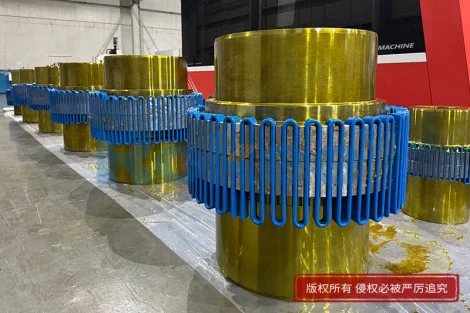
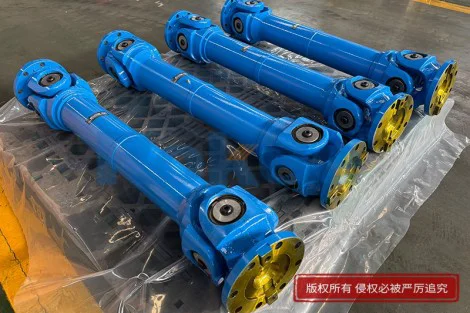
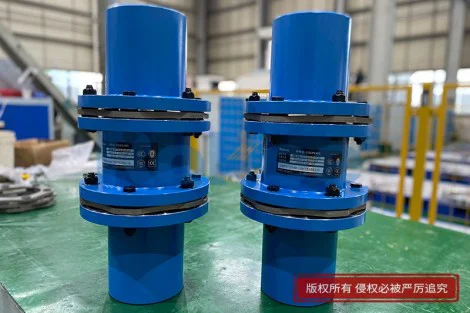
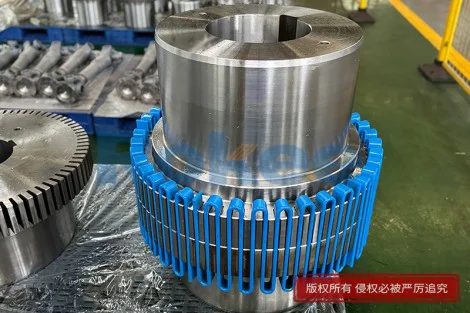
Rokee is a manufacturer of universal cross joint couplings from china, we can provide non-standard custom universal cross joint couplings based on parameters or drawings supplied by customers, with export support available.

As an indispensable core component in mechanical transmission systems, universal cross joint coupling serves as a pivotal connecting unit that bridges misaligned rotating shafts and realizes stable torque and motion transmission in complex mechanical operating environments. Unlike rigid coupling structures that rely on coaxial precision for normal operation, this flexible transmission component is uniquely designed to adapt to spatial position deviations between driving and driven shafts, solving the core mechanical problem of power transmission under non-coaxial, angled, and dynamically offset working conditions. Its ingenious spatial hinge structure and reliable mechanical properties enable it to be widely deployed in light-duty general machinery, medium-duty transmission equipment, and heavy-duty industrial operating scenarios, becoming a fundamental guarantee for the continuous and efficient operation of various mechanical power systems. The inherent value of universal cross joint coupling lies in its perfect balance of structural simplicity, transmission stability, and environmental adaptability, which makes it irreplaceable in countless mechanical transmission schemes that require flexible power transfer.


The basic composition and structural logic of universal cross joint coupling lay the foundation for its superior transmission performance. The entire assembly adopts a compact and symmetric spatial structure, mainly composed of two fork-shaped joint bodies, a central cross spindle, and four sets of precision rolling bearings. The cross spindle, as the core force-bearing and connecting component, features four mutually orthogonal shaft necks processed with high precision, forming a three-dimensional hinge structure that connects the two fork joints seamlessly. Each shaft neck of the cross spindle is fitted with an independent rolling bearing, which is embedded in the mounting holes of the fork joints. This structural design completely separates the sliding friction between traditional connecting components into efficient rolling friction, fundamentally reducing friction resistance and mechanical wear during operation. The overall structure is highly integrated without redundant auxiliary parts, realizing miniaturization and lightweight design while ensuring structural rigidity, which allows the coupling to be installed in limited mechanical spaces without occupying excessive layout space, and effectively avoids structural interference with surrounding mechanical components during dynamic operation.
The working principle of universal joint coupling originates from the spatial linkage motion mechanism, which realizes continuous and stable power transmission through the coordinated composite motion of internal components. In the actual operating state, the driving shaft drives the connected driving fork joint to perform circular rotation, and the rotational torque is transmitted to the cross spindle through the bearing assembly. Driven by the driving fork, the cross spindle undergoes a composite motion of spatial rotation and swing, and then transfers the torque to the driven fork joint and the connected driven shaft. This unique motion conversion mode enables the coupling to maintain uninterrupted power output even when there is a significant angular deviation between the two connected shafts. It effectively converts the fixed-axis rotary motion of the driving end into adaptive spatial motion, and then restores it to stable fixed-axis rotation at the driven end, realizing efficient torque transmission under non-ideal coaxial conditions. During the entire transmission process, the symmetric stress distribution of the cross spindle ensures uniform force on each bearing and connecting part, avoiding local stress concentration and unbalanced load operation, which is the key to maintaining long-term stable transmission performance.
One of the most prominent performance advantages of universal cross joint coupling is its excellent misalignment compensation capability. It can effectively adapt to multiple forms of shaft position deviations including angular deviation, axial displacement, and slight radial offset, and maintain efficient transmission within a certain range of spatial deviation. In actual mechanical operation, due to equipment installation errors, mechanical vibration, component thermal deformation after long-term operation, and structural deformation under load, the relative position of the driving and driven shafts often changes dynamically and cannot maintain absolute coaxial accuracy. Rigid transmission components are extremely sensitive to such deviations, which are prone to additional mechanical stress, accelerated component wear, vibration and noise, and even transmission failure in severe cases. In contrast, universal cross joint coupling can flexibly adapt to these dynamic changes through the hinge swing of the internal cross structure, offsetting the adverse effects of shaft misalignment on the transmission system, protecting the main mechanical components from additional alternating stress, and greatly improving the fault tolerance and operational stability of the entire transmission system.
In terms of transmission efficiency and load resistance, universal cross joint coupling shows outstanding comprehensive performance. The rolling friction matching structure greatly reduces energy loss during torque transmission, achieving high-efficiency power output with minimal power attenuation even under medium and heavy load conditions. This efficient transmission characteristic not only improves the overall operating efficiency of mechanical equipment but also reduces unnecessary energy consumption during long-term operation, bringing good energy-saving benefits. Meanwhile, the coupling has strong impact resistance and vibration damping performance. In mechanical systems with frequent start-stop, sudden load changes, and fluctuating operating conditions, it can effectively absorb instantaneous torque spikes and torsional vibrations generated by load shocks, buffer the alternating impact force inside the transmission system, and avoid structural damage or fatigue failure of rigid transmission parts caused by sudden load changes. Its excellent torsional rigidity enables it to stably transmit large torque while maintaining structural stability, without torsional deformation or motion lag during high-load operation, ensuring the synchronization and accuracy of power transmission.
The durability and operational reliability of universal coupling further consolidate its application value in industrial scenarios. Key load-bearing components are manufactured with precise processing technology and optimized material performance, with good surface hardness, structural toughness, and fatigue resistance. After precision finishing and surface treatment, the cross spindle and bearing matching parts have excellent wear resistance and oxidation resistance, which can resist mechanical wear, friction heat, and mild environmental corrosion during long-term continuous operation. In continuous working conditions of long-duration operation, repeated start-stop cycles, and variable load operation, the coupling can maintain stable mechanical performance without frequent failure or performance attenuation. Its internal matching structure has good lubrication adaptability, and a reasonable lubrication system can form a stable oil film between friction pairs, further reducing wear and prolonging service life. Even in harsh working environments with certain dust, humidity, and temperature changes, the well-sealed structural design can effectively prevent external impurities from entering the friction assembly, ensuring the stability of internal operating conditions and reducing the failure rate of mechanical transmission.
Universal cross joint coupling has extremely wide application scenarios, covering almost all mechanical fields that require flexible power transmission. In transportation machinery, it is applied to the power transmission structure of mobile equipment, adapting to the dynamic angle changes of the transmission shaft caused by vehicle body jitter, suspension vibration, and walking position adjustment during operation, ensuring continuous and stable power output from the power source to the walking execution structure. In engineering machinery and heavy industrial equipment, it undertakes the heavy-load transmission work of large mechanical systems, adapting to the large torque transmission and frequent impact load characteristics of heavy equipment, and providing reliable power connection for mechanical actions such as equipment lifting, walking, and rotating. In general industrial machinery such as processing equipment, transmission devices, and automated production lines, it compensates for installation deviations and operating deformation of equipment, ensuring the precision and stability of power transmission during high-speed or intermittent operation of equipment.
In addition, this type of coupling also plays an important role in special working condition scenarios. In mechanical equipment with dynamic structural displacement and periodic position changes, its flexible adaptive capability can keep up with the real-time spatial position adjustment of the transmission shaft, maintaining uninterrupted power transmission. In multi-angle and multi-directional mechanical transmission systems, the spatial hinge structure can realize multi-dimensional angle adjustment and torque transmission, breaking the limitation of single-direction transmission of traditional couplings. Whether it is high-speed light-load continuous operation or low-speed heavy-load intermittent operation, the universal cross joint coupling can adjust its operating state adaptively, showing excellent working condition compatibility. Its simple and standardized assembly structure also brings great convenience for equipment design and layout, allowing designers to arrange transmission structures more flexibly without being restricted by strict coaxial installation conditions, optimizing the overall structural design of mechanical equipment and reducing the difficulty of equipment processing and installation.
Scientific and standardized maintenance is crucial to giving full play to the performance advantages of universal cross joint coupling and extending its service life. Daily maintenance mainly focuses on lubrication inspection and sealing condition check. Good lubrication is the core to reduce friction and wear of internal components. Regular replacement of lubricating materials can avoid dry friction, high-temperature wear, and component clamping stagnation caused by lubricant failure. At the same time, it is necessary to check the sealing structure regularly to prevent lubricant leakage and external dust, impurities, and moisture from entering the interior, which may cause abrasive wear and component corrosion. In periodic equipment maintenance, it is necessary to detect the wear degree of key components such as cross spindles and bearings, check for abnormal gaps, loose assembly, and structural deformation. For components with excessive wear and reduced matching accuracy, timely replacement and calibration should be carried out to avoid increased transmission vibration, reduced efficiency, and even transmission failure caused by component aging and wear.
During equipment operation, real-time operating state monitoring can effectively judge the working condition of the coupling. Abnormal vibration, excessive operating noise, and unstable power output are typical signs of abnormal coupling operation, which usually indicate problems such as insufficient lubrication, excessive component wear, or installation deviation exceeding the allowable range. Timely troubleshooting and adjustment can avoid minor faults evolving into major equipment failures, reduce equipment downtime and maintenance costs, and ensure the long-term stable operation of the mechanical transmission system. Compared with other flexible transmission components, the maintenance cost of universal cross joint coupling is lower, the failure judgment is more intuitive, and the component replacement and assembly process are simpler, which greatly reduces the daily operation and maintenance difficulty of mechanical equipment and improves the overall operational efficiency of the equipment.
With the continuous upgrading of mechanical manufacturing technology and the continuous improvement of industrial equipment performance requirements, the design and manufacturing level of universal cross joint coupling are also constantly optimized and upgraded. Modern processing and manufacturing technologies further improve the dimensional accuracy, surface finish, and structural consistency of coupling components, making the internal matching gap more precise, the transmission operation smoother, and the vibration and noise control effect better. The optimization of material formulas and heat treatment processes further improves the structural strength, wear resistance, and fatigue resistance of the coupling, enabling it to adapt to higher load, higher speed, and harsher working environments. At the same time, the structural optimization design further reduces the weight and volume of the coupling on the premise of ensuring mechanical performance, realizing lightweight and compact design, and meeting the miniaturization and high-precision development needs of modern mechanical equipment.
In the entire field of mechanical transmission, universal cross joint coupling occupies an indispensable core position with its unique structural advantages, excellent comprehensive performance, and wide working condition adaptability. It solves many pain points in traditional transmission systems, such as strict installation requirements, poor misalignment adaptability, weak impact resistance, and high failure rate in complex working conditions, and provides a reliable, efficient, and economical flexible transmission solution for various mechanical equipment. Whether in traditional industrial mechanical equipment or emerging automated and intelligent mechanical systems, it can match diverse transmission needs, stably transmit power and motion, and support the efficient and safe operation of mechanical systems. As a classic and mature mechanical transmission component, universal cross joint coupling will continue to exert its core value in industrial development, and continuously adapt to the iterative upgrading of mechanical equipment through technological optimization and innovation, providing solid basic support for the progress of mechanical manufacturing industry.
« Universal Cross Joint Couplings » Update Date: 2026/7/17
Contact
If you require custom machined couplings, please contact Rokee via the contact information below for inquiries.
Email: https://www.gshmdpq.com
 WeChat