Flexible Plate Couplings
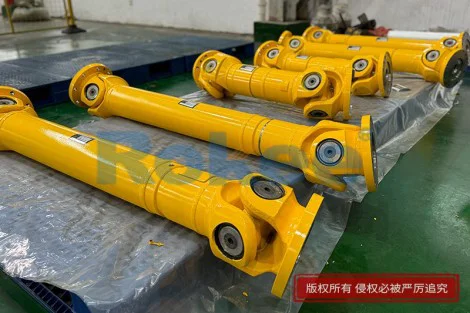
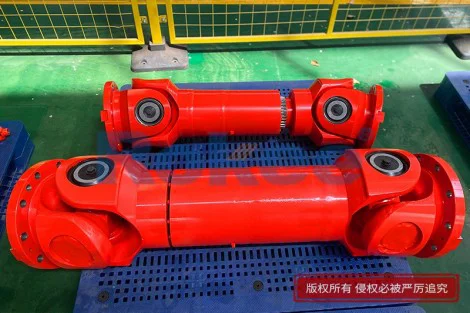
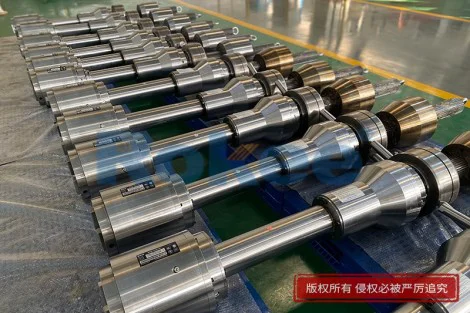
Rokee is a manufacturer of flexible plate couplings from china, we can provide non-standard custom flexible plate couplings based on parameters or drawings supplied by customers, with export support available.

In the field of modern mechanical transmission systems, the stability, accuracy and durability of shaft connection components directly determine the overall operating performance of equipment. As a high-performance metal flexible transmission component, flexible plate coupling has gradually become a core connecting part for high-speed, high-precision and high-stability mechanical equipment by virtue of its unique elastic deformation mechanism, compact structural design and excellent environmental adaptability. Different from traditional rigid couplings that rely on rigid contact for torque transmission and elastic sleeve couplings that use non-metallic elastic materials for buffering, flexible plate couplings adopt all-metal elastic structural components, realizing organic integration of efficient torque transmission and flexible misalignment compensation, which can effectively solve various shaft deviation problems generated during the operation of mechanical systems and provide reliable guarantee for the long-term stable operation of transmission equipment.


The basic structure of flexible plate coupling is simple and rigorous, mainly composed of elastic plate groups, high-strength fasteners and coupling hubs. The core functional component is the stacked thin metal elastic plates, which are processed with uniform bolt holes according to the structural design requirements. These elastic plates are fixed on the driving and driven shaft hubs through high-strength bolts to form a complete closed transmission structure. The elastic plates are made of high-quality stainless steel materials with excellent fatigue resistance and elastic recovery performance. The thin-plate laminated structure enables each elastic plate to independently undergo micro elastic deformation under stress, avoiding the concentrated stress problem of single thick plate structure. The overall structure abandons complex transmission accessories such as gears and elastic sleeves, realizing a fully enclosed and gap-free transmission structure, which lays a solid foundation for high-precision and low-loss torque transmission.
The working principle of flexible plate coupling is based on the reversible elastic deformation of metal thin plates. In the actual operation of mechanical equipment, it is almost impossible to achieve absolute coaxial alignment between the driving shaft and the driven shaft due to machining errors, assembly deviations, equipment vibration, thermal expansion and contraction, and foundation settlement. These unavoidable deviations will lead to angular deflection, radial offset and axial displacement between the two connected shafts. If rigid connection is adopted, the deviations will generate huge additional bending stress and shear stress on the shaft, bearings and equipment shell, resulting in accelerated wear of parts, increased equipment vibration and noise, and even early fatigue damage of key components in severe cases. The flexible plate coupling perfectly solves this industry pain point through the directional elastic deformation of the plate group. When the shaft has various misalignments, the metal elastic plates will produce tiny, controllable and reversible elastic deformation with the rotation of the shaft, which can automatically compensate angular, radial and axial deviations, offset the additional stress caused by shaft misalignment, and ensure that the torque and speed can be accurately and stably transmitted between the driving end and the driven end without interference.
One of the most prominent performance advantages of flexible plate coupling is its zero-clearance transmission characteristic. In the assembly structure of the coupling, the elastic plates are tightly connected with the hubs through high-precision bolt matching, and there is no relative sliding, gap or backlash between all matching parts. This gap-free design enables the coupling to respond instantly during torque transmission, without transmission delay or angle deviation, which is particularly suitable for mechanical systems requiring high positioning accuracy and synchronous transmission. Whether it is forward rotation, reverse rotation or variable speed operation, the flexible plate coupling can maintain consistent transmission accuracy, effectively avoid the transmission error caused by structural gaps, and meet the high-precision operation requirements of modern precision machinery and automated production equipment.
In terms of transmission efficiency and load capacity, flexible plate couplings also show outstanding comprehensive performance. The all-metal structural design enables the coupling to bear large torque load with small volume and light weight. Compared with non-metallic elastic couplings, metal elastic plates have higher structural rigidity and fatigue strength, which can maintain stable transmission performance under long-term high-load and high-speed operating conditions. The laminated plate structure can evenly distribute the transmission stress on each elastic plate, avoiding local stress concentration, so that the coupling can maintain excellent bearing capacity during continuous cyclic operation. Its efficient torque transmission mode greatly reduces the power loss in the transmission process, and the transmission efficiency is far higher than that of many traditional flexible couplings, which effectively improves the overall energy utilization rate of mechanical equipment and meets the energy-saving and efficient operation requirements of modern industrial production.
The environmental adaptability of flexible plate coupling is another key factor for its wide application in industrial fields. Different from rubber, plastic and other non-metallic elastic components that are easily affected by temperature, humidity and chemical corrosion, metal elastic plates have excellent high-temperature resistance, low-temperature resistance and corrosion resistance. It can maintain stable elastic performance and structural strength in high-temperature operating environments, and will not produce aging, deformation or failure like non-metallic materials. In low-temperature environments, the metal plates will not become brittle or lose elasticity, ensuring normal start-up and operation of equipment. At the same time, the special material and surface treatment process enable the coupling to resist the erosion of acid, alkali and humid media, and can operate stably in harsh working environments such as chemical industry, marine equipment and outdoor industrial facilities. In addition, the all-metal sealed structure does not need lubricating oil and grease for auxiliary protection, avoiding equipment failure and environmental pollution caused by lubricant deterioration, leakage and pollution, and adapting to diversified and harsh industrial working conditions.
In terms of operation stability and noise control, flexible plate couplings have obvious advantages over traditional transmission couplings. The gap-free elastic transmission mode avoids the impact and friction noise caused by relative movement between parts during operation. The smooth and uniform elastic deformation process can effectively absorb and weaken the vibration generated by equipment operation and load fluctuation, reduce the vibration amplitude of the shaft system, and realize low-noise and smooth operation of equipment. For high-speed rotating equipment, the structural symmetry and high-precision processing technology of the coupling ensure good dynamic balance performance, which will not cause additional vibration and vibration excitation during high-speed rotation, effectively improve the operating stability of the equipment, and extend the service life of supporting bearings, shafts and other key components.
The installation and maintenance characteristics of flexible plate coupling also make it have higher practical value in industrial application. The overall structural design is compact and lightweight, with simple assembly and disassembly steps. Workers can complete the installation and calibration work through conventional assembly processes without complex professional tools and cumbersome operation steps. In the long-term operation process, the all-metal elastic structure has no wearing parts and vulnerable parts, and there is no need for regular replacement of elastic accessories, lubrication maintenance and gap calibration. It basically realizes maintenance-free operation, greatly reducing the daily maintenance workload and maintenance cost of enterprise equipment, improving the operating rate and production efficiency of mechanical equipment, and creating more stable production conditions for industrial production.
Flexible plate couplings are widely used in various high-end and precision mechanical transmission scenarios, covering many industrial fields such as precision automation equipment, power transmission equipment, fluid machinery, metallurgical machinery and medical equipment. In precision automated production lines, the high-precision synchronous transmission performance of the coupling ensures the accurate coordination of each processing unit, avoiding processing errors and position deviations caused by transmission delays, and improving the processing accuracy and product qualification rate of automated equipment. In high-speed power transmission equipment, its high-speed resistance and stable load-bearing capacity adapt to the long-term high-speed operation state of the equipment, ensuring continuous and stable power output. In fluid machinery such as fans and pumps, the misalignment compensation performance can offset the shaft deviation caused by equipment vibration and thermal deformation, reduce the operating load of the equipment, and avoid abnormal noise and vibration failure of fluid machinery.
In metallurgical, chemical and other heavy industrial fields, the excellent corrosion resistance and high-load resistance of flexible plate couplings enable them to adapt to harsh working conditions such as high temperature, humidity and corrosive media. They can maintain stable operating performance under long-term heavy-load cyclic operation, reduce equipment failure rates, and ensure the continuous and stable operation of industrial production lines. In medical equipment, precision instruments and other fields with high requirements for equipment stability and low noise, the low-vibration and low-noise operation characteristics of the coupling avoid interference with precision equipment and detection results, and meet the ultra-high precision operation requirements of special equipment.
Compared with other common types of flexible couplings, flexible plate couplings have more balanced comprehensive performance. Traditional gear couplings have large transmission torque, but they need regular lubrication and maintenance, and are prone to gear wear and backlash after long-term use, resulting in reduced transmission accuracy. Elastic sleeve couplings have good buffering performance, but non-metallic materials are easy to age and deform, with short service life and poor high-temperature resistance. The flexible plate coupling integrates the advantages of large load capacity, high transmission accuracy, long service life, no maintenance and strong environmental adaptability, making up for the performance defects of traditional couplings, and is more suitable for the development trend of modern mechanical equipment towards high speed, high precision and high stability.
In the long-term industrial application practice, the fatigue resistance and service life of flexible plate couplings have been fully verified. The metal elastic plate adopts special processing technology and heat treatment process, which can withstand millions of times of cyclic elastic deformation without fatigue fracture or permanent deformation. Even in the state of frequent start-stop, variable load and variable speed operation, it can maintain stable structural performance and transmission accuracy, with far longer service life than non-metallic elastic couplings and partial metal couplings. This long-life and high-reliability feature greatly reduces the frequency of equipment replacement and maintenance, reduces the overall operating cost of mechanical equipment, and brings significant economic benefits to industrial production.
With the continuous upgrading of modern industrial manufacturing technology, the performance requirements for mechanical transmission components are constantly improving, and flexible plate couplings are also constantly optimized and upgraded in structural design, material selection and processing technology. The optimized laminated plate structure further improves the misalignment compensation ability and stress uniformity, the new high-strength elastic materials further enhance the fatigue resistance and environmental adaptability, and the refined processing technology further improves the overall matching accuracy and dynamic balance performance. These continuous optimizations make flexible plate couplings more adaptable to the increasingly complex and high-standard industrial operating conditions, and their application scope is still expanding in emerging fields such as new energy equipment, intelligent manufacturing equipment and precision aerospace supporting equipment.
In conclusion, flexible plate coupling, as a high-performance metal flexible transmission component, has irreplaceable application value in modern mechanical transmission systems by virtue of its reasonable structural design, excellent transmission performance, strong environmental adaptability and low maintenance cost. Its unique elastic deformation compensation mechanism solves many common pain points of traditional shaft connection transmission, realizes high-precision, high-efficiency and high-stability power transmission, and provides a reliable basic guarantee for the stable operation, precision improvement and life extension of various mechanical equipment. With the continuous development of industrial intelligence and precision manufacturing, flexible plate couplings will play a more important role in more industrial fields and become an indispensable core component of modern mechanical transmission systems.
« Flexible Plate Couplings » Update Date: 2026/7/17
Contact
If you require custom machined couplings, please contact Rokee via the contact information below for inquiries.
Email: https://www.gshmdpq.com
 WeChat