Long Shaft Couplings
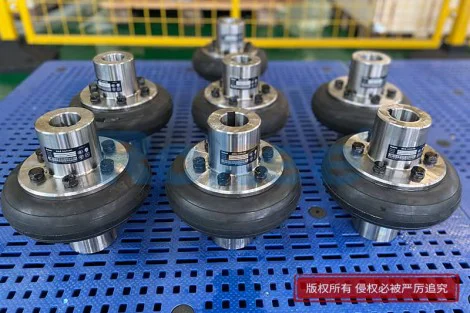
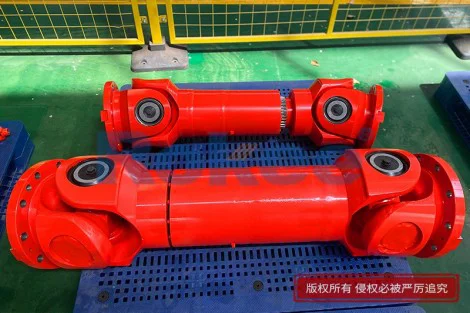
Rokee is a manufacturer of long shaft couplings from china, we can provide non-standard custom long shaft couplings based on parameters or drawings supplied by customers, with export support available.
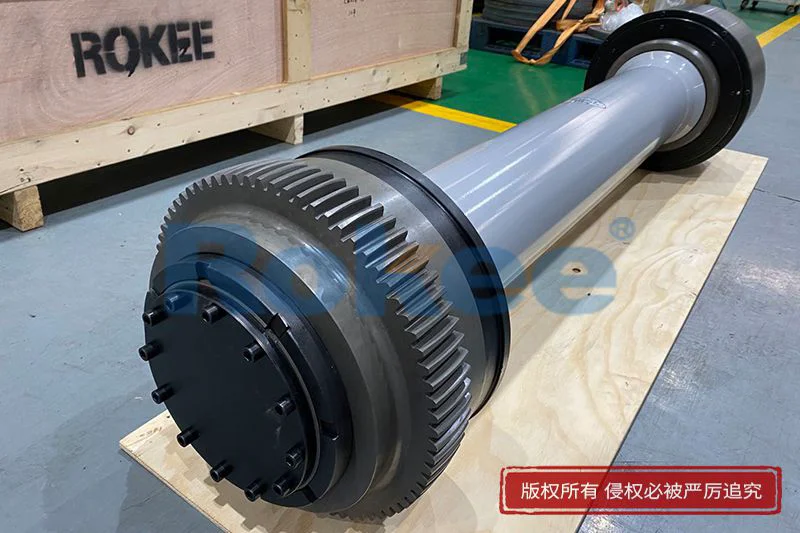
Long shaft couplings stand as indispensable mechanical transmission components designed to bridge spaced mechanical shafts and deliver consistent torque and rotational motion across extended distances, serving as a core link in modern industrial power transmission systems. Unlike conventional short couplings that suit compact shaft installation scenarios, long shaft couplings feature an elongated intermediate structural design, which effectively addresses the power transmission challenges faced by equipment with large spacing between driving and driven shafts. Their core value lies in not only realizing efficient and stable power transmission but also tolerating and compensating various minor deviations generated during equipment operation, thereby protecting the integrity and operational stability of the entire mechanical system. In complex industrial production environments where precise power transmission and long-span connection are required, these specialized couplings have become a key guarantee for continuous and efficient operation of mechanical equipment.


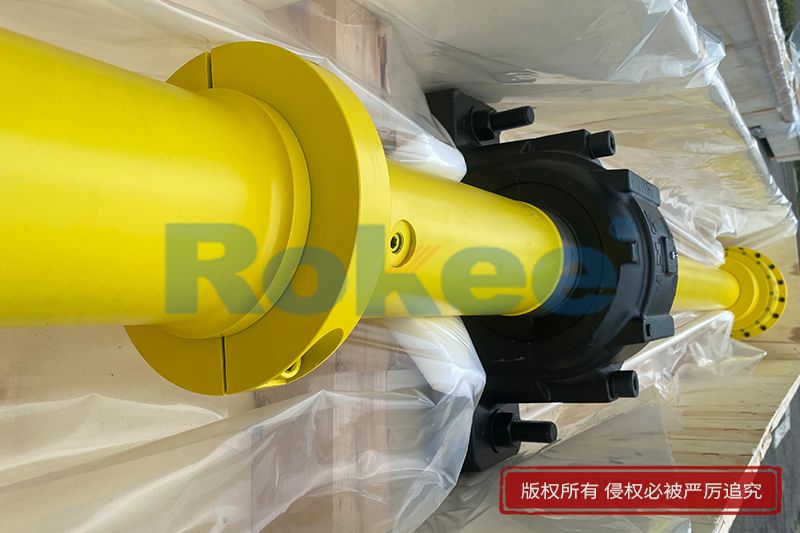
The basic working mechanism of long shaft couplings follows the fundamental principle of mechanical power transmission, realizing synchronous rotation and torque transfer between two independent shafts through rigid or flexible structural connection. The unique elongated intermediate shaft sleeve or connecting rod structure differentiates them from ordinary couplings, enabling them to adapt to installation scenarios with large axial spacing between shafts. During the operation of mechanical equipment, the driving shaft generates rotational torque, which is stably transmitted to the driven shaft through the integrated structure of the long shaft coupling, driving the entire equipment to operate synchronously. Beyond basic power transmission, the structural design of long shaft couplings incorporates flexible compensation performance, which can effectively absorb and offset parallel offset, angular deviation and axial displacement between shafts caused by installation errors, equipment operation vibration, thermal expansion and contraction, and mechanical wear. This compensation capability avoids rigid friction and stress concentration between shafts, greatly reducing the failure risk of transmission components.
Material selection is the core foundation that determines the service performance and service life of long shaft couplings, directly affecting their load-bearing capacity, operational stability and environmental adaptability. Most high-performance long shaft couplings adopt high-strength alloy materials with excellent mechanical properties, which feature high torsional rigidity, strong compression resistance and good fatigue resistance. These materials can withstand continuous cyclic loads and instantaneous impact loads in long-term industrial operation, avoiding structural deformation or fracture under high-torque working conditions. In addition, the surface of the coupling is usually treated with special anti-corrosion and wear-resistant processes, which can resist oxidation, rust and mechanical abrasion in humid, dusty and medium-corrosive working environments. For special extreme working conditions such as high temperature and low temperature, optimized material formulas are adopted to ensure that the structural toughness and torsional transmission performance of the coupling will not be attenuated under extreme temperature changes, maintaining stable working performance in complex and changeable industrial scenarios.
Long shaft couplings possess unique structural advantages that make them irreplaceable in long-distance power transmission scenarios. The integrated long-span connecting structure optimizes the force transmission path of torque, realizing uniform and stable force bearing in all parts of the coupling, avoiding local stress overload common in short-distance transmission structures. This structural optimization enables the coupling to maintain low torsional deformation even under long-term high-load operation, ensuring high-precision synchronous rotation of the driving and driven shafts. Meanwhile, the segmented flexible matching design at both ends of the long shaft coupling can independently adapt to the micro-deformation and position offset of the two connected shafts. When the equipment operates dynamically, the coupling can buffer torque fluctuation and vibration generated in the transmission process, effectively reducing the vibration amplitude of the entire transmission system and lowering operating noise. Compared with traditional split transmission structures, the integrated design of long shaft couplings reduces the number of connecting accessories, simplifies the overall transmission structure, and lowers the probability of loose connection and transmission failure.
In terms of operational performance, long shaft couplings achieve efficient and low-loss power transmission, with extremely high transmission efficiency that minimizes energy loss during torque conversion and transmission. This efficient transmission characteristic not only improves the overall operating efficiency of mechanical equipment but also reduces energy consumption in industrial production, meeting the energy-saving and efficient production needs of modern industry. Their excellent torsional rigidity ensures that there is almost no rotation delay or angle deviation during high-speed or high-load operation, which is particularly critical for precision mechanical equipment that requires synchronous operation and accurate motion control. In addition, long shaft couplings have strong dynamic adaptability, which can automatically adjust the stress state and connection state according to the real-time operating state of the equipment. When the equipment starts, stops or bears sudden load changes, the coupling can absorb instantaneous impact force, buffer mechanical vibration, and protect core components such as equipment bearings and shafts from impact damage.
Long shaft couplings are widely applied in multiple industrial fields that require long-span power transmission, covering general machinery, intelligent logistics, automated production, large processing equipment and other scenarios. In conveyor transmission systems, they connect spaced driving motors and transmission rollers, realizing stable long-distance power transmission for material conveying equipment and ensuring continuous and uniform operation of conveyor lines. In large gantry mechanical equipment, long shaft couplings assist in synchronous operation of multi-group driving structures, maintaining the positional accuracy and motion synchronization of moving parts during high-speed dynamic operation. In mechanical processing equipment, they connect power components and execution components with large installation spacing, avoiding transmission jitter and position deviation caused by long-distance power transmission, and improving the processing accuracy and stability of equipment. In addition, they also play an important role in ventilation, water supply and power transmission equipment, adapting to various working conditions of long-distance power transmission and providing stable mechanical transmission support for different types of industrial equipment.
The installation and commissioning process of long shaft couplings directly affects their operating performance and service life, and standardized operation is required to ensure optimal working condition. During the installation stage, the coaxiality and spacing of the two connected shafts need to be accurately calibrated to avoid excessive initial offset that causes long-term abnormal stress on the coupling. The connecting parts should be tightly fitted and fixed to prevent loosening or displacement during high-speed operation. Different from ordinary couplings, the long-span structure of long shaft couplings requires more attention to overall structural stability during installation, and auxiliary support structures can be configured according to actual installation spacing to avoid mid-span sagging caused by excessive structural length. After installation, no-load and load debugging tests need to be carried out to check for abnormal vibration, noise and torque transmission delay during operation, and fine-tune the installation state to ensure that the coupling can give full play to its compensation and transmission performance.
Daily maintenance and inspection are crucial to prolong the service life of long shaft couplings and maintain stable equipment operation. In the daily operation process, regular visual inspection should be carried out to check whether the coupling has surface wear, corrosion, structural deformation or loose connecting parts. For couplings operating in high-load and high-frequency working conditions, regular professional detection of torsional performance and compensation capability is required to judge whether their transmission performance is attenuated. It is necessary to regularly clean the dust, oil dirt and sundries on the coupling surface to avoid foreign matter accumulation affecting the flexible compensation function and rotational stability of the structure. For movable connecting parts, appropriate lubrication maintenance should be carried out according to the operating cycle to reduce mechanical friction loss and avoid abnormal wear and jamming. Timely maintenance and minor fault repair can effectively avoid small defects evolving into large-scale equipment failures, reduce equipment downtime and maintenance costs, and improve the overall operational reliability of the mechanical system.
In actual industrial operation, long shaft couplings can effectively solve many common pain points in long-distance power transmission. Traditional long-distance transmission structures are prone to problems such as unstable torque transmission, large vibration and easy wear of parts due to long force transmission paths, while the optimized structural design of long shaft couplings perfectly makes up for these defects. Their multi-dimensional misalignment compensation capability can adapt to various complex installation and operating deviations, eliminating transmission failure caused by shaft position offset. The high-strength and wear-resistant structure adapts to long-term continuous industrial operation, reducing the frequency of parts replacement and equipment maintenance. At the same time, the low-vibration and low-noise operating characteristics optimize the working environment of mechanical equipment, reduce the vibration impact on the surrounding structural parts, and improve the overall operational stability and safety of the production line.
With the continuous upgrading of modern industrial equipment towards high precision, high efficiency and high stability, the performance requirements for long shaft couplings are also constantly improving. The future development trend of long shaft couplings focuses on structural lightweight, performance high precision and service intelligence. Through optimized structural design and new material application, the weight of the coupling is reduced on the premise of ensuring load-bearing performance, reducing the overall load of equipment operation. The precision of structural processing and matching is continuously improved to realize more accurate torque transmission and micro-deviation compensation, meeting the power transmission needs of high-precision intelligent equipment. In addition, with the integration of intelligent monitoring technology, future long shaft couplings are expected to realize real-time monitoring of operating state, torque change and structural wear, providing data support for equipment predictive maintenance and further improving the intelligent level of industrial mechanical transmission systems.
In conclusion, long shaft couplings, as professional long-span power transmission components, occupy an important position in modern industrial mechanical systems by virtue of their unique structural design, excellent transmission performance and strong working condition adaptability. They not only solve the technical problem of stable power transmission over long distances, but also effectively protect mechanical equipment through multi-dimensional misalignment compensation and vibration buffering functions, reducing equipment operating faults and maintenance costs. With the continuous development of industrial manufacturing technology and the continuous expansion of complex working condition scenarios, long shaft couplings will continue to iterate and upgrade in material performance, structural design and functional expansion, providing more reliable and efficient transmission support for the stable operation and intelligent upgrading of various mechanical equipment, and becoming an indispensable basic component in the field of modern mechanical transmission.
« Long Shaft Couplings » Update Date: 2026/7/17
Contact
If you require custom machined couplings, please contact Rokee via the contact information below for inquiries.
Email: https://www.gshmdpq.com
 WeChat