Fire Pump Flexible Coupling
Rokee is a manufacturer of fire pump flexible coupling from china, we can provide non-standard custom fire pump flexible coupling based on parameters or drawings supplied by customers, with export support available.
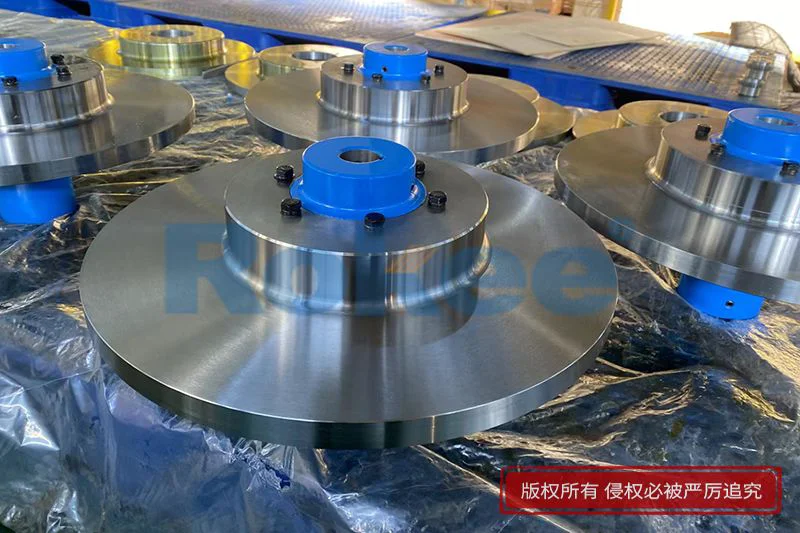
In modern fire protection engineering, the stability and reliability of fire pump systems stand as the cornerstone of building safety and emergency fire response capabilities. As a core connecting component between fire pump power units and pump bodies, flexible couplings undertake the critical task of power transmission, system buffering and structural protection, playing an irreplaceable role in ensuring the long-term stable operation of fire pump equipment. Unlike traditional rigid connecting structures that pursue absolute structural fixation, fire pump flexible couplings adopt elastic buffer design logic, which can adapt to complex mechanical changes and environmental interference in fire pump operation, effectively avoiding system failures and equipment damage caused by mechanical deviation, vibration impact and stress concentration. In standardized fire protection system design and construction worldwide, the application of flexible couplings has become a mandatory and standardized configuration, fully reflecting its indispensable technical value in fire safety systems.


The operational characteristics of fire pumps determine the special technical requirements for connecting components. Fire pumps are typically in a standby state for a long time and need to start instantly and operate stably at high load once a fire occurs. During startup, operation and shutdown, the equipment will generate instantaneous torque impact, mechanical vibration and axial displacement, while long-term static placement will also lead to slight structural deviation of the unit connection part and aging of mechanical stress. Rigid connection structures cannot adapt to these subtle and dynamic mechanical changes. Excessive rigid restraint will cause stress accumulation at the shaft connection, resulting in shaft wear, seal damage, pipeline cracking and even pump body failure in severe cases. In contrast, fire pump flexible couplings rely on high-performance elastic components and optimized structural design to build a flexible and stable power transmission bridge, which can not only ensure efficient and lossless power transmission, but also absorb and buffer various unfavorable mechanical forces in the system, greatly improving the overall operational safety and service life of fire pump equipment.
The core working principle of fire pump couplings is based on the elastic deformation energy absorption and displacement compensation characteristics of internal flexible components. The overall structure consists of symmetric connecting fittings and intermediate elastic buffer parts, which tightly connect the driving shaft of the power device and the driven shaft of the fire pump. In the power transmission process, the elastic medium inside the coupling can produce micro elastic deformation with the operation of the equipment. This deformation does not affect the stability of power transmission, but can effectively compensate for various minor deviations inevitably generated in the operation of mechanical equipment, including axial displacement caused by thermal expansion and cold contraction of equipment and pipelines, angular deflection formed by installation deviation and foundation settlement, and radial offset caused by long-term mechanical fatigue. This flexible compensation capability fundamentally solves the structural damage problem caused by rigid connection unable to adapt to mechanical micro displacement, realizing dynamic balance and stable operation of the fire pump system.
Vibration and noise damping is another key functional advantage of fire pump flexible couplings. Fire pumps will produce continuous mechanical vibration and fluid turbulence impact during high-speed operation. These vibrations will be transmitted along the shaft and pipeline in rigid connection systems, causing resonance of the entire pipeline and equipment support structure. Long-term resonance will loosen pipeline connections, damage waterproof and fireproof seals, and even lead to structural fatigue of building pipe supports. The elastic buffer structure of flexible couplings can effectively isolate vibration transmission, convert mechanical vibration energy into elastic deformation energy and dissipate it, significantly reducing the vibration amplitude of the pump body and pipeline system. At the same time, the elastic medium can weaken the noise generated by mechanical friction and fluid impact, improving the operating environmental stability of fire pump equipment. More importantly, vibration suppression can avoid abnormal wear of bearings, shafts and seals of fire pumps, reduce the probability of equipment failure during emergency startup, and ensure that the fire pump can reach the rated operating state quickly and stably in fire emergencies.
In terms of system safety protection, fire pump flexible couplings have excellent impact resistance and stress relief performance. The instantaneous startup of fire pumps will produce huge starting torque and water hammer impact in the pipeline. The instantaneous impact force is far greater than the operating load of daily equipment, which is easy to cause instantaneous overload damage to rigid connection parts. The flexible structure of the coupling can effectively buffer the instantaneous impact force through rapid elastic deformation, disperse concentrated mechanical stress on the connecting parts, and protect key components such as pump shafts, motor bearings and pipeline flanges from impact damage. In addition, in extreme environments such as building settlement, slight earthquake vibration and equipment aging deformation, flexible couplings can adapt to structural displacement changes within the allowable range, avoid pipeline fracture and equipment connection failure caused by structural deformation, and maintain the integrity and effectiveness of the fire pump system in complex working conditions.
The material selection and structural design of fire pump flexible couplings fully conform to the strict standards of fire protection industry specifications. Qualified fire pump flexible coupling products are manufactured with high-strength metal frameworks and fire-resistant, aging-resistant elastic media. The metal framework ensures the overall structural strength and pressure resistance of the coupling, meeting the high-pressure operating requirements of fire pump water supply systems. The elastic buffer components are mostly made of modified rubber, polyurethane and other high-performance polymer materials, which have excellent fire resistance, low temperature resistance, aging resistance and fatigue resistance. Different from ordinary industrial flexible couplings, fire pump dedicated products have passed strict fire protection performance tests, can maintain stable elastic performance and structural integrity in a certain high-temperature fire environment, and will not fail or deform rapidly due to temperature rise, ensuring the normal operation of fire pump systems in fire scenes.
Industry standard specifications have clear mandatory provisions for the application of fire pump flexible couplings. Relevant international fire protection codes clearly stipulate that all fixed fire pump units must use flexible connecting devices to connect power components and pump bodies, prohibiting the use of fully rigid connection structures. This specification requirement is formulated based on a large number of engineering practice and safety accident summaries, aiming to eliminate potential safety hazards caused by rigid connection defects. In standardized fire protection system design, installation and acceptance links, the displacement compensation capability, vibration damping performance, pressure resistance and fire resistance of flexible couplings are all key inspection indicators. Only products that meet the standard parameter requirements can be applied to fire pump engineering construction, ensuring the standardized and safe application of flexible coupling technology in fire protection systems.
Scientific type selection and standardized installation are key prerequisites for giving full play to the performance of fire pump flexible couplings. In the type selection process, it is necessary to comprehensively match parameters such as the rated operating pressure, flow rate, rotating speed and shaft diameter of the fire pump unit. The torque grade, maximum allowable displacement and deflection range of the coupling must adapt to the actual operating working conditions of the equipment. Excessively low parameter configuration will lead to insufficient buffering compensation capability and failure to achieve the protective effect, while excessive redundant configuration will cause unnecessary engineering cost waste. For high-rise buildings, industrial plants and other scenes with high fire protection safety requirements and high system pressure, it is necessary to select heavy-duty flexible coupling products with higher pressure resistance and structural strength to adapt to harsh operating conditions.
The installation process of fire pump flexible couplings has strict standardized requirements, and installation accuracy directly affects the service performance and service life of the product. Before installation, the coaxiality of the motor shaft and the pump shaft must be calibrated to reduce installation deviation as much as possible. Although flexible couplings have deviation compensation capability, excessive initial installation error will increase the long-term operating load of elastic components, accelerate material fatigue and aging, and shorten the service life of the coupling. During installation, the fastening tightness of connecting bolts should be uniform to avoid uneven stress on the coupling structure. Meanwhile, it is necessary to reserve a reasonable telescopic gap according to the ambient temperature and pipeline thermal expansion and contraction parameters, ensuring that the coupling can freely perform elastic displacement compensation during equipment operation. After installation, systematic debugging and inspection should be carried out to verify the vibration damping effect, displacement adaptability and sealing performance of the coupling to ensure that it meets the operating standard requirements.
Daily maintenance and inspection work is crucial to maintain the long-term stable performance of fire pump flexible couplings. As a key buffer component of fire pump equipment, flexible couplings are in a standby state for a long time and bear alternating mechanical load during startup and operation, so regular inspection and maintenance are required. Daily inspection mainly includes checking whether the elastic components have aging deformation, cracking and wear, whether the metal connecting parts have rust and loose fastening, and whether the coupling has abnormal vibration and displacement during equipment trial operation. For couplings that have been used for a long time or have experienced fire startup operation, a comprehensive performance inspection should be carried out regularly to judge the elastic recovery capability and structural integrity of the buffer components. Timely replacement and maintenance of aging and failed couplings can avoid performance degradation affecting the emergency response capability of fire pump systems.
Compared with rigid connection schemes, the comprehensive application advantages of fire pump flexible couplings are very prominent in the whole life cycle of fire protection engineering. In the construction stage, flexible couplings have lower requirements for equipment installation accuracy, which can effectively reduce the construction difficulty and installation error rate of fire pump units and improve construction efficiency. In the equipment operation stage, excellent vibration damping and stress relief performance can significantly reduce the failure rate of fire pump equipment and pipeline systems, extend the service life of the entire fire protection system, and reduce daily operation and maintenance costs. In emergency fire scenarios, reliable flexible connection performance ensures that the fire pump can start and operate stably, avoids system failure caused by mechanical stress and vibration problems, and provides stable water supply guarantee for fire extinguishing and rescue work.
With the continuous upgrading of modern building fire protection standards and the continuous improvement of fire safety system requirements, the technical performance of fire pump flexible couplings is also constantly optimized and upgraded. Modern new-generation flexible coupling products adopt optimized composite material formulas and innovative structural designs, which have stronger displacement compensation capability, higher temperature resistance and pressure resistance, and longer fatigue service life. At the same time, the integrated design of sealing and buffering is realized, which further improves the overall sealing performance of the fire pump connection part, avoids water leakage and pressure loss of the system, and improves the operating efficiency of fire pump water supply. The continuous progress of coupling technology also promotes the overall improvement of the stability and reliability of fire pump systems, providing more solid technical support for building fire safety.
In the entire fire protection system engineering, seemingly small fire pump flexible couplings undertake the important mission of protecting the safe operation of core fire water supply equipment. Its flexible buffering, displacement compensation, vibration isolation and impact resistance functions form an important safety barrier for fire pump operation. In daily standby state, it resists structural deformation and mechanical fatigue of equipment caused by environmental changes and long-term placement; in emergency startup and operation state, it buffers impact load, isolates vibration noise, and protects the stable operation of the entire system. Standardized selection, installation and maintenance of flexible couplings are important links that cannot be ignored in fire protection engineering construction and daily management.
In conclusion, fire pump flexible couplings are indispensable core components of modern fire pump systems, with unique technical advantages and important safety values that cannot be replaced by rigid connection structures. It integrates multiple functions of power transmission, vibration reduction and noise reduction, stress protection and displacement compensation, and provides reliable mechanical safety guarantee for the stable operation of fire pump equipment in various working conditions. With the continuous improvement of fire safety awareness and fire protection engineering standardization level, fire pump flexible couplings will be more widely used in various building fire protection, industrial fire protection and municipal fire protection systems, and continuously escort the safety and stability of fire water supply systems.
« Fire Pump Flexible Coupling » Update Date: 2026/7/16
Contact
If you require custom machined couplings, please contact Rokee via the contact information below for inquiries.
Email: https://www.gshmdpq.com
 WeChat