Sleeve Couplings
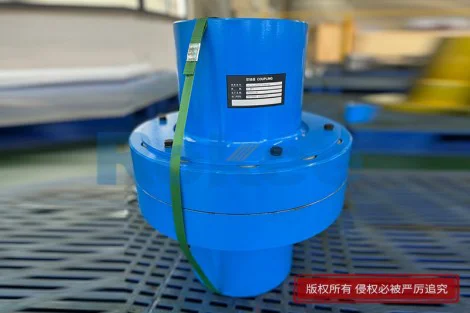
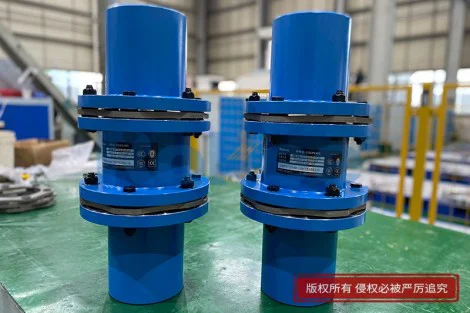
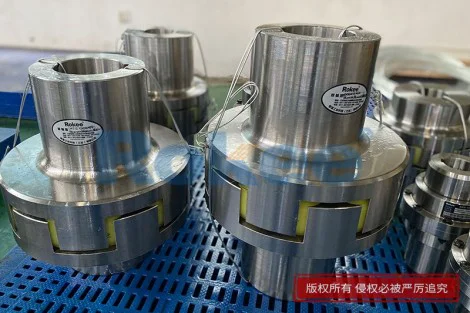
Rokee is a manufacturer of sleeve couplings from china, we can provide non-standard custom sleeve couplings based on parameters or drawings supplied by customers, with export support available.
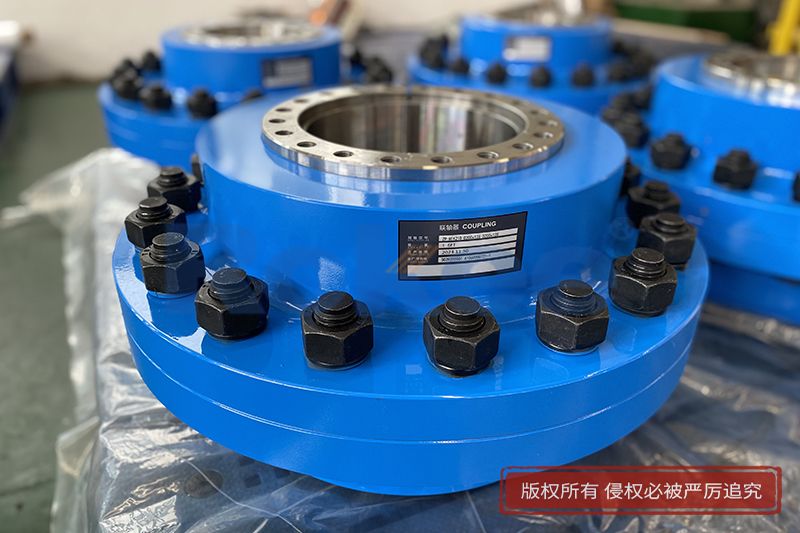
In the intricate ecosystem of mechanical power transmission, sleeve couplings stand out as one of the most fundamental yet indispensable components, serving as a critical connecting medium for rotating shafts in diverse mechanical systems. Also commonly referred to as muff couplings in industrial practice, this mechanical device is engineered primarily to link two adjacent rotating shafts, realizing the stable and continuous transmission of torque and rotational motion while optimizing the overall operational stability of mechanical equipment. Unlike complex coupling structures with multi-part assembly and flexible deformation mechanisms, the sleeve coupling adheres to a minimalist mechanical design philosophy, relying on precise structural matching and mechanical friction cooperation to complete power transmission, which endows it with unique application advantages in numerous industrial and precision mechanical scenarios. Its uncomplicated structural form, reliable working performance and convenient installation and maintenance features have made it a mainstream choice for light to medium-duty power transmission systems, laying a solid foundation for the efficient operation of various mechanical equipment.

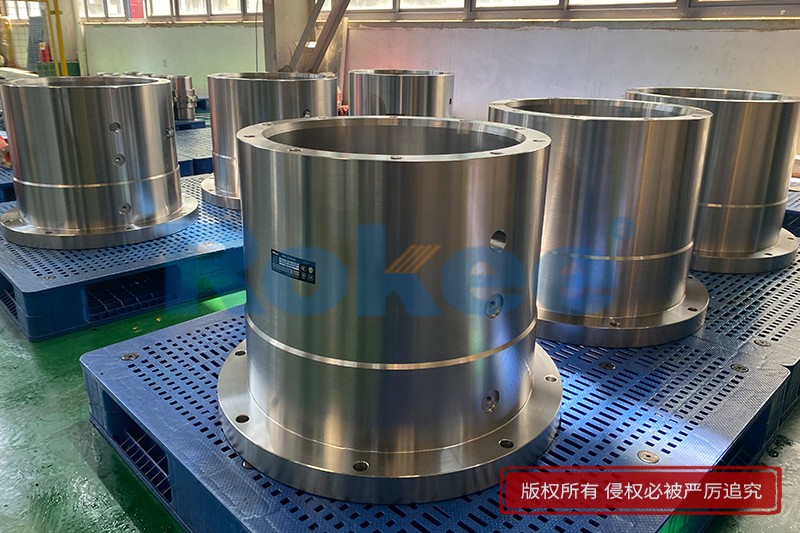

The basic structural composition of a sleeve coupling is extremely streamlined, with a thick-walled hollow cylindrical sleeve as the core bearing and connecting component. The inner cavity of the cylindrical sleeve undergoes high-precision machining to form a smooth and uniform inner diameter, which can achieve a tight and seamless fit with the outer circular surface of the connected shafts. This highly matched structural design eliminates redundant gaps between components and ensures excellent coaxiality of the two connected shafts during operation. To avoid relative rotation and axial displacement between the sleeve and the shafts during power transmission, the coupling is usually equipped with auxiliary locking structures, including embedded keyway matching and fastening set screw structures. The keyway arranged on the inner wall of the sleeve cooperates with the flat key on the shaft surface, forming a rigid limit structure to bear torsional force and prevent rotational deviation. The set screws penetrate the sleeve wall and tightly press against the shaft surface, providing stable axial positioning and auxiliary friction locking force, which further enhances the firmness of the connection. Some optimized structural designs adopt elastic expansion structures, which rely on elastic deformation to generate uniform radial pressure between the sleeve and the shaft, realizing integrated seamless connection and effectively solving the problem of local stress concentration caused by traditional single key connection modes.
The working principle of sleeve couplings is based on rigid mechanical transmission and elastic contact cooperation, and the power transmission process is stable and efficient. When the driving shaft rotates, the torsional force is transmitted to the cylindrical sleeve through the locking structure and friction contact surface, and the sleeve synchronously drives the driven shaft to rotate, completing the continuous transmission of torque and rotational speed. For rigid sleeve couplings, the whole structure presents an integrated rigid state after installation, with almost no elastic deformation during operation, so it can maintain ultra-high torsional stiffness and transmission accuracy. This rigid transmission mode ensures that there is no rotational hysteresis or angle deviation in the power transmission process, which is particularly suitable for mechanical scenarios that require precise motion synchronization. For improved flexible sleeve coupling structures, the reserved micro elastic gap and deformation space can absorb tiny vibration and impact force generated during equipment operation, realizing mild buffering and damping effects on the premise of ensuring transmission efficiency. Whether adopting rigid or slightly flexible working modes, the core working logic of sleeve couplings remains consistent, that is, relying on close mechanical contact to realize efficient and stable power transmission between shafts.
Compared with other types of shaft couplings in the mechanical industry, sleeve couplings possess prominent comprehensive performance advantages, which are the core reasons for their wide popularization and application. First of all, its ultra-compact structural form is irreplaceable in space-constrained mechanical environments. The overall radial size of the sleeve coupling is very small, and there are no protruding flanges, connecting bolts and other auxiliary parts on the outer surface. The smooth and integrated outer contour not only saves precious installation space inside the equipment, but also avoids the risk of component entanglement and collision during high-speed operation, greatly improving the operational safety of mechanical equipment. Secondly, the transmission efficiency of sleeve couplings is extremely high. The direct metal-to-metal contact transmission mode reduces intermediate energy loss links, and there is no relative sliding or deformation loss in the power transmission process, so it can maintain stable and efficient energy conversion for a long time. In small and medium-sized precision power systems, its transmission efficiency is significantly better than that of multi-component flexible couplings with complex structures.
In addition to structural and efficiency advantages, sleeve couplings also show excellent practicability in manufacturing, installation and later maintenance. The simple cylindrical structure is convenient for standardized machining and batch production, with low manufacturing difficulty and stable structural quality, which gives it outstanding cost-performance in practical application. The installation process does not require complex assembly tools and professional debugging procedures. Workers can complete shaft alignment, sleeve sleeving and locking fastening through simple operations, realizing rapid assembly and equipment commissioning. In terms of maintenance, the integrated structure has fewer vulnerable parts, no easy-wear elastic components and complex transmission structures, so the failure rate in long-term operation is extremely low. Daily maintenance only needs to check the fastening state of the locking parts and the surface wear degree of the contact parts, without regular replacement of accessories, which greatly reduces the later operation and maintenance cost and downtime loss of the equipment. Meanwhile, the rigid structural design enables the sleeve coupling to bear stable medium torque load, with strong structural rigidity and deformation resistance, and can maintain stable working performance under long-term continuous operation conditions.
According to structural characteristics and functional differences, sleeve couplings can be divided into rigid sleeve couplings and flexible optimized sleeve couplings, and the two types have clear applicable scenario boundaries. Rigid sleeve couplings are the most classic and widely used type, featuring complete rigid locking and zero deformation characteristics during operation. They have extremely high coaxiality retention capability and torsional stiffness, and can ensure precise synchronous operation of the two shafts. This type of coupling is mostly used in precision mechanical equipment with high requirements for motion accuracy and stable operation, such as precision machine tools, automated processing equipment, numerical control machinery and robotic transmission structures. In these precision scenarios, any tiny shaft deviation and transmission error will affect the processing accuracy and equipment operation stability, and the high-precision matching and rigid transmission characteristics of rigid sleeve couplings can perfectly meet the stringent working requirements.
Flexible optimized sleeve couplings are improved on the basis of traditional rigid structures, appropriately increasing micro elastic deformation performance while retaining the advantages of compact structure and high-efficiency transmission. This improved structure can adapt to tiny axial and radial misalignment between shafts caused by equipment operation vibration, assembly errors and thermal deformation, and can absorb part of vibration and shock energy generated during equipment start-stop and load switching. Therefore, it is more suitable for general industrial equipment with complex working conditions and certain vibration interference, such as pumping equipment, air compression equipment, small and medium-sized conveyor systems and agricultural mechanical equipment. In marine mechanical systems, flexible sleeve couplings are often used to connect engine shafts and propeller shafts, effectively buffering the vibration and impact generated by ship navigation and mechanical operation, and protecting the stability of the power transmission system. In agricultural production scenarios, they are widely matched with tractors, mixing and stirring equipment, adapting to the complex and variable working environment of agricultural machinery and ensuring continuous and stable power output.
The application scope of sleeve couplings covers almost all light and medium-duty mechanical power transmission fields, showing strong industrial adaptability. In industrial manufacturing, they are applied to printing machinery, packaging equipment and light processing machinery, realizing synchronous operation of multiple transmission shafts and ensuring the consistency and stability of mechanical movement. In hydraulic and pneumatic systems, they connect motor shafts and pump body transmission shafts, completing the conversion from rotational mechanical energy to fluid power energy, and providing stable power support for the operation of hydraulic and pneumatic equipment. In logistics and transportation machinery, sleeve couplings are used in the transmission structure of conveyor equipment, realizing stable power transmission of conveyor belts and ensuring the efficient and orderly operation of material transportation work. In precision electronic equipment and small automated machinery, their ultra-compact size and high-precision transmission performance make them the preferred connecting component, meeting the miniaturization and high-precision operation requirements of modern precision machinery.
Despite the many advantages of sleeve couplings, their application also has certain restrictive conditions, and reasonable type selection and use norms need to be followed in practical engineering applications. The most prominent limitation is that traditional rigid sleeve couplings have extremely low tolerance for shaft misalignment. Once there is obvious radial, axial or angular deviation between the two connected shafts, additional torsional stress and bending stress will be generated inside the coupling and the shaft body, which will accelerate component wear, cause transmission noise, and even lead to shaft deformation and coupling failure in severe cases. Therefore, when installing rigid sleeve couplings, it is necessary to ensure high-precision alignment of the two shafts to eliminate assembly deviation. In addition, the load-bearing capacity of sleeve couplings is limited by structural size and material performance, and they are not suitable for heavy-duty high-torque transmission scenarios and frequent impact load working conditions. For heavy industrial equipment with large torque and strong impact, it is necessary to select matched heavy-duty coupling products according to the load characteristics.
Material selection is a key factor affecting the service performance and service life of sleeve couplings, and different material formulas correspond to different application working conditions. Most conventional sleeve couplings are made of high-strength carbon steel and alloy steel materials, which have high structural rigidity, wear resistance and pressure resistance, and can adapt to most conventional industrial working environments. After finishing machining and surface treatment, the steel sleeve can effectively resist oxidation and corrosion, and maintain stable structural performance in long-term operation. For special working environments such as high humidity, strong corrosion and dust pollution, stainless steel materials are usually selected to prepare sleeve couplings, which can effectively avoid rust and corrosion damage and extend the service life of components. For light-load and low-speed precision micro-mechanical equipment, high-quality engineering plastic materials are also used in individual scenarios. Plastic sleeve couplings have the characteristics of light weight, low noise and insulation, and can meet the special working requirements of micro-precision equipment, although their load-bearing capacity and rigidity are lower than metal materials.
Daily maintenance and scientific use are crucial to giving full play to the performance advantages of sleeve couplings and extending their service life. In the daily operation of equipment, regular visual inspection and performance detection of the coupling are required, focusing on checking whether the set screws and key connection parts are loose, whether the contact surface has abnormal wear, scratches and corrosion phenomena. For the coupling parts operating in high-speed and high-load environments, the fastening state of the locking structure should be checked regularly to prevent connection failure caused by long-term vibration loosening. When abnormal noise, vibration and transmission lag are found during equipment operation, the equipment should be shut down in time for inspection and troubleshooting to avoid small faults evolving into large-scale component damage and equipment failure. In addition, during equipment shutdown and maintenance, the surface of the coupling should be cleaned regularly to remove dust, oil stains and sundries, keep the contact surface smooth and clean, and ensure the fitting accuracy and transmission efficiency of the connecting parts. For the couplings that have been used for a long time and have serious wear and deformation, they should be replaced in a timely manner to ensure the safe and stable operation of the entire mechanical transmission system.
With the continuous upgrading of modern mechanical equipment towards high precision, high efficiency and miniaturization, the technical iteration and performance optimization of sleeve couplings are also advancing continuously. On the basis of retaining the original simple structure and high cost-performance advantages, modern optimized sleeve couplings integrate elastic buffer structure, anti-loosening locking design and anti-corrosion and wear-resistant coating technology, which effectively makes up for the deficiencies of traditional products in misalignment adaptability and environmental adaptability. The innovative expansion sleeve structure realizes gapless connection through elastic expansion, eliminates the stress concentration problem of traditional key connection, further improves the transmission accuracy and structural stability, and reduces the failure rate of long-term operation. At the same time, the lightweight and refined structural design enables sleeve couplings to better adapt to the development needs of modern miniaturized precision machinery and intelligent automation equipment, and their application fields are constantly expanding.
In the entire field of mechanical power transmission, sleeve couplings, as a classic basic mechanical component, have irreplaceable application value. Their simple and reliable structural design, efficient and stable transmission performance, economical manufacturing and maintenance costs, and wide environmental adaptability make them an essential core connecting part for light and medium-duty mechanical systems. From precision precision machinery to general industrial equipment, from agricultural and marine machinery to automated logistics equipment, sleeve couplings silently support the stable operation of various mechanical systems. In the future, with the continuous progress of material technology and mechanical design technology, sleeve couplings will continue to realize performance upgrading and structural innovation, adapt to more complex and diversified mechanical working conditions, and provide more reliable basic support for the efficient and intelligent development of modern mechanical engineering.
« Sleeve Couplings » Update Date: 2026/7/17
Contact
If you require custom machined couplings, please contact Rokee via the contact information below for inquiries.
Email: https://www.gshmdpq.com
 WeChat