Flexible Couplings For Motors
Rokee is a manufacturer of flexible couplings for motors from china, we can provide non-standard custom flexible couplings for motors based on parameters or drawings supplied by customers, with export support available.

In modern industrial mechanical transmission systems, electric motors serve as the core power sources for almost all rotating equipment, providing stable and continuous rotational torque for production and operation. The stable connection between motors and driven equipment is the key to ensuring efficient power transmission, and flexible couplings have become an indispensable core component in this link. Unlike rigid couplings that pursue absolute shaft alignment and rigid torque transmission, flexible couplings for motors are designed with compliant structural characteristics, which can not only stably transmit rotational torque and motion between motor shafts and load shafts but also effectively adapt to various minor deviations and dynamic changes in the operation of transmission systems. This unique performance makes them widely applied in light industrial processing, heavy machinery manufacturing, intelligent automation, new energy equipment and numerous other fields, becoming a vital guarantee for the long-term stable operation of motor transmission systems.

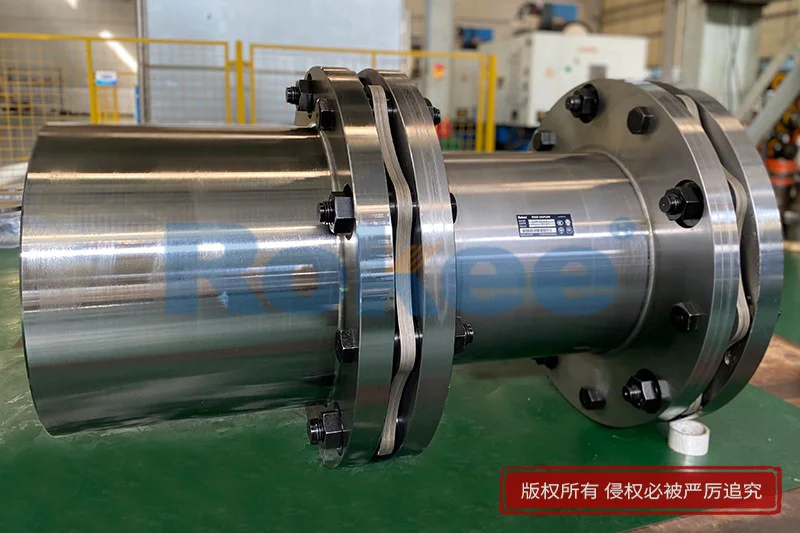

The core design concept of motor flexible couplings originates from the practical pain points of mechanical transmission. In actual industrial production, it is almost impossible to achieve complete and absolute alignment between the motor driving shaft and the driven equipment shaft. Various unavoidable deviations always exist in the assembly and operation process. Initial installation errors are the most common cause of shaft misalignment; even with high-precision processing and rigorous manual calibration, tiny axial, radial and angular deviations cannot be completely eliminated. In addition, the equipment will produce slight structural deformation under long-term load operation, and the temperature change during motor startup, operation and shutdown will cause thermal expansion and contraction of metal shafts and structural parts, further expanding the shaft misalignment deviation. Moreover, the vibration and impact generated by equipment operation will also cause real-time dynamic displacement between the two shafts. If rigid couplings are used in such scenarios, the unbalanced force generated by misalignment will be directly transmitted to the motor bearings, shaft bodies and driven equipment components, resulting in increased equipment operation friction, accelerated wear of precision parts, increased operating noise, and even fatigue damage and equipment shutdown in severe cases. Flexible couplings perfectly solve these problems through their elastic deformation and structural clearance characteristics, realizing flexible power transmission while protecting the entire transmission system.
The working principle of flexible couplings for motors is based on controllable elastic deformation and mechanical displacement compensation. In the power transmission process, the motor drives the driving hub of the coupling to rotate synchronously, and torque is transmitted to the driven hub and the connected load shaft through the internal elastic elements or movable structural parts of the coupling. When relative displacement and misalignment occur between the motor shaft and the load shaft, the flexible components inside the coupling will produce mild, regular and reversible elastic deformation or small-range sliding displacement. This deformation and displacement will not interfere with the basic efficiency and continuity of torque transmission but can effectively offset various misalignment deviations, converting the rigid collision and unbalanced stress in the transmission process into flexible buffer force. At the same time, the elastic structure can absorb the vibration energy generated by motor startup, load switching and equipment operation, suppress the resonance phenomenon of the transmission system, and reduce the impact load on the motor and driven equipment. This working mode of “transmission while buffering and compensation” enables the motor transmission system to maintain stable operation in complex and variable working conditions, greatly improving the fault tolerance of mechanical operation.
According to structural materials and flexible implementation modes, motor flexible couplings can be divided into two main categories: elastomeric flexible couplings and metallic flexible couplings, each with distinct performance characteristics and applicable working conditions. Elastomeric flexible couplings rely on elastic polymer materials such as rubber and polyurethane to realize flexible transmission. Their internal elastic elements have excellent elasticity and damping performance, with strong vibration absorption and impact resistance capabilities. This type of coupling has a simple structure, convenient installation and maintenance, and low operating noise, and can effectively alleviate the rigid impact during motor startup and sudden load changes. However, limited by the material properties of polymers, elastomeric couplings are slightly insufficient in torsional stiffness and high-temperature resistance, and are mostly suitable for medium and low torque, conventional temperature and conventional speed motor transmission scenarios, such as small and medium-sized motor supporting conveying equipment, packaging machinery, and general automated production lines.
Metallic flexible couplings adopt all-metal structural design, and their flexibility is realized through the bending deformation of thin-walled metal parts or the small-range sliding and rolling of precision matching parts. Compared with elastomeric couplings, metallic couplings have higher torsional stiffness, better high-temperature resistance, corrosion resistance and fatigue resistance, and can maintain stable dimensional accuracy and transmission performance under high speed, high torque and harsh working conditions. This type of coupling can realize zero-backlash torque transmission, with high transmission accuracy, and is very suitable for high-precision motor transmission scenarios such as precision numerical control equipment, servo motor systems, aerospace supporting equipment and high-speed rotating machinery. Although metallic flexible couplings have outstanding comprehensive performance, their structural design and processing precision requirements are higher, and they have relatively weak vibration absorption capacity compared with elastomeric products, making them more suitable for stable working conditions with small vibration and uniform load changes.
Different types of flexible couplings show clear differentiation in performance and application, which further enriches the matching options of motor transmission systems. Jaw couplings, as one of the most widely used general-purpose flexible couplings, consist of two metal jaw hubs and an intermediate elastomer spider. They can adapt to radial, axial and angular misalignment at the same time, with compact structure and strong versatility, and are suitable for most conventional motor power transmission scenarios. Disc couplings belong to high-precision metallic flexible couplings, which transmit torque through the stacking and bending deformation of metal discs, featuring zero backlash, high torsional stiffness and long service life, and are widely used in high-precision servo motor and industrial robot transmission systems. Bellows couplings rely on the elastic deformation of integral metal bellows to realize flexible transmission, with ultra-high alignment compensation accuracy and transmission efficiency, and are suitable for ultra-precision mechanical equipment driven by micro and small motors. Oldham couplings use the sliding fit of intermediate discs to compensate for large radial misalignment, solving the problem of large shaft displacement in the operation of some special motor equipment, and are often used in medium and low-speed transmission scenarios with large installation deviation.
The application value of flexible couplings in motor systems is reflected in multiple dimensions of equipment operation, maintenance and service life. First of all, they effectively protect the core components of the motor. The misalignment compensation and vibration damping functions avoid long-term eccentric wear of motor shafts and bearings, reduce the operating load of the motor, and stabilize the motor operating current, which not only reduces the failure rate of motor core parts but also helps reduce equipment energy consumption and improve power transmission efficiency. Secondly, flexible couplings can buffer the instantaneous impact during motor startup and braking. The instantaneous torque impact generated by frequent startup and shutdown of motors is the main cause of fatigue damage of transmission parts, and the flexible structure can disperse and absorb this impact force, protecting the motor and driven load equipment from instantaneous overload damage.
In addition, flexible couplings greatly reduce the daily maintenance pressure of motor transmission systems. In the absence of flexible buffering, the vibration and impact of equipment operation will lead to frequent loosening of connecting fasteners, accelerated aging and wear of parts, and frequent equipment failure and shutdown. After adopting matching flexible couplings, the operating stability of the transmission system is significantly improved, the wear degree of various parts is reduced, the maintenance cycle of equipment is prolonged, and the downtime loss caused by equipment failure is effectively reduced. For industrial production scenarios with continuous and uninterrupted operation, this maintenance optimization value can be converted into stable production benefits, ensuring the continuity and efficiency of production work.
Scientific selection of flexible couplings is the premise of giving full play to their performance advantages and ensuring the stable operation of motor systems. In the selection process, the first core factor is the matching degree with the motor operating parameters, including motor power, rated torque, operating speed and load characteristics. For motors with high power and high torque output, it is necessary to select flexible couplings with high torsional bearing capacity and structural strength to avoid torque overload damage; for high-speed rotating motors, priority should be given to couplings with good dynamic balance performance and small running vibration to adapt to high-speed operating conditions. At the same time, the load type of the equipment must be considered. For impact load and variable load working conditions such as crushing machinery and lifting equipment, elastomeric couplings with strong vibration damping and impact resistance should be selected; for precision transmission equipment with stable load and high accuracy requirements, high-rigidity and zero-backlash metallic couplings are more suitable.
The actual operating environment of the equipment is also a key selection basis. In high-temperature, low-temperature, humid or corrosive industrial environments, the material stability of the coupling must be guaranteed. Metallic couplings with high-temperature resistance and corrosion resistance are mostly used in high-temperature workshop and chemical industry equipment supporting motors, while special modified elastomer couplings can be selected for conventional humid and dust environments to balance performance and cost. In addition, the installation space and maintenance conditions of the equipment need to be considered. For equipment with compact installation space, compact small-size flexible couplings should be selected to adapt to limited assembly space; for equipment that is inconvenient to disassemble and maintain, couplings with simple structure and convenient disassembly and replacement should be prioritized to reduce subsequent maintenance difficulty.
Daily maintenance and standardized use further determine the service life and operating effect of motor flexible couplings. In the equipment operation process, regular inspection of the coupling operating state is required, focusing on checking whether there is abnormal vibration, abnormal noise and elastic element aging. For elastomeric couplings, long-term high-load operation and ultraviolet radiation will lead to aging, hardening and cracking of elastic materials, so regular replacement and maintenance are needed according to the operating cycle. For metallic couplings, attention should be paid to checking the fatigue deformation of metal parts and the wear of matching gaps to avoid transmission accuracy reduction caused by part wear. At the same time, the installation standardization must be guaranteed. Excessive misalignment caused by non-standard installation will exceed the compensation range of the coupling, resulting in accelerated fatigue damage of the coupling and even failure of the transmission system. Standard installation, regular inspection and timely maintenance can maximize the service performance of flexible couplings, reduce equipment operating risks, and create a stable and reliable operating environment for motor transmission systems.
With the continuous upgrading of industrial intelligent manufacturing and mechanical equipment precision, the technical requirements for motor flexible couplings are also constantly improving. Modern industrial equipment is developing towards high speed, high precision, high load and long life, which puts forward higher standards for the misalignment compensation ability, transmission accuracy, fatigue resistance and environmental adaptability of flexible couplings. At present, the industry is constantly carrying out material innovation and structural optimization of flexible couplings. New high-elasticity and high-temperature resistant polymer materials are applied to elastomeric couplings to expand their applicable temperature range and load capacity; precision alloy materials and integrated processing technology are used in metallic couplings to further improve transmission accuracy and structural stability. In addition, with the development of intelligent monitoring technology, some optimized coupling structures can cooperate with sensor equipment to realize real-time monitoring of operating vibration, torque and deformation, providing data support for equipment predictive maintenance.
As a key connecting component in motor transmission systems, flexible couplings undertake the important functions of power transmission, deviation compensation, vibration damping and equipment protection. Their unique flexible transmission characteristics make up for the inherent defects of rigid transmission, solve various unstable problems in the operation of motor and load equipment, and provide a solid guarantee for the efficient and stable operation of industrial mechanical equipment. In the future, with the continuous progress of industrial manufacturing technology and material science, motor flexible couplings will continue to iterate and upgrade in performance, structure and applicability, adapt to more complex and diversified industrial working conditions, and play an increasingly important role in the fields of industrial automation, precision manufacturing, new energy power equipment and intelligent machinery. Reasonable selection, standardized installation and scientific maintenance of flexible couplings will always be an important part of equipment operation and maintenance management, helping enterprises reduce operating costs and improve production efficiency.
« Flexible Couplings For Motors » Update Date: 2026/7/16
Contact
If you require custom machined couplings, please contact Rokee via the contact information below for inquiries.
Email: https://www.gshmdpq.com
 WeChat