Flexible Pin Bush Coupling
Rokee is a manufacturer of flexible pin bush coupling from china, we can provide non-standard custom flexible pin bush coupling based on parameters or drawings supplied by customers, with export support available.

In the intricate ecosystem of mechanical power transmission, the stability, flexibility, and durability of connecting components determine the overall operational efficiency and service life of entire mechanical systems. Among various coupling types designed for shaft connection and torque transmission, the flexible pin bush coupling stands out as a versatile and reliable solution, widely adopted in general industrial machinery, power transmission equipment, and automated production systems. Renowned for its ingenious structural design, excellent misalignment compensation capability, and superior vibration damping performance, this type of coupling perfectly balances rigid torque transmission and flexible buffering, making it an indispensable core component in modern mechanical transmission systems. Unlike rigid couplings that lack adaptive capacity and specialized flexible couplings with complex structures, the flexible pin bush coupling integrates simplicity in manufacturing, convenience in installation, and stability in operation, adapting to most conventional and moderately harsh industrial working conditions.


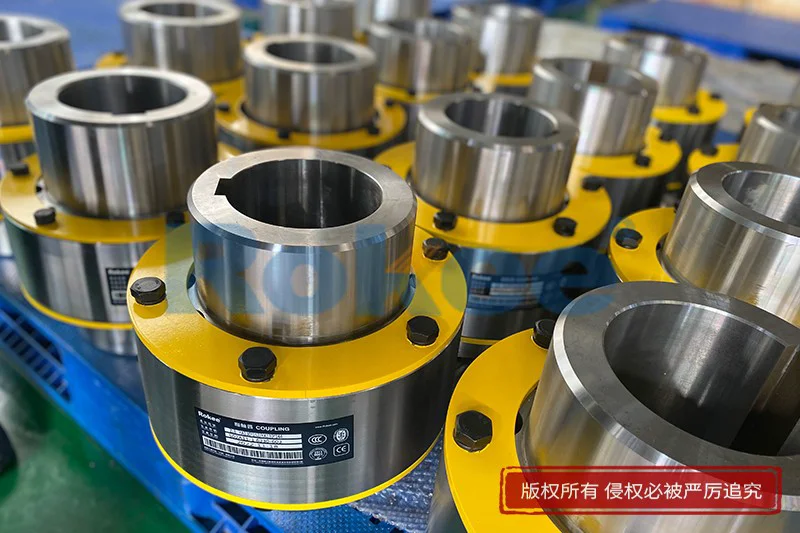
The fundamental structural composition of flexible pin bush couplings lays the foundation for their unique working performance. The overall structure is composed of two symmetrical flange hubs, high-strength transmission pins, and elastic bush buffer elements, forming a compact and integrated transmission mechanism. The two flange hubs are respectively mounted on the driving shaft and driven shaft of mechanical equipment, undertaking the basic positioning and connection functions. The precision-machined pin holes on the flanges ensure accurate matching with transmission pins, while the elastic bushes sleeved on the outer side of the pins serve as the core flexible functional component of the entire coupling. All metal structural parts adopt high-rigidity and corrosion-resistant materials, which can maintain stable structural strength under long-term high-speed operation and load-bearing conditions, while the elastic bushes are made of high-elasticity polymer materials with excellent compression resistance, fatigue resistance, and environmental adaptability. This differentiated material collocation enables the coupling to achieve rigid torque transmission and flexible dynamic buffering simultaneously, avoiding the structural damage and transmission failure caused by rigid contact between metal parts.
The working principle of flexible pin bush couplings centers on elastic deformation and buffered torque transmission, realizing efficient and stable power transfer while adapting to dynamic shaft misalignment. During equipment operation, the driving shaft drives the active flange hub to rotate, and the rotational torque is transmitted to the transmission pins through the flange holes. The pins then transfer the torque to the elastic bushes, and the elastic bushes drive the driven flange hub and the connected driven shaft to operate synchronously, completing the entire power transmission process. In this operating cycle, the elastic bushes bear the key flexible adjustment function. When relative displacement or deviation occurs between the driving shaft and the driven shaft due to installation errors, equipment vibration, or operational wear, the elastic bushes produce tiny and reversible elastic deformation. This deformation can effectively compensate for three common types of shaft misalignment in industrial operation: parallel misalignment, angular misalignment, and axial displacement. Different from hard-contact transmission structures that generate huge stress and friction under misalignment conditions, the elastic buffering structure of the pin bush coupling converts rigid impact stress into elastic deformation energy, which is gradually released in the rotation process, ensuring continuous and stable torque transmission without interruption.
The unique structural and working mechanism endows flexible pin bush couplings with multiple core performance advantages that adapt to complex industrial operating conditions. First and foremost is the outstanding vibration and shock absorption capacity. In the start-stop process of mechanical equipment, sudden load changes, or intermittent impact operation scenarios, the elastic bushes can effectively absorb torsional vibration and mechanical shock generated by the transmission system. This vibration damping effect not only eliminates the resonance phenomenon of the transmission system but also reduces the vibration noise of equipment operation, realizing low-noise and stable operation of mechanical systems. Long-term vibration suppression can significantly reduce the fatigue wear of shaft parts, bearings, and other auxiliary components, effectively extending the overall service life of mechanical equipment.
Secondly, the excellent misalignment tolerance is a prominent feature of flexible pin bush couplings. In actual industrial production, it is impossible to achieve absolute coaxiality of the two connected shafts due to manual installation errors, equipment foundation settlement, and thermal deformation during equipment operation. Most rigid couplings are extremely sensitive to shaft misalignment, and tiny deviations will cause severe eccentric wear, shaft bending, and even equipment failure. In contrast, flexible pin bush couplings can adapt to a certain range of parallel, angular, and axial misalignments through the elastic deformation of bushes, eliminating additional mechanical stress caused by misalignment. This adaptive performance greatly reduces the precision requirements for equipment installation and debugging, lowers the technical threshold of field operation, and improves the fault tolerance rate of mechanical assembly.
In addition, the flexible pin bush coupling has remarkable operational stability and low maintenance characteristics. The overall structure has no complex transmission accessories or precision vulnerable parts, and the integrated plug-in assembly design enables the coupling to maintain stable operation for a long time after installation without frequent adjustment and calibration. Different from gear couplings and chain couplings that require regular lubrication and oil maintenance, the pin bush coupling realizes maintenance-free operation in conventional working environments, saving a large amount of daily maintenance time and labor costs for industrial production. Moreover, the elastic bushes have excellent environmental adaptability, resisting the erosion of water, dust, and conventional atmospheric environments, and will not undergo aging failure or performance attenuation under normal temperature and humid working conditions, ensuring continuous and reliable operation of the equipment throughout the production cycle.
The load adaptability of flexible pin bush couplings also makes them suitable for diverse industrial transmission scenarios. This type of coupling can stably transmit rated torque under both constant load and variable load conditions, and has a certain overload protection function in practical operation. When the mechanical system is subjected to sudden overload impact, the elastic bushes will produce large elastic deformation to buffer instantaneous overload torque, avoiding direct damage to shafts, motors, and core transmission parts caused by excessive instantaneous torque. This passive protection mechanism effectively reduces the failure rate of mechanical equipment under abnormal working conditions and improves the safety and stability of industrial production. Meanwhile, the optimized barreled structure of flexible bushes ensures small circumferential backlash during operation, realizing high-precision synchronous transmission and meeting the operation requirements of medium and low-speed precision transmission equipment.
Flexible pin bush couplings have been widely applied in numerous industrial fields due to their comprehensive performance advantages, covering general manufacturing, logistics transportation, environmental protection equipment, and municipal engineering. In conveyor transmission systems, which are typical variable-load operation scenarios, the frequent start-stop and material impact will generate continuous vibration and load fluctuation. The vibration damping and buffering performance of pin bush couplings can effectively stabilize the transmission state of conveyor equipment, avoid material jamming and equipment shutdown caused by transmission jitter, and improve the continuous operation efficiency of production lines. In pump and fan equipment, long-term high-speed operation is prone to shaft deviation and system resonance. The misalignment compensation and vibration suppression functions of the coupling ensure the stable operation of fluid transmission equipment, reduce equipment failure caused by shaft wear, and lower the energy consumption of equipment operation.
In addition, this coupling is also widely used in light industrial machinery, food processing equipment, agricultural machinery, and small and medium-sized automated production equipment. These devices generally have the characteristics of frequent start-stop, complex working conditions, and low maintenance frequency, which perfectly match the performance characteristics of flexible pin bush couplings, such as shock resistance, vibration reduction, and maintenance-free operation. In some moderately harsh working environments with dust and humidity, the good environmental resistance of the coupling components can maintain long-term stable performance, avoiding performance degradation caused by environmental erosion. Compared with other flexible couplings, the pin bush coupling has a more compact structure and smaller installation space, which can adapt to the limited assembly space of miniaturized and integrated modern mechanical equipment, meeting the development trend of compact mechanical structure design.
In terms of installation, debugging and later maintenance, flexible pin bush couplings have obvious practical advantages. The standardized modular structure enables quick plug-in assembly, and the installation process does not require complex professional tools and high-precision debugging equipment. After the two flanges are fixed with the driving and driven shafts respectively, the pins and elastic bushes can be assembled in place at one time, and the equipment can be put into normal operation after simple coaxiality inspection. In the daily operation process, there is no need for regular lubrication, tightening and other maintenance operations, which greatly reduces the daily operation and maintenance workload of enterprise equipment management. When individual parts are worn and aged after long-term operation, the replacement of elastic bushes and pins can be completed independently without disassembling the overall mechanical structure, which has the characteristics of convenient replacement and low replacement cost, greatly improving the maintenance efficiency of equipment and reducing the downtime loss of production.
Despite its excellent comprehensive performance, the application of flexible pin bush couplings also has certain applicable scope limitations, which is crucial for reasonable model selection in industrial design. Restricted by the material performance of elastic bushes, this type of coupling is more suitable for medium and low torque transmission scenarios, and cannot adapt to ultra-high torque transmission requirements of heavy-duty mechanical equipment. At the same time, the elastic polymer materials have limited high-temperature resistance, so it is not suitable for long-term operation in ultra-high temperature working environments, so as to avoid accelerated aging and failure of elastic components. In industrial design and equipment transformation, mechanical designers need to select couplings according to actual working conditions such as equipment torque, operating speed, ambient temperature and load characteristics, so as to give full play to the performance advantages of flexible pin bush couplings and avoid performance mismatch caused by improper selection.
With the continuous upgrading of modern industrial manufacturing towards high efficiency, energy saving and intelligence, the technical iteration and performance optimization of flexible pin bush couplings are also advancing continuously. Through the optimization of elastic bush material formula, the high-temperature resistance, wear resistance and fatigue resistance of flexible components are continuously improved, expanding the applicable temperature range and service life of the coupling. Through the optimization of structural size and mechanical design, the torque transmission efficiency and misalignment compensation range of the coupling are further improved, realizing the adaptation to higher speed and more precise transmission scenarios. At the same time, the standardized and serialized production of couplings enables products to meet the differentiated needs of different industries and different types of mechanical equipment, realizing the universal application of flexible pin bush couplings in the field of general mechanical transmission.
In the entire mechanical power transmission system, the flexible pin bush coupling is not a high-precision core control component, but its stable operation is the basic guarantee for the efficient and long-term operation of the entire mechanical equipment. Its design philosophy of combining rigidity and flexibility perfectly solves the common pain points in industrial transmission, such as installation deviation, operational vibration, impact load and difficult maintenance. By absorbing vibration and shock, compensating shaft misalignment and reducing equipment wear, it effectively improves the operational stability of mechanical systems, reduces enterprise production and maintenance costs, and creates stable economic benefits for industrial production. With the continuous development of industrial machinery towards integration, miniaturization and high reliability, the flexible pin bush coupling, with its simple structure, reliable performance and low comprehensive use cost, will still maintain broad application prospects in the field of general power transmission, and become an important basic component supporting the stable operation of modern industrial equipment.
« Flexible Pin Bush Coupling » Update Date: 2026/7/16
Contact
If you require custom machined couplings, please contact Rokee via the contact information below for inquiries.
Email: https://www.gshmdpq.com
 WeChat