Steel Flexible Couplings
Rokee is a manufacturer of steel flexible couplings from china, we can provide non-standard custom steel flexible couplings based on parameters or drawings supplied by customers, with export support available.
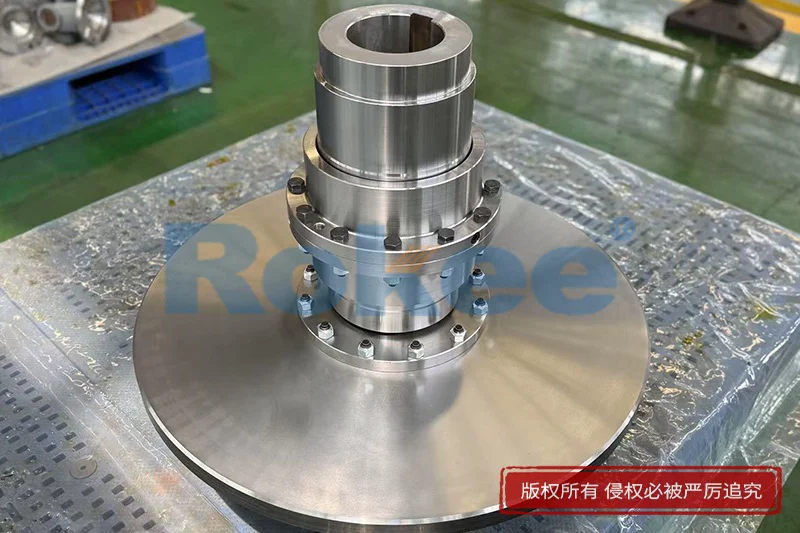
In the intricate ecosystem of modern mechanical transmission systems, steel flexible couplings stand as indispensable core components that balance structural rigidity, operational flexibility, and long-term durability. Serving as critical connecting units between rotating shafts in mechanical equipment, these precision-engineered components primarily undertake the task of stable torque transmission while resolving a series of operational anomalies caused by shaft misalignment, mechanical vibration, and environmental changes. Unlike rigid couplings that pursue absolute structural fixation, steel flexible couplings integrate metal elastic deformation and mechanical buffer mechanisms, enabling them to adapt to complex and variable operating conditions without compromising transmission efficiency. As industrial equipment continues to develop toward high speed, high load, and high precision, the functional value and application scope of steel flexible couplings have been continuously expanded, becoming a key guarantee for the stable and efficient operation of various mechanical transmission systems.


The core design logic of steel flexible couplings originates from the practical pain points of mechanical transmission. In actual equipment assembly and operation, perfect coaxial alignment between driving shafts and driven shafts is almost unattainable. Minor deviations are inevitably generated due to manual installation errors, structural deformation of equipment under long-term load, thermal expansion and contraction of metal components during operation, and gradual wear of supporting parts such as bearings and bases. These deviations include angular misalignment where the two shafts form a tiny included angle, radial misalignment with parallel offset of shaft centers, and axial displacement caused by thermal expansion or mechanical vibration. If rigid connection structures are adopted, these subtle misalignments will generate huge additional mechanical stress during equipment operation, leading to accelerated wear of bearings and gears, increased transmission noise, reduced operating accuracy, and even fatigue fracture of shaft components in severe cases, causing equipment shutdown and production losses. Steel flexible couplings effectively solve this industry problem through their unique flexible structure, which can elastically compensate for various shaft misalignments within the allowable range while maintaining continuous and stable torque transmission.
The working principle of steel flexible couplings is based on the elastic deformation characteristics of high-quality steel materials and optimized mechanical structure design. During the operation of mechanical equipment, the driving end shaft drives the flexible coupling to rotate synchronously, and the coupling transmits torque and rotational power to the driven end shaft through the elastic cooperation of its internal structure. When misalignment or displacement occurs between the two connected shafts, the steel elastic components inside the coupling produce controllable and reversible elastic deformation. This deformation does not affect the overall torque transmission efficiency but can effectively offset the stress concentration caused by shaft deviation, isolate the vibration generated by the operation of the driving end equipment, and prevent vibration and shock from being transmitted bidirectionally between the two shafts. In high-speed operating scenarios, this vibration damping and buffering function is particularly critical. It can suppress torsional vibration generated by frequent start-stop, load mutation, and speed fluctuation of equipment, smooth the transmission process, and avoid impact damage to precision mechanical structures caused by instantaneous torque peaks.
Material performance is the fundamental foundation for the excellent comprehensive performance of steel flexible couplings. Different from plastic and cast iron flexible couplings used in low-load and low-precision scenarios, steel flexible couplings are mostly made of high-strength carbon steel and alloy steel after precision forging, heat treatment, and surface finishing. These steel materials have excellent mechanical properties, including high tensile strength, good yield toughness, and stable fatigue resistance. After standardized quenching and tempering treatment, the internal microstructure of the steel is optimized, which not only ensures that the coupling can withstand long-term high-load torque transmission without permanent deformation but also maintains stable elastic deformation performance under frequent alternating stress. Meanwhile, the surface anti-corrosion and wear-resistant treatment of steel components effectively resist the erosion of moisture, dust, and weak corrosive media in industrial environments, slowing down the oxidation and wear rate of parts and greatly extending the service life of the whole component. The inherent structural stability of steel materials also enables flexible couplings to adapt to a wide temperature range, maintaining consistent working performance in both low-temperature cold environments and high-temperature heat-generating working conditions, which is incomparable to non-metal flexible coupling products.
Structural diversity enables steel flexible couplings to adapt to differentiated industrial application scenarios. After long-term technical iteration, mature structural forms such as gear type, diaphragm type, jaw type, and sleeve type have been formed in the industry, all of which belong to the category of steel flexible couplings and realize flexible compensation through different mechanical mechanisms. Gear-type steel flexible couplings rely on the meshing fit of internal and external crowned gear teeth. The tiny gaps between gear teeth and the elastic deformation of tooth profiles can compensate for large radial and angular misalignment, with super strong torque bearing capacity, suitable for heavy-duty mechanical transmission scenarios. Diaphragm-type steel flexible couplings use the elastic deformation of thin steel diaphragms to realize torque transmission and misalignment compensation, featuring compact structure, high precision, and zero clearance transmission, which is widely used in high-speed and high-precision equipment. Jaw-type steel flexible couplings adopt a split tooth-shaped structure, with good vibration damping performance and convenient assembly and disassembly, adapting to medium-load and variable-speed operating conditions. Despite the differences in structural design, all steel flexible couplings adhere to the core design concept of integrating rigidity and flexibility, ensuring transmission accuracy while retaining sufficient operational adaptability.
The application fields of steel flexible couplings cover almost all modern industrial sectors involving mechanical transmission. In the field of industrial manufacturing and processing, they are widely matched with mechanical equipment such as machine tools, conveyors, mixers, and crushers, stabilizing the transmission operation of production equipment and reducing the failure rate of mechanical parts. In the fluid machinery industry, steel flexible couplings serve various pumps, fans, and compressors, effectively isolating the vibration generated by the rotation of impellers and blades, avoiding resonance between equipment and the base, and ensuring the stable operation of fluid transmission systems. In the power industry, they are applied to power transmission structures of generators, turbines, and wind power equipment, adapting to high-speed and high-power transmission environments and improving the operational safety of power equipment. In the emerging fields of intelligent manufacturing and industrial automation, steel flexible couplings are matched with robotic arms, automated transmission lines, and precision testing equipment. Their high-precision transmission and micro-vibration suppression performance guarantee the action accuracy and operational stability of automated equipment. In addition, they also play an important role in engineering machinery, marine equipment, and transportation machinery, adapting to harsh working conditions such as heavy load, frequent vibration, and complex environmental interference.
In addition to the core functions of torque transmission and misalignment compensation, steel flexible couplings also bring comprehensive economic and operational benefits to mechanical systems. First of all, their excellent vibration damping and buffering performance greatly reduce the mechanical wear of bearings, shafts, gears, and other vulnerable parts in the transmission system, effectively extending the service life of the whole equipment and reducing the frequency of parts replacement and equipment maintenance. Secondly, the flexible connection mode reduces the rigid impact during equipment start-stop and load switching, smooths the power transmission process, reduces equipment operation noise and vibration amplitude, and improves the working environment of industrial production. Moreover, steel flexible couplings have strong installation adaptability. They can tolerate minor assembly errors, reduce the precision requirements of equipment installation and debugging, shorten the installation cycle, and improve the overall production efficiency. In long-term industrial operation, the stable performance of steel flexible couplings also reduces unplanned downtime caused by transmission system failures, ensuring the continuity and stability of production and creating stable economic benefits for industrial production.
Standardized installation and scientific maintenance are key links to ensure the long-term stable performance of steel flexible couplings. Although steel flexible couplings have good fault tolerance and adaptability, excessive misalignment beyond the allowable range will still cause additional fatigue stress on the components, leading to accelerated aging and damage. Therefore, precise alignment detection and adjustment must be carried out during installation to control shaft misalignment within the optimal working range. In daily operation and maintenance, regular inspection of the operating state of the coupling is required, including checking for abnormal vibration, abnormal noise, and loose connection parts. For steel flexible couplings working in high-load and high-frequency operating environments, regular cleaning of dust and debris on the surface and inspection of elastic component fatigue and wear are needed to eliminate potential faults in advance. Compared with vulnerable non-metal couplings, steel flexible couplings have lower maintenance frequency and longer maintenance cycle, and most of them can realize maintenance-free operation for a long time under standard working conditions, which greatly reduces the operational and maintenance cost of mechanical equipment.
With the continuous progress of industrial manufacturing technology and the upgrading of industrial equipment performance, the technical development of steel flexible couplings is also advancing continuously. The current industry development trend focuses on high precision, high fatigue resistance, lightweight, and intelligent adaptation. Through optimized finite element analysis and structural simulation design, the structural form of couplings is further optimized to reduce self-weight while improving torque transmission efficiency and misalignment compensation capability. The application of new alloy steel materials and advanced heat treatment processes further enhances the fatigue resistance and corrosion resistance of products, adapting to more extreme industrial environments such as high temperature, low temperature, and strong corrosion. At the same time, with the development of intelligent industrial equipment, steel flexible couplings are gradually combined with monitoring and sensing technologies, which can realize real-time monitoring of operating torque, vibration amplitude, and misalignment state, providing data support for equipment predictive maintenance and further improving the intelligent level of mechanical transmission systems.
In the entire mechanical transmission industry chain, steel flexible couplings are small in volume but undertake crucial transmission and protection functions. As a connecting bridge between mechanical power sources and execution components, they not only realize efficient transmission of mechanical power but also build a safe buffer barrier for the whole equipment system. In the context of modern industrialization pursuing high efficiency, high stability, and low consumption, the value of steel flexible couplings is increasingly prominent. Their unique advantages of metal elastic compensation, strong environmental adaptability, long service life, and low maintenance cost make them irreplaceable core components in industrial mechanical transmission systems. With the continuous upgrading of industrial manufacturing standards and the continuous expansion of high-end manufacturing fields, steel flexible couplings will continue to iterate and upgrade in technology and performance, providing more reliable and efficient support for the stable operation of various modern mechanical equipment and promoting the high-quality development of the mechanical manufacturing industry.
« Steel Flexible Couplings » Update Date: 2026/7/16
Contact
If you require custom machined couplings, please contact Rokee via the contact information below for inquiries.
Email: https://www.gshmdpq.com
 WeChat