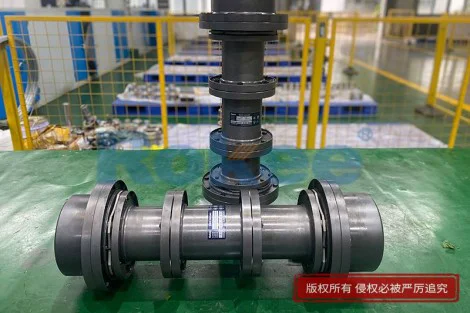
Half Gear Coupling
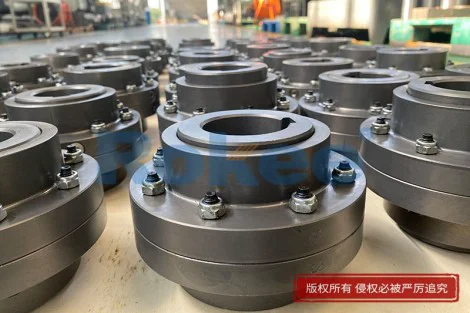
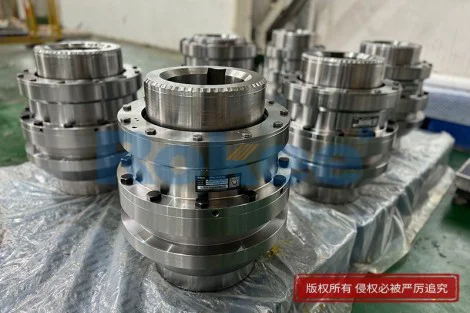
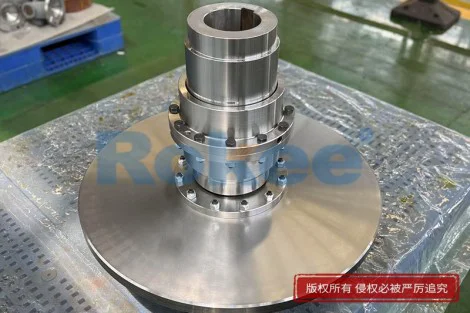
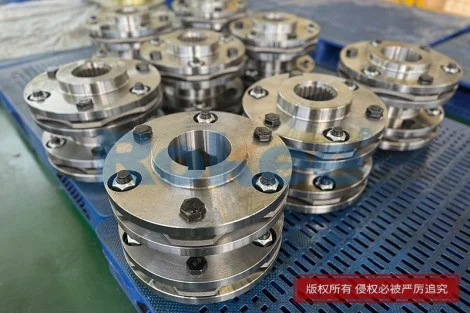
Rokee is a manufacturer of half gear coupling from china, we can provide non-standard custom half gear coupling based on parameters or drawings supplied by customers, with export support available.
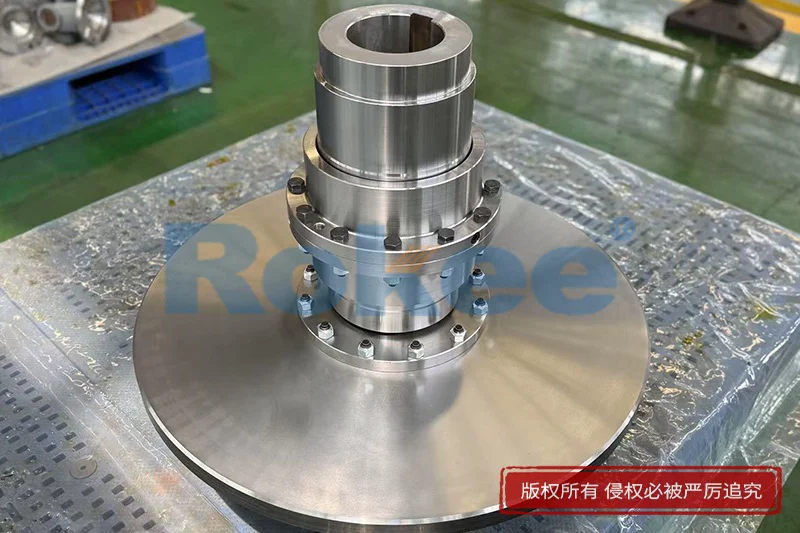
Half gear couplings, also widely recognized as semi-rigid or flex-rigid gear couplings, stand out as a pragmatic and specialized power transmission component in modern industrial mechanical systems, offering a balanced combination of structural simplicity, reliable torque transmission and targeted misalignment compensation for diverse mechanical connection scenarios. Differing fundamentally from full gear couplings that adopt dual flexible meshing structures on both ends, this type of coupling features a unique asymmetric structural design, integrating a flexible gear meshing end and a completely rigid connecting end, which precisely caters to the unbalanced operating characteristics of most shaft systems where one side maintains stable fixed operation while the other bears dynamic vibration and position deviation. This distinctive structural layout not only simplifies the overall mechanical configuration of transmission systems but also effectively avoids the redundant performance waste caused by excessive flexible compensation, making it a cost-effective and high-efficiency solution for medium and low-load industrial power transmission applications.

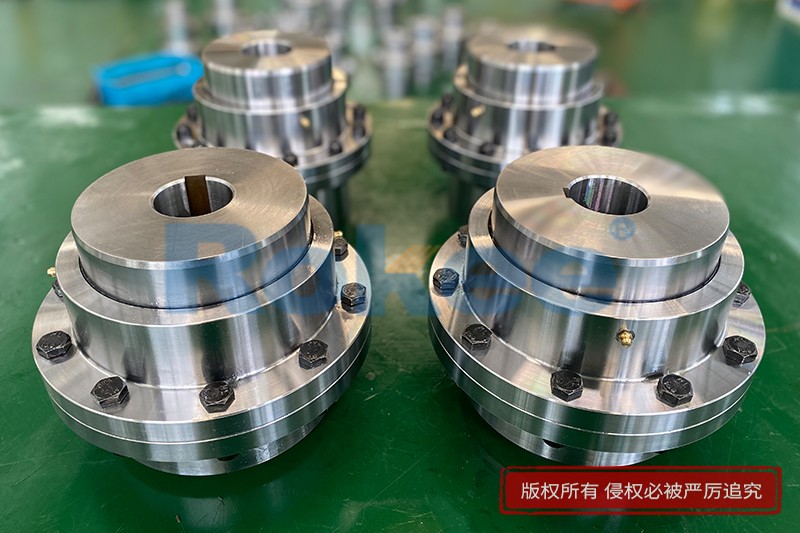
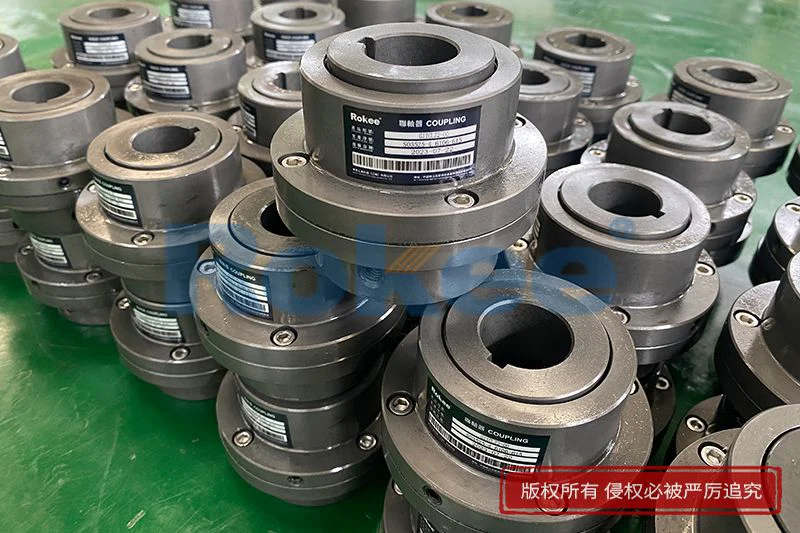
The basic structural composition of a half gear coupling is concise and compact, mainly consisting of three core functional parts: an externally toothed gear hub, an internally toothed sleeve and a rigid solid hub, with no redundant auxiliary components that increase assembly complexity and operational resistance. The flexible end is composed of the meshing fit between the external gear hub and the internal gear sleeve, where the tooth profile is usually designed with a slight spherical or arc transition structure. This refined tooth shape enables the gear teeth to achieve fine sliding and swinging during operation, reserving reasonable movement allowance for the adaptive adjustment of the shaft system. In contrast, the other end adopts an integrated rigid hub structure without any gear meshing design, realizing a fully locked fixed connection with the matched shaft. The rigid hub completely limits the relative displacement and deflection of the connected shaft, ensuring that the power output end maintains extremely high positional stability and rotational accuracy during long-term operation. The overall structural asymmetry is the core feature that distinguishes half gear couplings from other gear coupling types, and it is also the key basis for their differentiated performance and application scope.
In terms of working principle, the half gear coupling realizes continuous and stable torque transmission through the precise meshing of internal and external gear teeth on the flexible side, while relying on the structural characteristics of the gear meshing gap to achieve limited misalignment compensation. When the driving shaft operates normally, the torque is transmitted to the external gear hub through the key connection or spline structure, and then evenly transferred to the internal gear sleeve via the meshing gear teeth, finally driving the rigid hub and the connected driven shaft to rotate synchronously. During this process, the flexible meshing end can produce tiny adaptive swing and sliding through the gear tooth clearance and tooth profile deformation, effectively absorbing and adapting to the angular deviation and small axial displacement of the shaft system generated by installation errors, equipment operation vibration and thermal expansion and contraction of mechanical parts. However, due to the fixed and non-deformable characteristics of the rigid end, the half gear coupling cannot compensate for parallel radial offset of the shaft system, which forms a clear functional boundary with full gear couplings that can realize multi-dimensional misalignment compensation. This single but targeted compensation capability is not a performance defect, but a precise functional positioning for specific working conditions, avoiding the structural looseness and additional vibration risks brought by excessive flexible compensation in fixed-shaft operation scenarios.
The unique structural design endows half gear couplings with prominent comprehensive performance advantages in practical industrial applications. First of all, the simplified asymmetric structure effectively reduces the overall weight and assembly volume of the coupling, realizing lightweight configuration of the transmission system. The reduction of structural parts lowers the overall inertia of the rotating component, which helps to improve the response sensitivity of the mechanical system and reduce the energy consumption of equipment operation, especially suitable for medium-speed operation scenarios that require stable power output and low energy loss. Secondly, the rigid end design greatly improves the overall torsional rigidity and structural stability of the coupling. Compared with fully flexible couplings, it can effectively suppress the torsional vibration and rotational jitter of the shaft system, ensure the synchronous rotation accuracy of the driving and driven shafts, and avoid power transmission loss and equipment operation noise caused by shaft displacement. In addition, the gear meshing transmission mode has strong load-bearing capacity and fatigue resistance, which can withstand continuous cyclic load and intermittent impact load in industrial production, with long service life and stable working performance. Meanwhile, the simple structural form brings convenient installation and later maintenance, with low assembly difficulty and no complicated debugging process, which can effectively reduce the time cost and labor cost of equipment assembly and daily maintenance.
While possessing multiple application advantages, half gear couplings also have clear performance limitations, which determine their exclusive application scenarios and avoid misuse in inappropriate working conditions. The most notable limitation is the single-dimensional compensation capability, which can only adapt to angular misalignment and a small range of axial floating displacement of the shaft system, and cannot cope with parallel radial offset of the shaft. Therefore, this coupling is not suitable for mechanical systems with large installation deviation, severe equipment vibration or complex multi-dimensional shaft displacement. In addition, although the gear meshing structure has good wear resistance, long-term high-load operation or operation in dusty and humid environments will still cause gradual wear of gear teeth surface, and insufficient lubrication will accelerate the wear process, leading to increased transmission clearance, reduced synchronization accuracy and even abnormal noise and vibration of the equipment. Moreover, the rigid end has poor buffering performance for strong impact load. When the equipment bears sudden extreme impact torque, the rigid structure cannot effectively absorb and decompose the impact force, which may lead to local stress concentration of parts and even structural damage in severe cases. These limitations make it necessary to strictly match the working conditions when selecting half gear couplings to ensure the consistency between product performance and actual operation requirements.
Half gear couplings are widely applied in various medium and low-speed, medium-load industrial mechanical systems with single-sided fixed shaft characteristics, covering multiple fields of industrial production and mechanical manufacturing. They are commonly used in the connection of gearboxes and fixed-support rotating shafts in mechanical transmission equipment, where the gearbox side needs flexible compensation to adapt to operational vibration and thermal deformation, while the other side needs rigid fixation to maintain the stable operation of the load end. In pump and fan equipment, half gear couplings can realize stable power transmission between power motors and working hosts. The flexible side adapts to the tiny shaft displacement generated by the vibration of the motor during operation, and the rigid side ensures the stable operation of the pump body and fan impeller, avoiding the efficiency reduction and equipment damage caused by shaft system deviation. In addition, they are also widely used in light metallurgical machinery, textile machinery, food processing machinery and general industrial transmission equipment with stable working conditions, providing reliable power transmission guarantee for conventional mechanical operation. In some floating shaft transmission systems, two half gear couplings can be used in pairs with the floating shaft in the middle, which can realize long-distance power transmission while maintaining the overall stability of the shaft system, expanding the application range of this coupling type.
The installation, lubrication and daily maintenance of half gear couplings are key links to ensure their long-term stable operation and give full play to their performance advantages. In the installation process, the coaxiality of the two connected shafts must be strictly calibrated in advance to minimize the initial installation misalignment, especially to control the parallel radial offset of the shaft system within the allowable tiny range, so as to avoid excessive stress wear of the flexible meshing end caused by installation deviation. The assembly of gear meshing parts needs to ensure uniform gap and smooth meshing, without clamping stagnation and eccentric contact, so as to ensure the free adaptive adjustment of the flexible end during operation. Lubrication maintenance is crucial for gear meshing parts. Good lubrication can form a uniform oil film on the gear tooth surface, reduce friction and wear between meshing teeth, buffer contact stress, and prevent dry friction and tooth surface ablation. In daily use, it is necessary to regularly check the lubrication state of the coupling, supplement or replace lubricating grease on time according to the operation frequency and working environment, and clean the dust and sundries inside the meshing structure to avoid foreign matter abrasion of gear teeth. At the same time, the fastening state of the rigid hub connection structure should be checked regularly to prevent loose bolts and positional deviation of the fixed end, so as to ensure the long-term stability of the overall transmission performance of the coupling.
In the field of industrial coupling applications, half gear couplings occupy an irreplaceable market position with their unique flex-rigid integrated performance characteristics. Compared with full gear couplings with comprehensive multi-dimensional compensation capability, they have simpler structure, lower manufacturing and maintenance costs, and higher operational stability in fixed-shaft systems, avoiding the structural instability risk caused by excessive flexibility. Compared with ordinary rigid couplings, they retain targeted flexible compensation capability, which can effectively adapt to the inevitable tiny displacement and deformation of the shaft system in actual operation, solving the problem of poor adaptability and easy wear of fully rigid connections. This precise performance positioning makes half gear couplings always maintain high application value in conventional industrial transmission scenarios. With the continuous upgrading of industrial mechanical equipment towards high efficiency, energy saving and stability, the structural design and manufacturing process of half gear couplings are also constantly optimized. The improvement of tooth profile precision and surface treatment technology further improves the wear resistance and meshing accuracy of the coupling, and the optimization of structural materials enhances the fatigue resistance and environmental adaptability of the product, enabling it to adapt to more complex conventional working conditions and provide more stable and durable power transmission services for industrial mechanical systems.
In conclusion, half gear couplings are a kind of practical and efficient transmission coupling tailored for asymmetric shaft system operation scenarios. Their flexible-rigid composite structure, stable torque transmission performance, convenient installation and maintenance and cost-effective advantages make them widely applicable in most conventional medium and low-load industrial mechanical equipment. Although they have certain limitations in misalignment compensation range and impact resistance, their targeted functional advantages are fully highlighted in matching working conditions. In the future industrial mechanical transmission field, half gear couplings will still rely on their unique performance characteristics to serve as an important basic component of mechanical connection, continuously optimize performance with technological progress, and meet the increasingly refined and efficient operation requirements of modern industrial equipment.
« Half Gear Coupling » Update Date: 2026/7/17
Contact
If you require custom machined couplings, please contact Rokee via the contact information below for inquiries.
Email: https://www.gshmdpq.com
 WeChat