Motor Flex Couplings
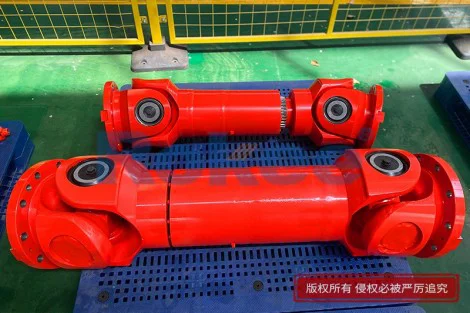
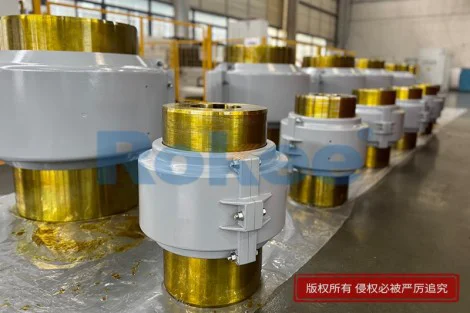
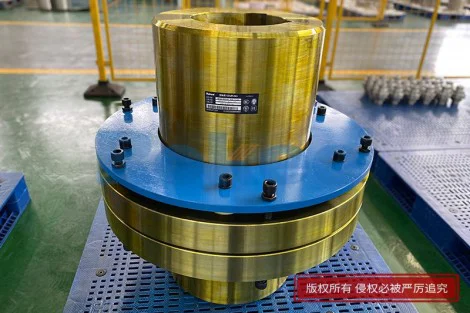
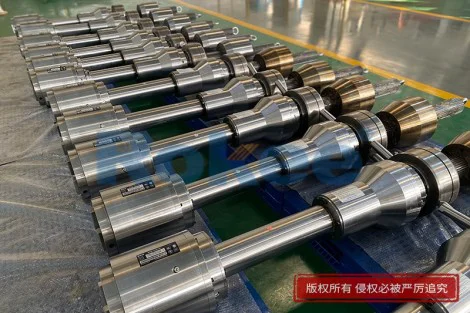
Rokee is a manufacturer of motor flex couplings from china, we can provide non-standard custom motor flex couplings based on parameters or drawings supplied by customers, with export support available.

In modern mechanical transmission systems, motor flex couplings stand as indispensable core components that bridge the power output end of motors and the input end of driven equipment. Unlike rigid connecting structures that pursue absolute positional fixation and rigid force transmission, flexible couplings are designed with adaptive mechanical flexibility, solving the inherent operational defects of traditional rigid connection modes in rotating machinery. All rotating mechanical systems inevitably produce subtle deviations and dynamic changes during installation, commissioning, and long-term operation, and these tiny variations, if not properly buffered and compensated, will gradually evolve into severe mechanical wear, structural fatigue, and system operation failure. Motor flex couplings precisely make up for this mechanical defect, serving as a flexible buffer and power transmission medium that ensures continuous, stable, and efficient power output of the entire drive train.


Shaft misalignment is the most common and unavoidable problem in mechanical assembly and operation, and it is also the key adaptation scenario for motor flex couplings. In practical industrial production and mechanical application scenarios, absolute coaxiality of two connected shafts can never be achieved permanently. Installation errors in manual assembly, structural displacement caused by equipment thermal expansion and cold contraction during long-term high-load operation, slight structural deflection under continuous mechanical load, and aging wear of supporting bearings and fixing parts will all lead to different types of shaft misalignment. These misalignment states are mainly divided into axial displacement, angular deviation, and radial offset, and multiple deviations often exist simultaneously in actual equipment operation. Without the adaptive adjustment function of flexible couplings, these misalignments will generate continuous additional friction and alternating stress on the shaft, bearings, and motor rotor, accelerating component aging, increasing equipment operating noise and vibration amplitude, and even causing shaft deformation and equipment shutdown failure in severe cases. Motor flex couplings rely on the flexible tolerance of internal elastic structures to adapt to various micro misalignment states, offset abnormal stress generated by shaft deviation in real time, and protect the core transmission structure of the motor and driven equipment.
The structural design of motor couplings follows the dual design concept of rigid torque transmission and flexible vibration damping, and the matching of different structural materials endows them with diverse application adaptability. Most flexible couplings are composed of two symmetrical metal hubs and intermediate flexible elastic elements. The metal hubs are usually made of high-strength alloy materials with good rigidity, wear resistance and structural stability, which can ensure stable clamping with the shaft and accurate and efficient transmission of rated torque without structural deformation. The intermediate flexible elements are the core functional parts of the coupling, and common materials include polymer elastomers such as rubber and polyurethane, as well as special flexible metal structural parts. Elastomer flexible elements have excellent shock absorption and noise reduction performance, with good compression and reset capabilities, which can effectively absorb high-frequency vibration and instantaneous impact load generated during motor operation, and are widely used in general industrial transmission scenarios with ordinary load requirements. Flexible metal structural parts complete flexible adaptation through precise structural grooving and thin-wall deformation, featuring high torsional rigidity, zero backlash, and strong structural stability, making them more suitable for high-precision, high-speed, and high-torque transmission scenarios.
The functional advantages of motor flex couplings are fully reflected in the full-cycle operation protection of mechanical transmission systems. In the equipment startup stage, the flexible structure can buffer the instantaneous torque surge generated by the motor from static to dynamic operation, avoid sudden load impact on the motor body and driven equipment, and reduce the startup loss of mechanical parts. In continuous operation, it can isolate the high-frequency vibration generated by motor rotation and equipment operation, prevent vibration resonance between the motor and the load structure, effectively reduce equipment operating noise, and improve the stability of the entire mechanical system. In the load mutation scenario, the elastic deformation of the flexible medium can disperse and release instantaneous overload stress, avoid local stress concentration of the shaft and key parts, and reduce the risk of structural fracture and fatigue damage. In the equipment shutdown process, it can buffer the inertial impact generated by mechanical rotation, make the shutdown process more stable, and avoid abnormal abrasion of the shaft caused by sudden braking.
In addition to basic power transmission and misalignment compensation functions, motor flex couplings also have excellent auxiliary protection effects for mechanical equipment and can effectively reduce the comprehensive operating cost of the system. For motor equipment, stable transmission buffer can reduce the axial and radial alternating load borne by the motor rotor and bearing system, slow down bearing wear and rotor offset, extend the service life of the motor core components, and reduce the frequency of motor failure and maintenance. For the entire transmission system, flexible isolation can avoid the transmission of vibration and impact between different equipment structures, protect precision parts of driven equipment such as gears, bearings, and precision transmission components, and maintain the long-term operating accuracy of mechanical equipment. At the same time, compared with rigid couplings, flexible couplings have lower assembly accuracy requirements, which can effectively reduce the difficulty and time cost of equipment installation and commissioning, and improve the overall assembly efficiency of mechanical systems.
Motor flex couplings are widely used in almost all mechanical scenarios that rely on motors for power transmission, covering general industrial equipment, precision motion systems, automated production equipment, and fluid power equipment. In conveyor and transmission equipment, they adapt to long-term continuous operation and intermittent load changes, ensuring stable power transmission of material conveying systems. In pump and fan equipment, they effectively isolate the vibration generated by fluid impact and rotor rotation, reducing equipment operating noise and structural vibration. In precision processing equipment such as numerical control machine tools and automated processing platforms, high-precision flexible couplings ensure zero-backlash torque transmission, maintain the positioning accuracy and operating stability of precision motion mechanisms, and meet the high-precision processing requirements of mechanical equipment. In power transmission equipment such as reducers and compressors, they buffer high-torque impact loads, protect gear transmission structures, and improve the operational reliability of high-load transmission systems.
The scientific selection and standardized use of motor flex couplings are key prerequisites for giving full play to their functional advantages. In the selection process, it is necessary to comprehensively consider multiple core parameters such as the motor’s rated torque, operating speed, load characteristics, shaft diameter matching size, and actual operating environment. For conventional steady-load operation scenarios, elastomer flexible couplings with good shock absorption and cost performance can be selected to meet daily stable transmission needs. For high-speed, high-precision, and frequent forward and reverse operation scenarios, flexible couplings with high torsional rigidity and zero-backlash performance should be prioritized to avoid transmission clearance affecting equipment operating accuracy. For high-load and impact-load frequent scenarios, it is necessary to select coupling products with higher torque tolerance and stronger deformation resistance to prevent structural failure caused by overload deformation of flexible parts.
Daily maintenance and inspection also determine the service life and operating effect of motor flex couplings. In the long-term operation of equipment, the flexible elements will produce subtle fatigue loss due to repeated elastic deformation, and aging and wear will occur after long-term load operation. Regular visual inspection should be carried out during daily use to check whether the flexible parts have cracks, deformation, aging hardening or excessive wear, and whether the clamping structure between the hub and the shaft is loose. For equipment operating in high-temperature, humid or dusty environments, the inspection cycle should be appropriately shortened, because harsh environments will accelerate the aging of polymer flexible materials and affect the structural stability of metal parts. Timely replacement of aging and failed flexible elements can avoid transmission instability and equipment failure caused by functional attenuation of couplings, and ensure the long-term stable operation of the entire motor transmission system.
With the continuous upgrading of modern mechanical equipment towards high speed, high precision and high intelligence, the performance requirements for motor flex couplings are also constantly improving. Traditional single-function flexible couplings can no longer fully adapt to the complex and changeable operating conditions of new mechanical systems, and coupling products are gradually developing towards composite functions, high structural stability and long service life. Modern optimized motor flex couplings integrate multiple advantages such as efficient vibration damping, precise torque transmission, strong misalignment adaptability and fatigue resistance, and can cope with extreme working conditions such as variable load operation, frequent startup and shutdown, and long-term high-speed operation. At the same time, the continuous innovation of material technology and structural design further improves the comprehensive performance of couplings, making them more adaptable to the diversified development needs of modern mechanical transmission systems.
In the entire field of mechanical transmission, motor flex couplings are small but vital core components. They do not directly determine the power output level of the motor, but they restrict the operating stability, service life, transmission efficiency and operating accuracy of the entire mechanical system. As a flexible connection bridge between power source and load equipment, it solves many pain points in traditional rigid transmission, including vibration noise, structural wear, stress concentration and misalignment failure. Reasonable application and scientific maintenance of motor flex couplings can effectively optimize the operating state of mechanical equipment, reduce equipment failure rate and maintenance cost, and improve the overall operating efficiency and service life of mechanical systems. In the future mechanical design and industrial production, motor flex couplings will still occupy an irreplaceable core position in the field of motor transmission by virtue of their unique flexible transmission advantages and diverse application adaptability, and continuously support the stable and efficient operation of various mechanical equipment.
« Motor Flex Couplings » Update Date: 2026/7/17
Contact
If you require custom machined couplings, please contact Rokee via the contact information below for inquiries.
Email: https://www.gshmdpq.com
 WeChat