Teeth Couplings Factory
In the intricate and systematic field of modern mechanical transmission, the stability, efficiency and durability of connecting components directly determine the overall operating performance of mechanical equipment. As a core universal transmission component, teeth couplings have become an indispensable part of heavy-duty industrial machinery, precision transmission systems and automated production equipment by virtue of their unique structural design, excellent load-bearing capacity and reliable displacement compensation performance. Unlike traditional coupling structures that rely on friction or rigid connection, teeth couplings adopt involute gear meshing transmission logic, which perfectly balances high-torque transmission efficiency and multi-dimensional shaft deviation adaptability, and has been widely applied in diverse industrial scenarios ranging from heavy mining machinery to sophisticated automated production lines.
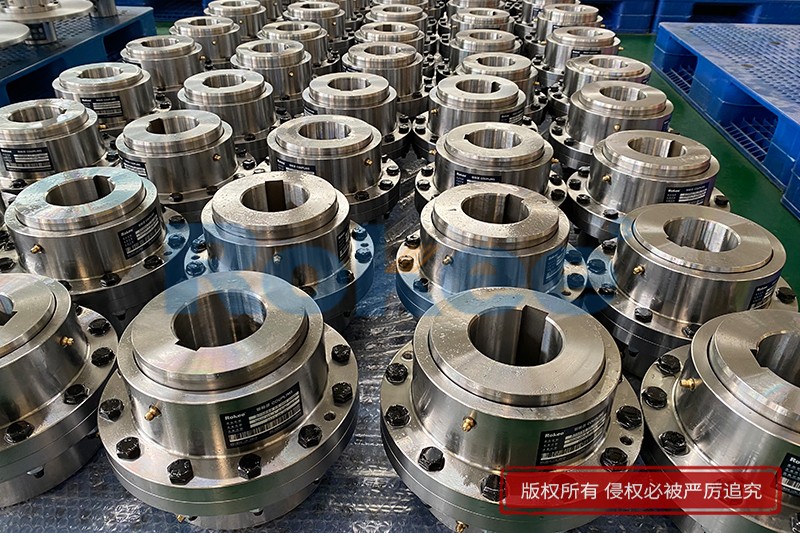
The working principle of teeth couplings is rooted in precise mechanical meshing and adaptive kinematic adjustment, forming a stable and efficient power transmission system. The basic structure consists of two toothed hubs fixed on the driving and driven shafts and an inner-toothed sleeve that connects the two hubs. In the operating state, the external teeth of the two hubs mesh tightly with the internal teeth of the floating sleeve, realizing synchronous rotation and torque transmission between the driving shaft and the driven shaft. This positive locking meshing transmission mode completely avoids the slipping problem inherent in friction couplings, ensuring zero power loss in the transmission process under normal working conditions and maintaining extremely high transmission efficiency for a long time.
What distinguishes teeth couplings from other rigid and flexible couplings is their outstanding multi-dimensional displacement compensation capability. During the assembly and long-term operation of mechanical equipment, it is inevitable that various shaft deviations will occur due to installation errors, equipment vibration, thermal expansion and cold contraction of materials, and foundation settlement. Ordinary rigid couplings cannot adapt to these deviations, which will cause additional mechanical stress on the transmission shaft system, accelerate component wear, and even lead to shaft deformation and equipment failure. Teeth couplings, however, rely on the relative sliding and fitting gap between meshing tooth surfaces, which can effectively compensate for radial deviation, axial displacement and angular deflection between the two connected shafts. The involute tooth profile design further optimizes the stress distribution of the meshing part, enabling each tooth to bear load evenly during operation, avoiding local stress concentration, and greatly improving the stability of the shaft system operation.
Structural superiority is the fundamental reason why teeth couplings occupy a dominant position in heavy-load transmission scenarios. The overall structure of teeth couplings is highly compact, with a small axial and radial installation space occupation. Under the same torque transmission condition, the volume and weight of teeth couplings are far lower than those of flange couplings and sleeve couplings, which can effectively save the internal space of equipment and facilitate the integrated and miniaturized design of mechanical structures. Despite the compact size, the integral tooth structure has extremely high structural rigidity and mechanical strength. The tooth surface contact mode enables multiple teeth to bear the load simultaneously during operation, which greatly improves the overload resistance and fatigue resistance of the coupling, and can stably operate under harsh working conditions such as heavy load, impact load and frequent start-stop.
The performance advantages of teeth couplings are fully reflected in industrial adaptability and long-term operational economy. First of all, the transmission efficiency of teeth couplings is extremely high, approaching full efficiency in conventional working environments. The smooth meshing of involute tooth surfaces reduces mechanical friction resistance to the greatest extent, avoiding energy waste in the power transmission process, which is of great significance for reducing industrial energy consumption and improving equipment operation efficiency. Secondly, the tooth surface processing technology is mature and precise. Through fine machining and surface strengthening treatment, the hardness, wear resistance and corrosion resistance of the tooth surface are significantly improved, which can resist the abrasion of dust, impurities and humid gas in complex industrial environments and prolong the service life of components.
In addition, teeth couplings have excellent vibration damping and buffering performance. Although they belong to rigid transmission components in essence, the tiny gap and elastic fitting state between meshing teeth can absorb part of the vibration and impact generated by equipment operation, weaken the vibration transmission between the driving and driven shafts, reduce the operating noise of the equipment, and protect the bearing, shaft body and other precision components in the transmission system from impact damage. This performance makes teeth couplings not only suitable for stable continuous operation scenarios, but also competent for variable load and impact load working conditions that are common in industrial production.
The industrial application scope of teeth couplings covers almost all fields involving mechanical power transmission, showing strong scene adaptability. In the heavy machinery industry such as mining, metallurgy and cement, large-scale crushers, ball mills, rotary kilns and conveyor equipment need to transmit huge torque and bear frequent impact loads. Teeth couplings can stably bear heavy-load transmission tasks, adapt to the severe working environment of high dust and high vibration, and ensure the continuous and stable operation of heavy equipment, avoiding production interruption caused by coupling failure.
In the field of industrial manufacturing and automated production, precision transmission requirements are more stringent. Mechanical equipment such as servo transmission systems, automated assembly lines and precision machine tools require high synchronization accuracy of shaft rotation and small transmission error. Teeth couplings rely on precise gear meshing to realize synchronous rotation with high accuracy, effectively compensate for tiny shaft deviations caused by equipment operation and temperature changes, ensure the positioning accuracy and operation stability of precision equipment, and meet the high-precision transmission needs of modern intelligent manufacturing.
In addition, teeth couplings are also widely used in petrochemical, power, marine engineering and other fields. Petrochemical equipment often operates in corrosive and high-temperature environments, and the surface-strengthened teeth couplings can resist medium corrosion and high-temperature oxidation, maintaining stable mechanical performance in harsh environments. Power generation equipment such as fans, water pumps and generators need long-term uninterrupted operation, and the high fatigue resistance and low failure rate of teeth couplings reduce the frequency of equipment maintenance and improve the continuous operation capacity of power equipment. Marine mechanical equipment puts forward higher requirements for component stability and space utilization. The compact structure and high reliability of teeth couplings can adapt to the narrow installation space and complex working conditions of marine equipment, ensuring the safe operation of marine transmission systems.
Lubrication and sealing are key factors that determine the operating effect and service life of teeth couplings. Due to the relative sliding friction between meshing tooth surfaces during operation, good lubrication conditions must be maintained to reduce tooth surface wear and avoid dry friction ablation. Reasonable lubrication measures can form a uniform oil film on the tooth surface, isolate direct contact between metal surfaces, reduce friction coefficient, and at the same time play a role in heat dissipation, vibration reduction and rust prevention. In actual industrial applications, different lubrication methods and lubricants will be selected according to the operating speed, load size and environmental conditions of the equipment to ensure that the meshing parts are always in a good lubrication state.
The matching sealing structure is equally important for the stable operation of teeth couplings. A high-quality sealing system can effectively prevent external dust, impurities, moisture and corrosive media from entering the meshing interior, avoid tooth surface abrasion, corrosion and jamming failure, and also prevent internal lubricating oil leakage to ensure the sustainability of the lubrication system. For equipment operating in extreme environments such as high dust, high humidity and strong corrosion, the optimized sealing structure can greatly improve the environmental adaptability of teeth couplings and extend their service cycle.
Daily maintenance and scientific use are crucial to giving full play to the performance advantages of teeth couplings. In the installation stage, precise alignment of the driving and driven shafts is required to control the shaft deviation within the allowable range, avoid excessive deviation causing abnormal wear of tooth surfaces and additional load of the shaft system. In the operation process, regular inspection of the coupling's operating state, checking for abnormal vibration, noise and temperature rise, can timely discover potential faults such as tooth surface wear, lubricant failure and sealing damage. Regular replacement of lubricants and maintenance of sealing components can effectively reduce the failure rate of the coupling and ensure long-term stable operation of the equipment.
With the continuous upgrading of modern industrial manufacturing towards high precision, high efficiency and intelligence, the technical iteration of teeth couplings is also advancing continuously. Traditional manufacturing processes are constantly optimized, and advanced precision machining, heat treatment and surface strengthening technologies are applied to the production of teeth couplings, further improving the dimensional accuracy, surface finish and mechanical performance of products. At the same time, combined with the differentiated needs of different industrial scenarios, customized structural optimization is carried out. For high-speed precision transmission scenarios, the tooth profile is optimized to reduce transmission vibration and improve synchronization accuracy; for heavy-duty impact scenarios, the structural strength and impact resistance are enhanced to adapt to extreme load working conditions.
In the entire mechanical transmission industry, teeth couplings have become a key component to support the stable operation of industrial equipment with their comprehensive performance advantages. Compared with elastic couplings, they have higher structural rigidity and torque transmission capacity, avoiding elastic deformation and transmission lag; compared with rigid fixed couplings, they have flexible displacement compensation capacity, which can adapt to complex shaft system deviation problems and reduce equipment operation failure risks. The excellent comprehensive performance makes teeth couplings occupy an irreplaceable core position in the transmission component industry.
In the future, with the continuous development of intelligent equipment, green manufacturing and extreme industrial equipment, the performance requirements for transmission components will be further improved. Teeth couplings will continue to develop in the direction of higher precision, stronger durability, better environmental adaptability and lighter structure. The integration of new materials, new processes and intelligent monitoring technology will further release the application potential of teeth couplings, provide more reliable basic support for the efficient and stable operation of modern industrial systems, and promote the continuous progress and upgrading of the mechanical transmission industry.
Tags: Teeth Couplings , sandwich panel machine , pu sandwich panel line
« Teeth Couplings Factory » Update Date: 2026/7/16
Contact
If you require custom machined couplings, please contact Rokee via the contact information below for inquiries.
Email: https://www.gshmdpq.com
 WeChat
Industrial Couplings
You may also like
- Diaphragm Coupling Types
- Universal Cross Joint Coupling Structural Diagram
- Types of Pin Couplings
- Universal Joint Shaft Coupling Schematic Diagram
- Types of Flexible Membrane Couplings
- Working Principle of Flexible Membrane Coupling
- Universal Coupling Joints Assembly Drawing
- Universal Couplings Size Chart
- Types of Spline Gear Couplings
- Cardan Shaft Alignment Tolerances