Universal Shaft Joint
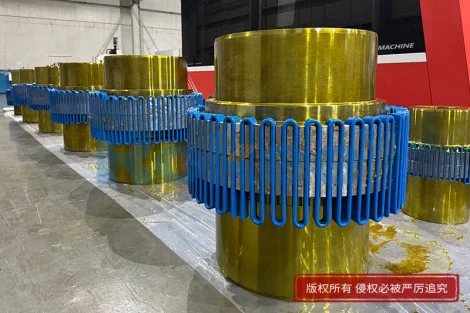
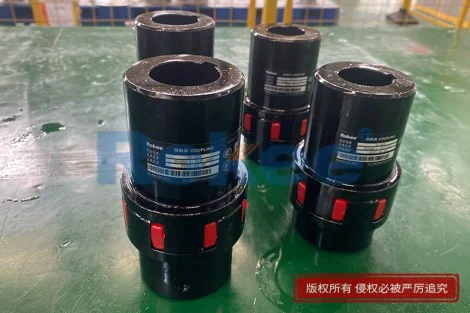
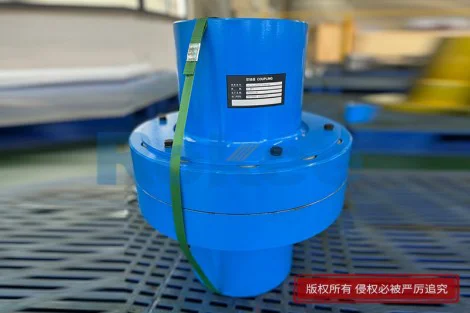
Rokee is a manufacturer of universal shaft joint from china, we can provide non-standard custom universal shaft joint based on parameters or drawings supplied by customers, with export support available.

Universal shaft joints, also widely recognized as universal couplings or cardan joints, stand as one of the most indispensable mechanical transmission components in modern mechanical engineering and industrial manufacturing. As a core flexible transmission structure, their fundamental value lies in breaking through the functional limitations of traditional rigid shaft connections, enabling stable and efficient transmission of rotational torque and mechanical power between two shafts that are not strictly collinear, have angular deviations, or produce relative displacement during operation. Unlike rigid couplings that require precise axis alignment and can hardly adapt to operational deformation and installation errors, universal shaft joints feature unique spatial motion characteristics, allowing them to maintain continuous and reliable power transmission under complex working conditions with shaft deflection, vibration displacement and structural position changes, which makes them widely applicable in mobile machinery, industrial transmission systems and various special mechanical equipment scenarios.
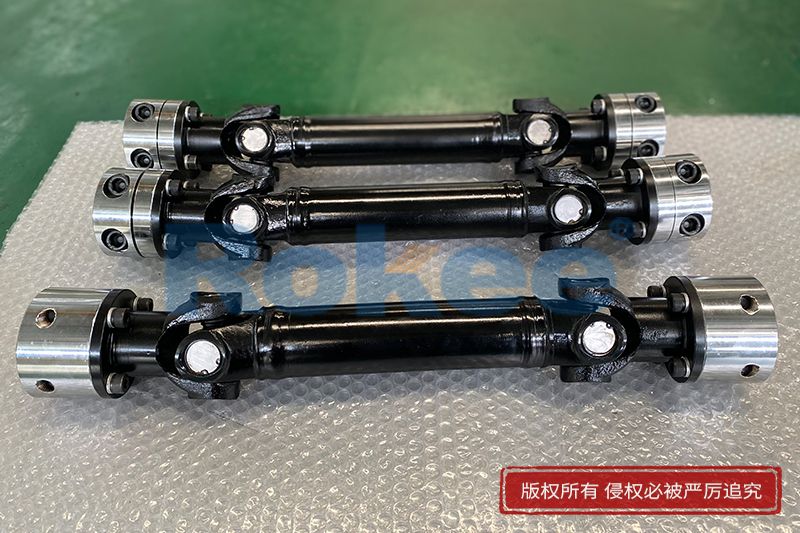


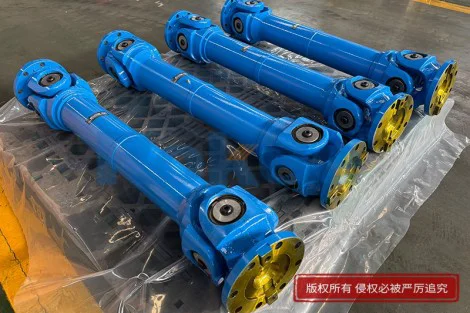
The basic working mechanism of universal shaft joints originates from the spatial kinematic principle of multi-link mechanical structures. The most mainstream structural form adopts a cross-shaft transmission structure, which consists of core components including cross trunnions, precision bearings, fork-shaped yokes and connecting shafts. In the operating state, the driving shaft drives the connected driving yoke to perform fixed-axis rotational motion, and the cross trunnion connected to the yoke converts the single fixed-axis rotation into a spatial composite motion of swing and rotation. This composite motion is then transmitted to the driven yoke and the driven shaft, finally realizing the continuous output of rotational power and torque. This unique motion conversion process is the core reason why universal shaft joints can adapt to angular misalignment between shafts. Even when the axes of the driving and driven shafts form a certain included angle, the flexible coordination of the cross structure and bearings can compensate for the axis deviation, ensuring that the power transmission process will not be interrupted or fail due to non-collinear shafts.
One of the most prominent performance characteristics of universal shaft joints is their excellent angular compensation capability, which is far superior to ordinary elastic couplings and sleeve couplings. In actual mechanical operation, the ideal state of complete collinearity between transmission shafts is almost unattainable. Installation errors during equipment assembly, structural deformation caused by long-term load operation, vibration displacement generated by mechanical movement, and thermal expansion and contraction of components under variable working conditions will all lead to different degrees of angular and positional deviation between shafts. Universal shaft joints can effectively adapt to such deviations, with adaptable angular ranges covering multiple gradient intervals to meet the differentiated needs of light-duty and heavy-duty mechanical transmission. While realizing angular compensation, this component can also tolerate a certain degree of axial and radial displacement, forming a multi-dimensional compensation system for shaft misalignment, which greatly improves the stability and fault tolerance of the entire transmission system.
In addition to the outstanding compensation ability, universal shaft joints also possess remarkable comprehensive mechanical properties. Their compact structural design enables them to occupy a small installation space while maintaining high torque transmission capacity, realizing high-power and high-efficiency power output in limited mechanical layout space. The internal bearing and cross shaft friction pairs are designed with optimized kinematic matching, which effectively reduces friction resistance and mechanical loss during operation, ensuring high transmission efficiency in the full-speed operation range. Compared with other flexible transmission components, universal shaft joints have stronger structural rigidity and load-bearing capacity, can withstand alternating loads, impact loads and long-term continuous operating loads, and maintain stable transmission performance without obvious deformation or power attenuation. This combination of compact structure, high efficiency and high load capacity makes it irreplaceable in many heavy-duty and continuous operating mechanical scenarios.
It is worth noting that single universal joint has the inherent motion characteristic of non-uniform rotation speed during operation. When there is a fixed angle between the driving and driven shafts, the instantaneous rotation speed of the driven shaft will fluctuate periodically with the rotation of the driving shaft. This periodic speed fluctuation will produce certain alternating torque and mechanical vibration, which may affect the transmission stability of precision mechanical equipment. To solve this problem, most practical application scenarios adopt the combined structure of double universal joints or multiple universal joints. Through the phase matching and motion compensation of two groups of universal joint structures, the periodic speed fluctuation generated by the single joint is completely offset, so that the output rotation speed and torque of the entire transmission system remain uniform and stable. This optimized combined design perfectly makes up for the structural defects of a single universal joint, further expanding the application scope of universal shaft joints and enabling them to be applied in high-precision and high-stability transmission scenarios.
Universal shaft joints have extremely diverse application scenarios, covering almost all fields that require non-collinear shaft power transmission. In mobile engineering machinery, they serve as the core transmission component of walking and power output systems, adapting to the body jitter, tire displacement and structural angle changes during equipment walking and operation, and stably transmit engine power to walking mechanisms and working devices. In industrial production equipment, they are applied to various transmission systems of rolling machinery, conveying equipment, processing machine tools and automated production lines, solving the transmission problems caused by equipment installation deviation and operational structural deformation, and ensuring the continuous operation of production lines. In addition, they also play an important role in special equipment such as agricultural machinery, mining machinery and transportation equipment, adapting to harsh working environments such as complex terrain, severe vibration and variable loads, and providing reliable power transmission guarantee for mechanical equipment.
The structural diversity of universal shaft joints also enables them to adapt to differentiated working condition requirements. According to different structural forms and functional designs, universal shaft joints can be divided into telescopic and non-telescopic types. The telescopic structure is equipped with spline pairs, which can realize free expansion and contraction within a certain axial range, effectively compensating for the axial distance change between shafts caused by equipment operation, thermal deformation and position adjustment, and is suitable for transmission occasions with frequent axial displacement changes. The non-telescopic integrated structure has higher overall rigidity and structural stability, can bear greater impact loads and torsional loads, and is more suitable for fixed-installation transmission scenarios with stable shaft spacing and high load requirements. Different structural configurations enable universal shaft joints to accurately match the working characteristics of various mechanical systems, achieving targeted transmission effects.
In terms of operational performance and service life, the service state of universal shaft joints is closely related to structural design, processing precision and daily maintenance. The high-precision processing of cross shafts, bearing raceways and fork yokes ensures the precise matching of kinematic pairs, reduces wear and vibration during operation, and extends the service life of components. The reasonable lubrication design can effectively reduce the friction and wear of internal moving parts, avoid dry friction damage caused by long-term operation, and maintain stable transmission efficiency. In harsh working environments such as high dust, high humidity and variable temperature, good structural sealing performance can prevent external impurities from entering the internal kinematic pairs, avoid component abrasion and corrosion failure, and improve the environmental adaptability and operational reliability of the equipment. Scientific structural design and processing technology make universal shaft joints have excellent durability and stability in long-term industrial application.
With the continuous upgrading of modern mechanical equipment towards high speed, high precision and high intelligence, the performance optimization of universal shaft joints is also advancing continuously. Modern optimized designs focus on reducing operational vibration and noise, improving transmission smoothness, and adapting to the high-speed operation requirements of precision mechanical equipment. At the same time, lightweight structural design and high-strength material application have realized the dual improvement of component strength and structural flexibility, reducing the self-weight of the transmission system while ensuring load-bearing capacity, and improving the dynamic response performance of mechanical equipment. In addition, the integrated and modular design of universal shaft joints simplifies the installation, disassembly and replacement process, reduces equipment maintenance costs and downtime, and improves the operational efficiency of the entire mechanical system.
In the entire mechanical transmission system, universal shaft joints undertake the key task of connecting power sources and execution components, and their operational state directly determines the overall working efficiency and stability of mechanical equipment. As a classic and mature flexible transmission component, it not only solves the technical problem of power transmission between non-collinear shafts, but also adapts to various complex and variable working conditions through multi-dimensional displacement compensation and excellent load-bearing performance. From traditional heavy industrial machinery to modern intelligent automated equipment, universal shaft joints always show irreplaceable application value. With the continuous development of mechanical manufacturing technology, the structural design, processing technology and performance indicators of universal shaft joints will continue to be innovated and improved, providing more reliable and efficient technical support for the upgrading and iteration of modern mechanical engineering.
« Universal Shaft Joint » Update Date: 2026/7/17
Contact
If you require custom machined couplings, please contact Rokee via the contact information below for inquiries.
Email: https://www.gshmdpq.com
 WeChat